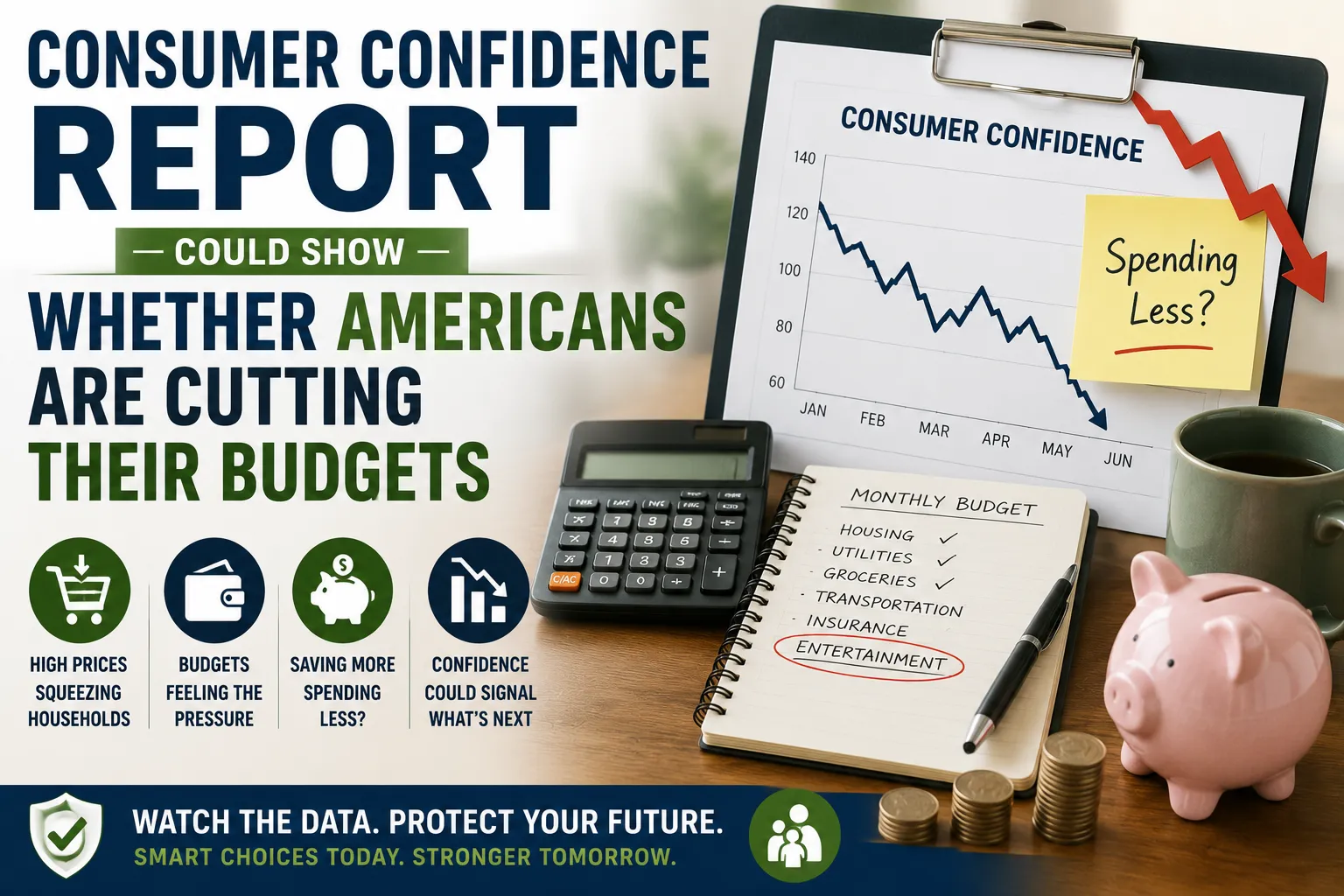
Consumer Confidence Report Could Show Whether Americans Are Cutting Their Budgets
A new consumer confidence reading could provide an important snapshot of how Americans are feeling about their finances—and whether concerns about prices, borrowing costs and the wider economy are beginning to translate into more cautious household spending.
Consumer confidence surveys do not directly measure how much people spend. Instead, they capture attitudes about current economic conditions and expectations for the months ahead. Those expectations can influence decisions about major purchases, saving, borrowing and discretionary spending.
That makes an upcoming confidence report potentially important for households, businesses and investors watching for signs that consumers are becoming more defensive with their money.
For a broader explanation of how confidence, inflation, employment and other data points fit together, see this complete guide to economic indicators.
Why Consumer Confidence Matters
Consumer spending is a major component of the U.S. economy.
When households feel financially secure, they may be more comfortable purchasing cars, appliances, travel, restaurant meals and other discretionary goods and services.
When confidence weakens, consumers may become more selective.
They might:
- Delay large purchases
- Look for discounts
- Reduce restaurant spending
- Cut entertainment costs
- Shop around for cheaper alternatives
- Increase savings
- Pay down debt
- Postpone major financial commitments
This does not mean every consumer behaves the same way. Confidence is an aggregate measure, and households with different incomes, savings levels and debt obligations can respond very differently to the same economic conditions.
A Confidence Report Is Not the Same as a Spending Report
One of the most important distinctions is between what consumers say they expect to do and what they actually do.
A household may report feeling pessimistic about the economy while continuing to spend because it has a stable income and sufficient savings.
Conversely, consumers may report reasonable confidence while cutting spending in particular categories because prices have increased.
For that reason, economists typically look at confidence alongside other indicators, including:
- Retail sales
- Personal consumption expenditures
- Household income
- Employment
- Credit-card spending
- Delinquency rates
- Savings rates
- Inflation
- Consumer borrowing
Together, these indicators provide a more complete picture of household financial behavior.
What Would Signal More Cautious Consumers?
A decline in consumer confidence would not automatically mean Americans are cutting their budgets.
But if confidence falls alongside weaker expectations for personal finances, employment or economic conditions, it could suggest that households are becoming more cautious.
The most interesting signal would be a combination of declining confidence and evidence that consumers are changing their behavior.
For example, if households say they are increasingly worried about their financial situation and retailers simultaneously report weaker discretionary demand, the two trends could reinforce each other.
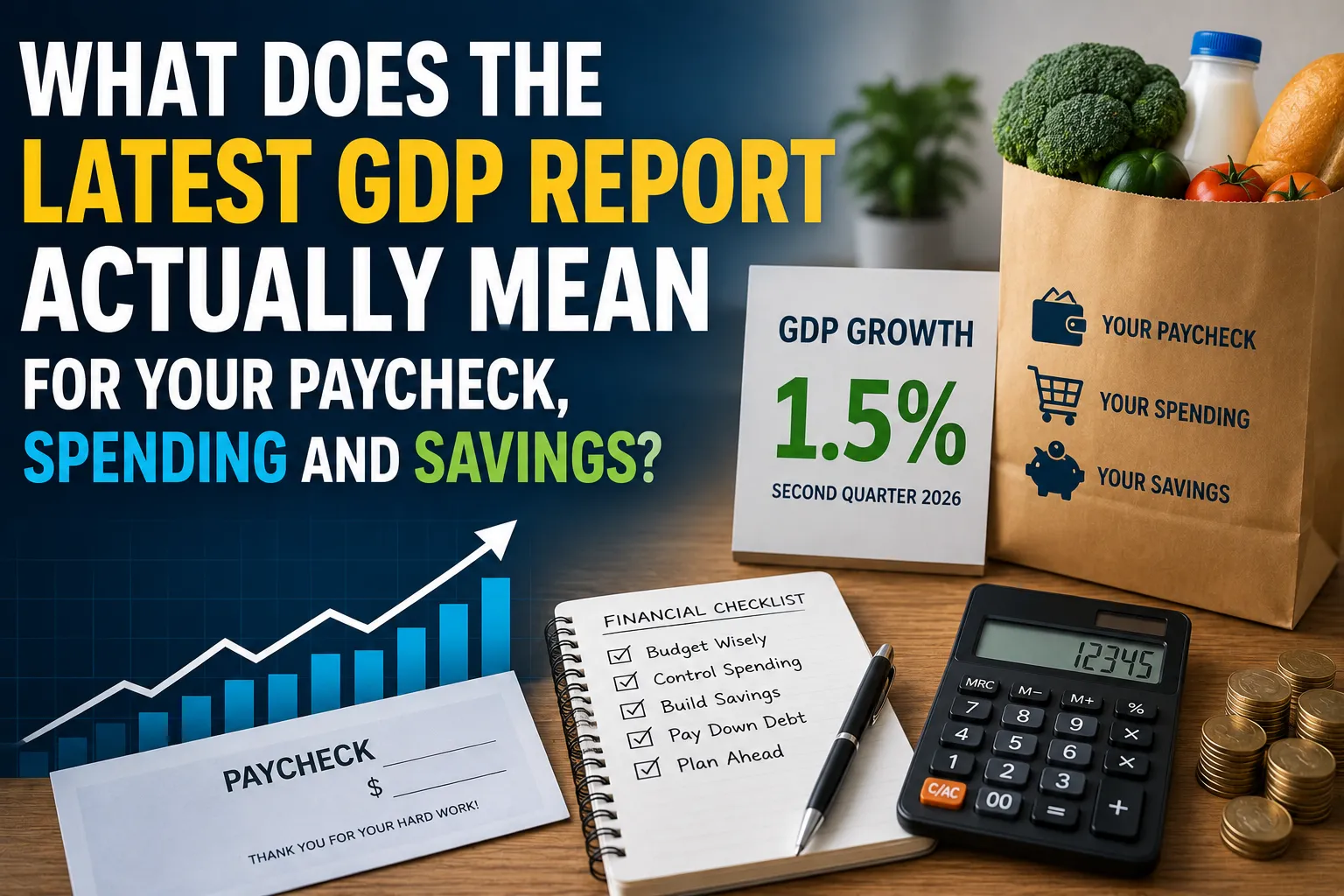
The distinction between confidence and actual spending is also important when considering what falling consumer confidence could mean for household spending and saving.
Household Budgets Are Still Under Pressure
Americans have been dealing with elevated costs across many areas of household spending.
Even when the rate of inflation slows, prices generally do not return to their previous levels.
That distinction is important.
If the price of groceries rises more slowly than before, consumers may still be paying substantially more than they did several years earlier.
The same dynamic can affect:
- Housing
- Insurance
- Utilities
- Food
- Transportation
- Healthcare
- Childcare
- Entertainment
As a result, households may feel financial pressure even when headline inflation is no longer accelerating sharply.
The Difference Between Inflation and Prices
Inflation measures the rate at which prices are changing.
It does not mean that prices themselves are falling when inflation declines.
Suppose the price of a product rises 3% this year after rising 6% last year. Inflation has slowed, but the product is still more expensive than it was before.
That can create a challenging situation for household budgets.
Income may have increased, but families may still feel that their purchasing power is being squeezed because everyday expenses remain elevated.
Consumers looking at their own finances can also benefit from understanding how inflation affects everyday finances.
Lower-Income Households May Feel the Pressure Differently
Not all consumers have the same ability to absorb higher costs.
A household with substantial savings and relatively low debt may be able to maintain spending despite higher prices.
A family living close to its monthly budget limit has fewer options.
When essential expenses consume most available income, even modest increases in food, rent, utilities or transportation costs can force difficult decisions.
Those households may respond by cutting discretionary spending first.
Discretionary Purchases Could Be the First to Change
If consumers begin tightening their budgets, the effects may initially appear in categories that are easier to postpone.
These can include:
- Restaurant meals
- Travel
- Entertainment
- Clothing
- Electronics
- Home furnishings
- Recreation
Essential purchases are generally harder to eliminate.
That means businesses selling discretionary products and services may be particularly sensitive to changes in consumer sentiment.
Big-Ticket Purchases Could Also Be Delayed
Confidence can be especially relevant when households are considering expensive purchases.
Buying a vehicle, remodeling a home or replacing major appliances can involve significant borrowing or a large cash outlay.
If consumers become less confident about their income or the broader economy, they may decide to wait.
A homeowner might postpone a renovation.
A family might keep an older vehicle for another year.
A consumer might delay upgrading an expensive electronic device.
These individual decisions can collectively affect economic activity.
High Borrowing Costs Can Reinforce Caution
Interest rates influence household budgets in several ways.
Higher borrowing costs can increase the expense of:
- Credit-card balances
- Auto loans
- Mortgages
- Personal loans
- Home-equity borrowing
Consumers carrying variable-rate debt can be particularly sensitive to changes in financing costs.
Even households that do not borrow heavily may become more cautious when they see that financing a major purchase has become significantly more expensive.
Credit-Card Balances Are Worth Watching
Credit cards can provide flexibility when household expenses rise, but persistent revolving balances can become expensive when interest rates are high.
If consumers increasingly rely on credit to cover routine expenses, that can indicate financial pressure.
Rising balances alone, however, do not tell the whole story.
Analysts also look at repayment patterns and delinquency rates to determine whether households are struggling to manage their debt.
Savings Could Become a Bigger Priority
If consumer confidence weakens, some households may respond by building cash reserves.
This could mean:
- Increasing contributions to savings accounts
- Reducing discretionary spending
- Delaying large purchases
- Paying down high-interest debt
- Building an emergency fund
From an individual perspective, this can be a sensible response to economic uncertainty.
From a macroeconomic perspective, however, widespread increases in saving can reduce short-term consumer spending.
That creates an interesting tension between financial resilience for individual households and demand across the broader economy.
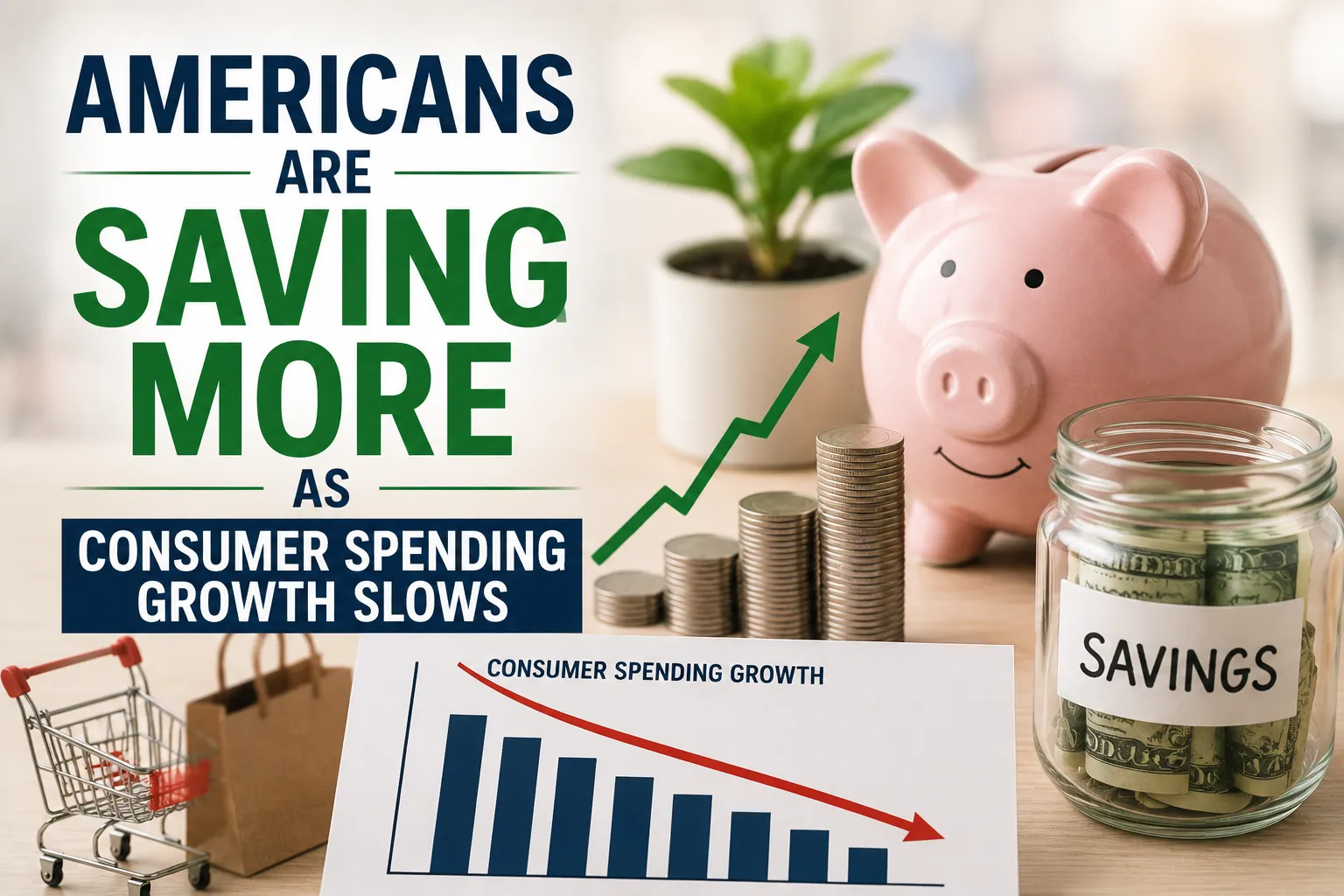
Recent spending data illustrates this relationship, with Americans saving more as consumer spending growth slows.
Consumers May Trade Down Rather Than Stop Spending
Budget-conscious consumers do not necessarily stop purchasing altogether.
Instead, they may look for cheaper alternatives.
A household might:
- Choose store brands over premium brands
- Shop at discount retailers
- Wait for sales
- Use coupons
- Compare prices more carefully
- Reduce the frequency of certain purchases
- Choose less expensive restaurants
This behavior is sometimes described as trading down.
It can allow consumers to maintain some level of spending while reducing the strain on their budgets.
Retailers Are Paying Attention
Consumer confidence can influence how retailers plan inventory, promotions and pricing.
If shoppers become more cautious, retailers may respond with:
- More discounts
- Promotional campaigns
- Lower-priced product options
- Loyalty incentives
- Smaller package sizes
- More aggressive competition for price-sensitive customers
Businesses have to determine whether weaker demand is temporary or part of a broader change in consumer behavior.
Businesses Also Watch Expectations
Confidence surveys are valuable partly because they capture expectations.
Consumers may be asked how they view:
- Current business conditions
- Employment prospects
- Personal finances
- Future economic conditions
- Major purchase decisions
Expectations can matter because economic behavior is partly forward-looking.
Someone who expects their income to increase may be more comfortable making a major purchase today.
Someone worried about job security may delay it.
Employment Expectations Could Be Especially Important
Household spending depends heavily on income.
A consumer who feels confident about keeping their job may be more willing to spend even when prices remain high.
But concerns about unemployment can quickly change that behavior.
Consumers may begin building cash reserves or cutting discretionary expenses if they believe their income could become less secure.
This is why employment-related questions within confidence surveys can be particularly useful to economists.
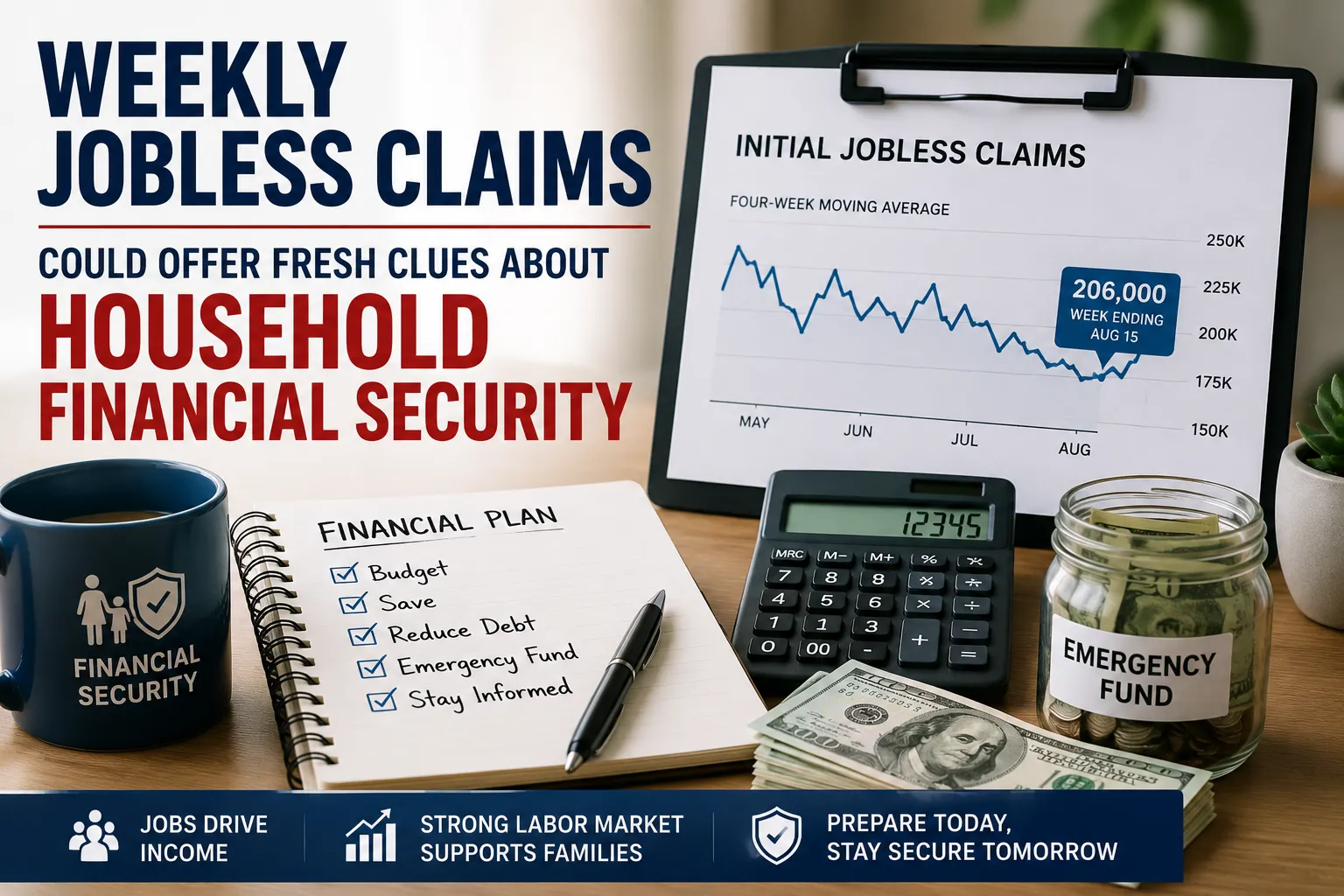
The connection between employment conditions and markets is explored further in how employment data influences financial markets.
Housing Costs Remain a Major Budget Issue
Housing is one of the largest expenses for many households.
Renters can face higher costs when leases renew.
Homeowners may face changes in insurance premiums, property taxes, maintenance costs and utility bills.
For prospective buyers, mortgage rates and home prices can determine whether purchasing a property fits within the household budget.
These pressures can influence confidence even when other parts of the economy appear relatively healthy.
Food Prices Can Shape Consumer Sentiment
Consumers encounter grocery prices frequently, making food costs highly visible.
A household may not closely track every economic indicator, but it is likely to notice when the weekly grocery bill changes.
This can influence perceptions of whether the economy is improving or becoming more difficult.
Food is also an area where consumers can respond quickly by switching brands, shopping at different stores or changing meal choices.
Insurance Costs Can Add Another Layer of Pressure
Household budgets are also affected by insurance.
Depending on location and individual circumstances, consumers may face changes in:
- Auto insurance
- Home insurance
- Health insurance
- Renters insurance
Insurance costs can be particularly frustrating because reducing coverage may not be a realistic option.
When unavoidable expenses rise, households may have less money available for discretionary spending.
What a Weak Confidence Reading Would Mean
A weak confidence reading would not necessarily indicate that the U.S. economy is entering a recession.
Consumer confidence can fluctuate because of:
- Inflation concerns
- Political uncertainty
- Financial-market volatility
- Employment expectations
- Interest rates
- News about economic conditions
Consumers can become pessimistic without immediately changing their spending behavior.
The more meaningful question is whether a decline in confidence is sustained and whether it is reflected in actual economic activity.
What a Strong Reading Would Mean
A stronger confidence reading could suggest that households feel more comfortable about their financial prospects.
That could support spending on:
- Travel
- Dining
- Retail goods
- Vehicles
- Home improvements
- Entertainment
But a strong confidence report would not necessarily eliminate concerns about household budgets.
Consumers can feel optimistic about the economy while still responding to high prices by shopping selectively.
Why Investors Care About the Data
Investors closely monitor consumer-related indicators because household spending can influence corporate revenue.
Companies that depend heavily on consumer demand may be particularly sensitive to changes in spending patterns.
If consumers become more cautious, investors may reassess expectations for retailers, restaurants, travel companies, entertainment businesses and other consumer-facing industries.
At the same time, companies positioned around value-oriented products may benefit if consumers increasingly prioritize affordability.
The Bigger Question Is Whether Consumers Are Running Out of Cushion
One of the most important issues for the economy is whether households still have enough financial flexibility to absorb higher costs.
During periods of strong income growth and healthy savings, consumers may tolerate rising prices relatively well.
But if savings decline, debt increases and income growth slows, households may have less room to maintain spending.
That could make future confidence readings more consequential.
How Households Can Respond to Greater Uncertainty
Consumers do not need to wait for an economic report before reviewing their own budgets.
A few practical steps can improve financial resilience:
Review Recurring Expenses
Look for subscriptions, services and recurring charges that are no longer necessary.
Prioritize High-Interest Debt
Reducing expensive revolving debt can free up money for future expenses.
Build an Emergency Fund
Even a modest cash reserve can reduce the need to rely on credit when an unexpected bill arrives.
Separate Needs From Wants
When budgets become tight, distinguishing essential expenses from discretionary purchases makes adjustment easier.
Compare Prices
Shopping around for insurance, utilities, groceries and major purchases can sometimes reduce costs.
Avoid Making Decisions Based Solely on Headlines
Economic reports provide useful information, but individual financial decisions should be based primarily on household income, expenses, debt and long-term goals.
What to Watch When the Report Arrives
The headline confidence number will attract attention, but several details may be more informative.
Watch for changes in:
- Expectations about personal finances
- Employment expectations
- Views of current economic conditions
- Intentions to purchase major goods
- Inflation expectations
- Differences between current sentiment and future expectations
The relationship between confidence and actual spending will also matter.
If confidence declines but retail activity remains resilient, consumers may be worried without being ready to materially change their behavior.
If both confidence and spending weaken, the signal would be considerably stronger.
Why One Report Rarely Tells the Whole Story
Economic data is most useful when viewed as a trend rather than a single number.
One month of weaker confidence can be noise.
Several consecutive readings showing worsening expectations may be more meaningful.
Likewise, a single strong reading does not necessarily prove that consumers are suddenly financially comfortable.
Economists and investors will likely compare the report with other indicators released around the same period.
The Household Budget May Be the Most Important Story
The next consumer confidence report could offer clues about whether Americans are becoming more cautious, but the real story will be how those attitudes translate into everyday financial decisions.
If households respond to persistent cost pressures by delaying large purchases, choosing cheaper alternatives, increasing savings or reducing discretionary spending, businesses could eventually feel the effects.
For individual consumers, however, greater caution is not necessarily a negative development. Building savings, managing debt and distinguishing essential spending from optional purchases can strengthen a household’s financial position regardless of where confidence moves next.
The most important question may not simply be whether Americans feel confident about the economy, but whether their paychecks still give them enough room to spend, save and handle the unexpected.