Consumer Confidence Falls: What It Could Mean for Household Spending and Saving
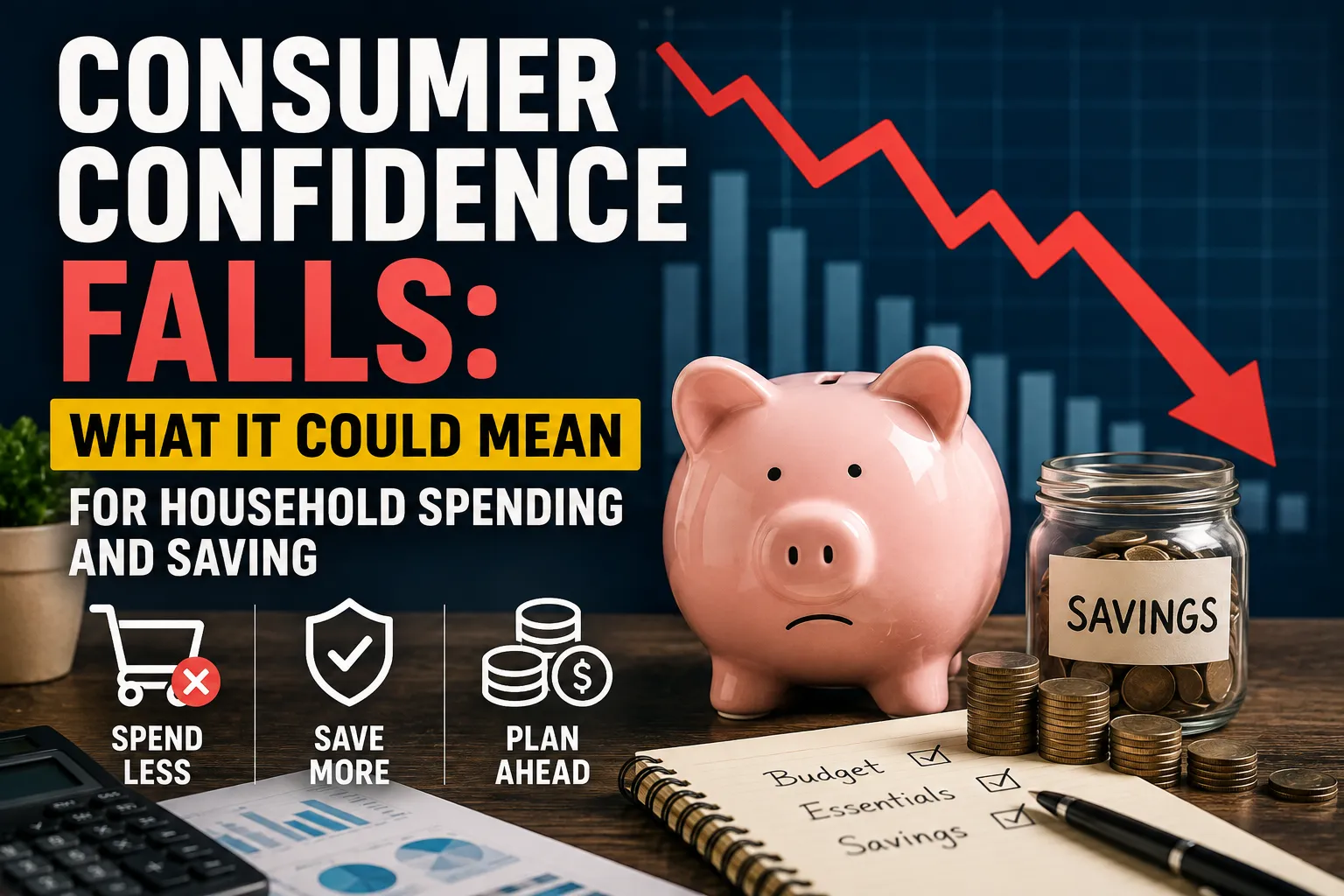
When consumer confidence falls, economists and investors often pay close attention. Confidence surveys can provide an early indication of how households feel about their finances, employment prospects and the broader economy.
For ordinary households, however, a decline in confidence is more than an economic statistic. It can influence everyday decisions about spending, saving, borrowing and making major purchases.
People who become less optimistic about the future may start delaying discretionary purchases, building larger cash reserves or looking more carefully at their household budgets. If enough consumers behave this way, the combined effect can eventually influence businesses and the wider economy.
Understanding what a decline in consumer confidence means can therefore help households make more deliberate financial decisions rather than reacting to economic headlines.
For broader context on how confidence, spending, employment and other indicators fit together, see this complete guide to economic indicators.
What Is Consumer Confidence?
Consumer confidence measures how optimistic or pessimistic households feel about the economy and their own financial circumstances.
Surveys typically ask people about areas such as:
- Current household finances
- Employment conditions
- Expected income
- General economic conditions
- Future financial prospects
- Plans to make major purchases
The exact methodology varies between consumer-confidence surveys, but the basic idea is similar: how do households feel about their financial situation and where the economy is heading?
A rising confidence reading generally suggests that consumers feel more comfortable about spending.
A falling reading can indicate greater caution.
Confidence is therefore not the same thing as actual consumer spending. People can feel pessimistic and continue spending because they need to pay for housing, food, transportation and other essentials. Likewise, people can feel optimistic while saving heavily for a future purchase.
Why Consumer Confidence Matters for Household Finances
Consumer confidence can influence financial behavior in several ways.
When people feel secure about their jobs and income, they may be more comfortable making discretionary purchases or taking on large financial commitments.
When uncertainty increases, households may become more conservative.
They might:
- Reduce restaurant and entertainment spending
- Delay buying furniture or electronics
- Postpone vacations
- Increase emergency savings
- Pay down credit-card balances
- Delay taking on new loans
- Search for cheaper alternatives
- Become more cautious about investments
These individual decisions may seem small, but consumer spending represents a significant part of economic activity.
If millions of households simultaneously become more cautious, businesses can eventually feel the effects.
A Confidence Decline Does Not Mean Consumers Stop Spending
One of the most important distinctions is between essential spending and discretionary spending.
Households cannot easily eliminate necessities such as:
- Food
- Housing
- Utilities
- Transportation
- Healthcare
- Insurance
- Basic household supplies
Instead, spending reductions often begin with purchases that can be postponed.
Someone who is uncertain about their financial future may still buy groceries but delay replacing a television.
A family may continue paying rent while postponing a vacation.
A homeowner may continue paying the mortgage while deciding not to renovate the kitchen immediately.
This is why a decline in confidence can affect some parts of the economy more quickly than others.
Falling Confidence Can Encourage More Saving
One potential consequence of weaker confidence is an increase in precautionary saving.
People often save more when they are uncertain about what lies ahead.
The reasoning is straightforward.
If a household worries about losing income, facing higher expenses or encountering an unexpected financial problem, having cash available provides a buffer.
That can lead people to prioritize:
- Emergency funds
- Short-term savings
- Debt repayment
- Cash reserves
- Lower-risk financial products
From an individual household’s perspective, this can be sensible.
A larger emergency fund can provide greater financial flexibility when circumstances change.
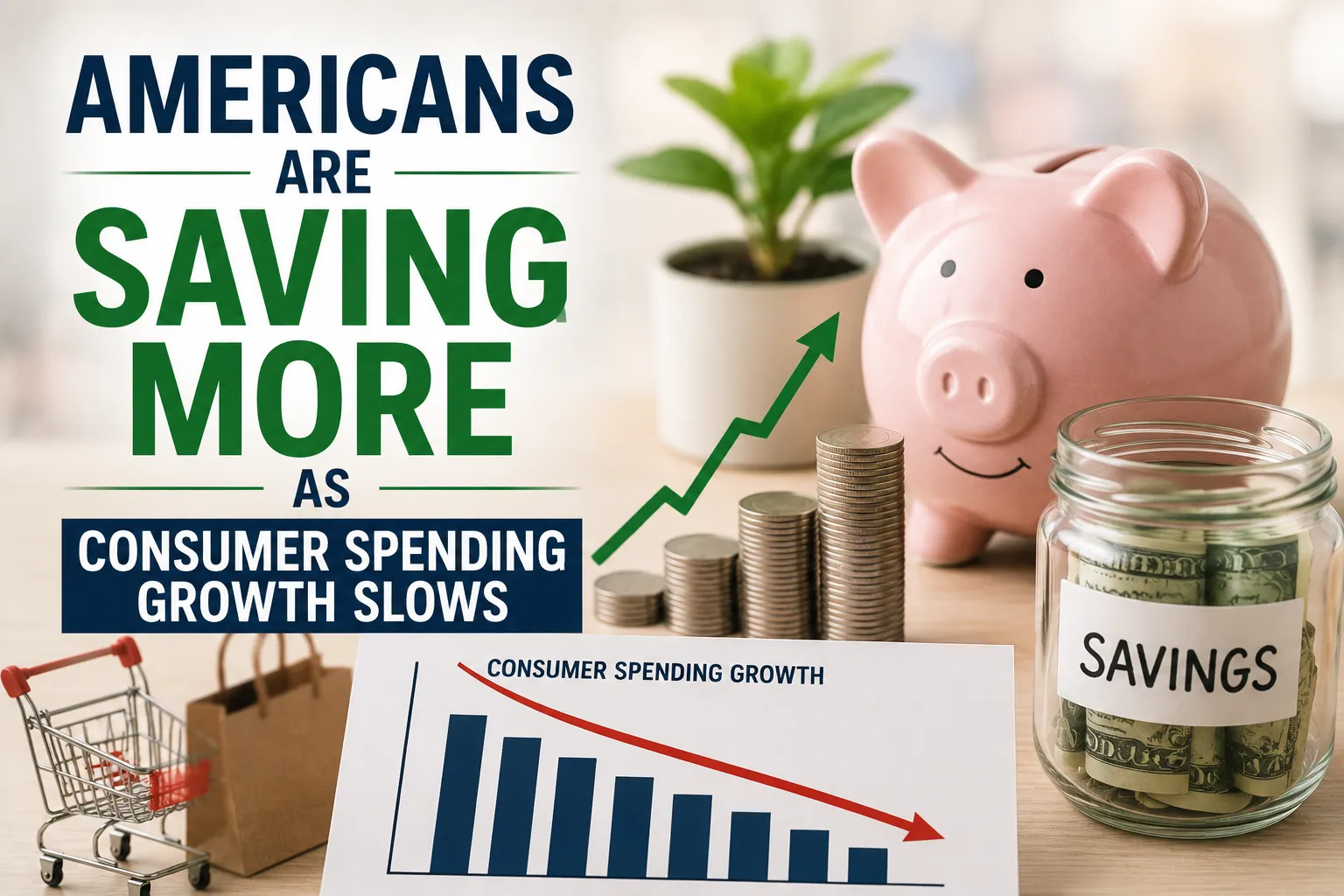
The relationship between stronger savings and slower spending can also be seen in how Americans are saving more as consumer spending growth slows.
Why Saving More Can Be a Positive Response
A decline in consumer confidence is not necessarily bad news for every household.
If lower confidence encourages someone to review their finances, eliminate unnecessary expenses and build an emergency fund, the result could strengthen their personal financial position.
For example, a household might discover that it has been spending heavily on subscriptions, dining out or impulse purchases.
Reducing those expenses could free money for savings without requiring major lifestyle changes.
Similarly, someone carrying expensive revolving debt might use a period of cautious spending to accelerate repayment.
The broader economy may prefer strong consumer spending, but an individual household can benefit from becoming financially resilient.
But Excessive Caution Can Have Costs
There is another side to the story.
If households become excessively cautious, they may postpone reasonable purchases or investments indefinitely.
A family might delay replacing an inefficient appliance even though a newer model could reduce operating costs.
Someone might avoid necessary home repairs until the problem becomes more expensive.
A worker might stop investing for retirement because of short-term economic anxiety.
This highlights an important distinction between financial caution and financial paralysis.
Being careful with money does not mean avoiding every expense.
It means separating essential spending, valuable spending and unnecessary spending.
Consumer Confidence Can Affect Big Purchases
Major purchases are especially sensitive to changes in economic sentiment.
Cars, homes, appliances, furniture and other expensive goods often require consumers to feel relatively confident about future income.
If people worry that their financial circumstances could deteriorate, they may delay such purchases.
This can create a feedback effect.
Businesses may see weaker demand, leading them to reduce production, hiring or investment. If households then become even more concerned about employment or income, confidence can weaken further.
The reverse can also happen when confidence improves.
Employment Expectations Matter
People’s perceptions of job security can have a major influence on financial decisions.
Someone with a stable job and predictable income may be more comfortable spending money than someone who fears layoffs or reduced working hours.
This is one reason consumer confidence can sometimes change before actual household finances deteriorate significantly.
People do not make financial decisions based only on what has already happened.
They also respond to what they expect might happen.
If workers believe economic conditions are becoming less favorable, they may start saving more even while their current income remains unchanged.
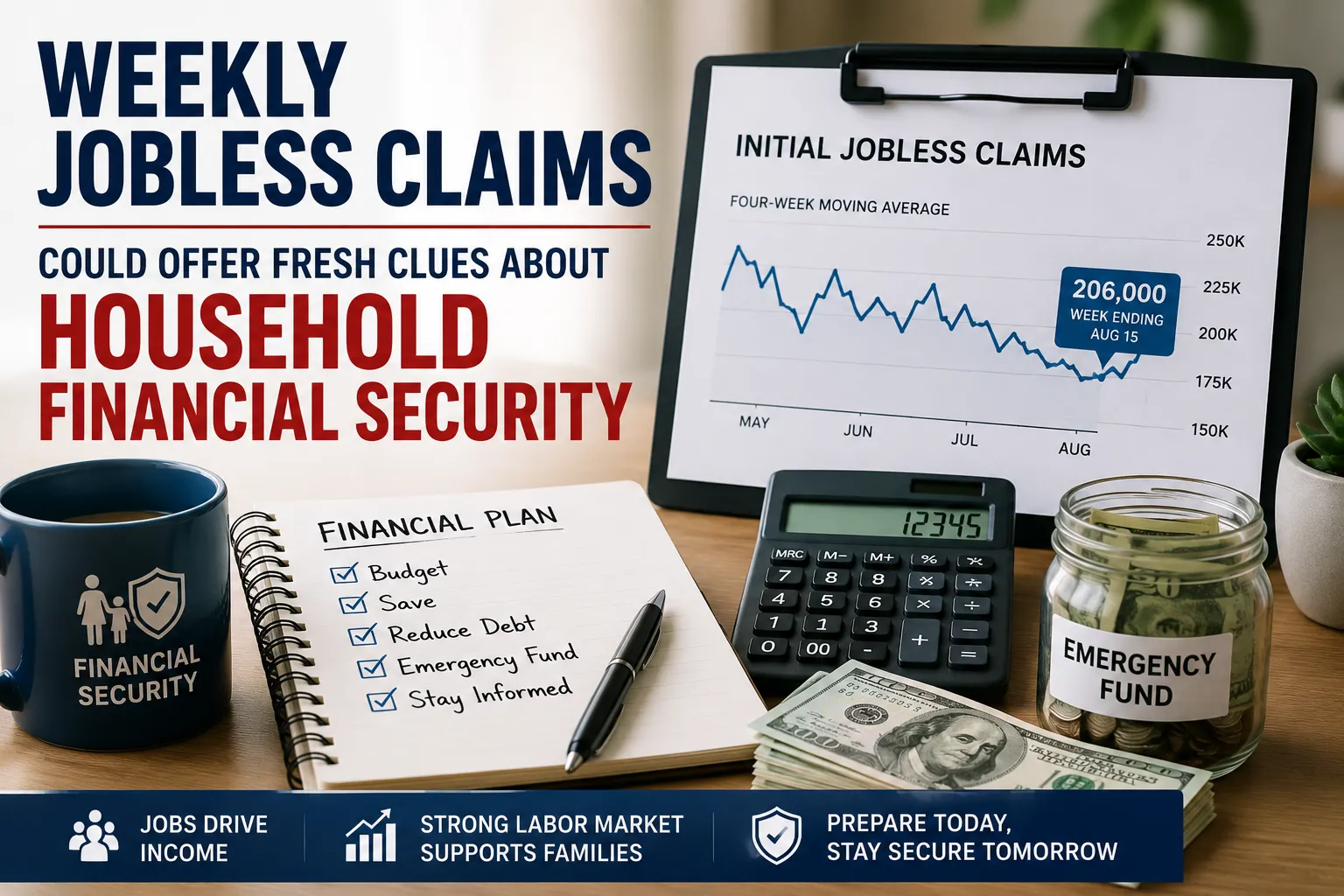
For another perspective on how employment conditions can influence markets and household finances, see how employment data influences financial markets.
Inflation Can Complicate the Picture
Consumer confidence can also be influenced by the cost of living.
Even when inflation slows, households may still be dealing with prices that are substantially higher than they were several years earlier.
That distinction matters.
A slower rate of price increases does not mean prices have returned to previous levels.
For households, the question is often less about the inflation rate itself and more about whether income is keeping up with the cost of necessities.
When food, housing, transportation and other essential costs consume a larger portion of income, households may have less money available for saving or discretionary spending.
Understanding this relationship is important when considering how inflation affects everyday finances.
Higher Interest Rates Can Change Household Decisions
Borrowing costs are another important factor.
When interest rates are elevated, loans and credit-card balances can become more expensive.
That can encourage households to delay borrowing or reduce existing debt.
For prospective homeowners, higher mortgage rates can significantly affect monthly payments.
For consumers financing cars or other large purchases, higher borrowing costs can also increase the total cost of ownership.
A decline in consumer confidence combined with expensive credit can therefore produce particularly cautious household behavior.
Credit-Card Spending Deserves Attention
Credit can temporarily support household spending, but it can also create financial pressure.
When confidence declines, households that rely heavily on credit may face a difficult choice.
They may continue spending to maintain their lifestyle, or they may reduce purchases to avoid accumulating additional debt.
The second approach is generally more sustainable when high-interest balances are involved.
A useful response to economic uncertainty is to review credit-card balances, interest rates and minimum payments before taking on new discretionary debt.
What Falling Confidence Could Mean for Household Budgets
A decline in consumer confidence can be a useful signal to revisit a household budget.
The goal is not to panic.
Instead, look at where money is currently going.
Divide expenses into three broad categories:
Essential Expenses
These are costs that are difficult to avoid, such as housing, utilities, food and necessary transportation.
Important but Flexible Expenses
These may include clothing, household improvements, entertainment and some forms of travel.
They are meaningful but can potentially be adjusted if circumstances change.
Discretionary Expenses
These include purchases that are enjoyable but not necessary.
Examples could include frequent restaurant meals, impulse purchases or subscriptions that are rarely used.
This structure can make it easier to identify where adjustments could be made if income becomes uncertain.
Build an Emergency Fund Before Chasing Returns
Economic uncertainty can reinforce the importance of maintaining accessible savings.
An emergency fund is designed for unexpected expenses rather than everyday spending.
Potential emergencies include:
- Job loss
- Major vehicle repairs
- Unexpected household repairs
- Urgent travel
- Significant medical or family expenses
The appropriate amount varies depending on income stability, household responsibilities and expenses.
Someone with highly predictable employment may have different needs from a household relying on irregular income.
The key is having enough accessible money to handle unexpected events without immediately relying on expensive debt.
Don’t Let Headlines Dictate Every Financial Decision
Economic news can be useful, but individual financial decisions should not be based entirely on one confidence reading.
Consumer confidence can rise and fall for many reasons.
A household should consider its own:
- Income
- Expenses
- Debt
- Savings
- Employment stability
- Financial goals
- Time horizon
Someone with a stable income, manageable debt and substantial savings may not need to dramatically change their financial plan because a confidence index falls.
Someone with little emergency savings and high-interest debt may have more reason to strengthen their finances.
The same economic headline can therefore have very different implications for different households.
Be Careful About Cutting Long-Term Investments
When confidence declines, investors may become tempted to move entirely into cash.
That reaction can be understandable, particularly when financial markets are volatile.
But long-term investments should generally be evaluated according to their intended time horizon rather than short-term economic sentiment.
Someone saving for retirement decades from now has a very different investment horizon from someone saving for a house they intend to purchase next year.
Selling long-term investments simply because economic confidence has weakened can turn temporary uncertainty into a permanent loss.
Financial decisions should be connected to specific goals and time horizons.
Delaying Purchases Can Sometimes Make Sense
Not every major purchase needs to happen immediately.
If a household is uncertain about its income, postponing a nonessential purchase can provide useful financial flexibility.
Before buying something expensive, consider:
- Is it necessary?
- Can the purchase wait?
- Can I pay without taking on expensive debt?
- Will buying it reduce my emergency savings too much?
- Is there a cheaper alternative?
- Does it support an important household need?
These questions can turn uncertainty into a practical budgeting exercise.
But Don’t Delay Necessary Maintenance
Caution can become counterproductive when it leads homeowners to ignore problems.
A small plumbing leak, damaged roof or malfunctioning appliance may become significantly more expensive if neglected.
Households should distinguish between postponing a luxury and postponing necessary maintenance.
The first can strengthen cash flow.
The second can sometimes increase future costs.
Consumer Confidence and the Wider Economy
Household behavior matters beyond individual budgets.
Consumer spending supports businesses across a wide range of industries.
When households spend confidently, businesses may experience stronger demand and respond by hiring workers, increasing inventories or investing in expansion.
When consumers pull back, businesses may face weaker sales.
That can affect hiring and investment decisions.
This is why economists watch consumer confidence alongside other indicators such as employment, inflation, retail sales, income growth and household debt.
No single indicator provides a complete picture of the economy.
Confidence Is About Expectations as Much as Reality
One reason consumer confidence is interesting is that it measures perception as well as economic conditions.
Two households with similar incomes can feel very differently about their finances.
One may feel secure because it has substantial savings and little debt.
Another may feel vulnerable because it has high monthly obligations.
Similarly, households may become pessimistic because of news coverage even when their own financial situations remain stable.
This makes confidence useful as a measure of sentiment, but not a perfect measure of household financial health.
How Households Can Respond to Economic Uncertainty
When confidence falls, households do not need to make dramatic changes overnight.
A practical response can involve several small steps:
- Review the household budget.
- Check how much emergency savings are available.
- Prioritize high-interest debt repayment.
- Separate essential purchases from optional ones.
- Review recurring subscriptions and unnecessary expenses.
- Avoid taking on debt for nonessential purchases.
- Continue appropriate long-term financial contributions.
- Consider whether insurance coverage remains adequate.
- Set specific short- and long-term savings goals.
- Base decisions on personal circumstances rather than headlines alone.
These steps can improve financial resilience whether the economy strengthens or weakens.
A Confidence Drop Can Be a Reason to Recheck the Financial Plan
Falling consumer confidence is not necessarily a prediction that a recession is coming, nor does it mean households should stop spending altogether.
It is better understood as a signal that people are becoming more cautious about their economic prospects.
For households, that can be an opportunity to step back and assess financial priorities.
A stronger emergency fund, manageable debt, controlled discretionary spending and consistent long-term saving can provide protection when economic conditions become uncertain.
The most useful response to weaker confidence is therefore not panic—it is preparation.
When households know where their money is going, understand which expenses can be adjusted and maintain savings for unexpected events, they have more freedom to navigate periods of economic uncertainty without allowing every change in consumer sentiment to dictate their financial choices.