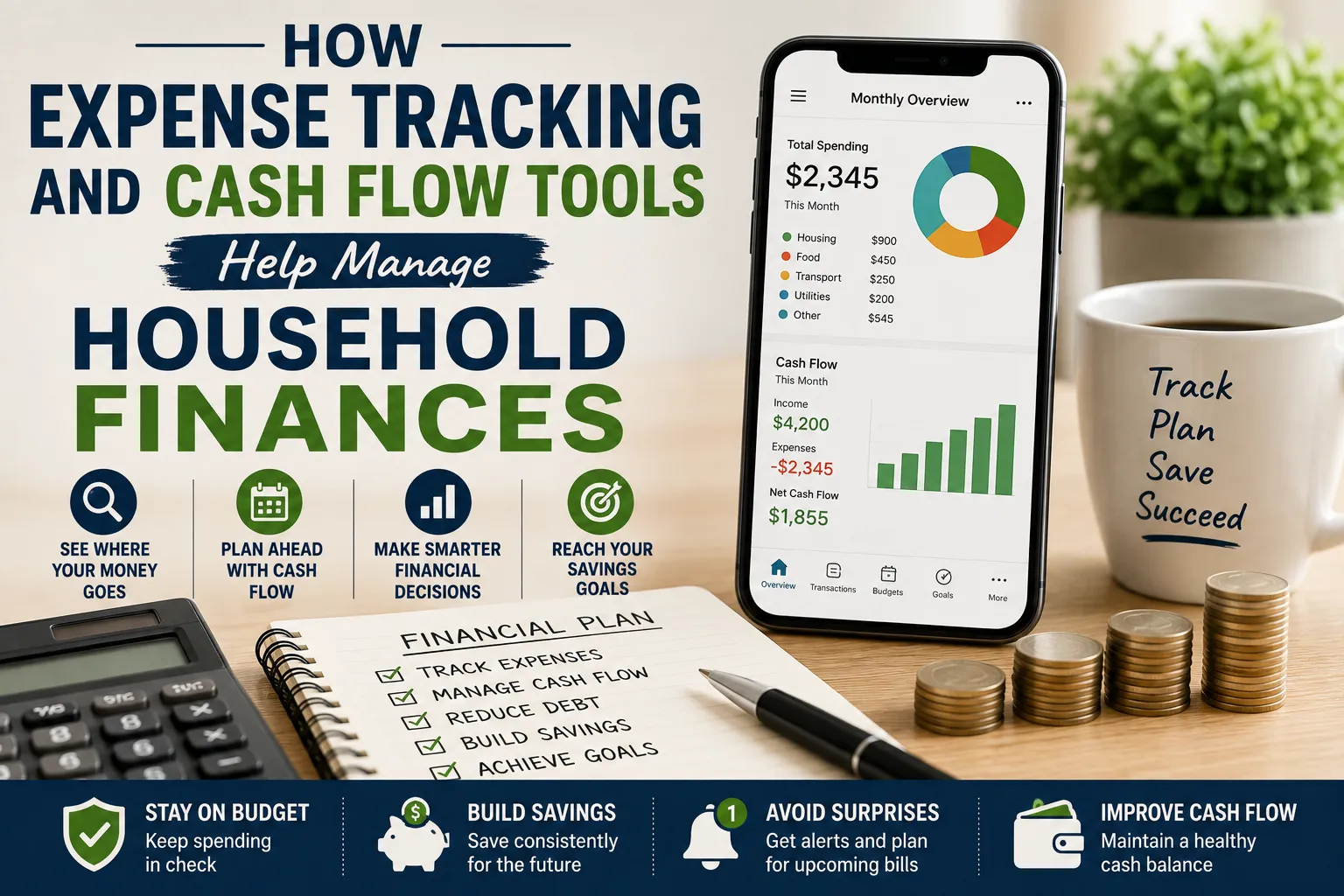
How Expense Tracking and Cash Flow Tools Help Manage Household Finances
Managing household finances can become difficult when money moves in many different directions each month. Bills, groceries, subscriptions, transportation, debt payments, savings and unexpected expenses can quickly make it hard to understand where income is actually going.
Expense tracking and cash flow tools can make that picture clearer.
These tools do not automatically fix financial problems or create more income. Their real value is helping households see, organize and understand their financial activity so they can make better decisions.
Whether it is a simple spreadsheet, budgeting app, banking dashboard or more sophisticated financial management software, the right tool can turn scattered transactions into useful information.
For a broader look at budgeting, savings, debt, financial dashboards and other ways technology can support household finances, see the Complete Guide to Money Management Tools.
What Is Expense Tracking?
Expense tracking is the process of recording and categorizing money that leaves a household.
Common categories include:
- Housing
- Utilities
- Groceries
- Transportation
- Healthcare
- Insurance
- Debt payments
- Entertainment
- Dining
- Shopping
- Education
- Savings
- Subscriptions
The objective is not necessarily to eliminate spending.
Instead, expense tracking answers a basic but important question:
Where is the household’s money actually going?
Without tracking, people often rely on estimates or memory. Those estimates can be surprisingly inaccurate.
A household might believe it spends a small amount on takeout, subscriptions or online shopping, only to discover that several small transactions add up to hundreds of dollars over a month.
What Is Cash Flow?
Cash flow looks at the movement of money into and out of a household over time.
Income represents money coming in.
Expenses represent money going out.
A simplified household cash flow calculation looks like:
Income − Expenses = Net Cash Flow
If income consistently exceeds expenses, the household has positive cash flow.
If expenses regularly exceed income, the household has negative cash flow.
Cash flow management goes beyond simply knowing how much was spent last month. It focuses on when money arrives and when payments are due.
That timing can be particularly important for households with irregular income.
Why Expense Tracking and Cash Flow Are Different
Expense tracking and cash flow management are closely related, but they answer different questions.
Expense tracking asks:
“What did we spend?”
Cash flow management asks:
“When is money coming in, when is it going out, and will we have enough available when payments are due?”
For example, a household may have enough income to cover all monthly expenses but still experience a temporary cash shortage if several large bills arrive before payday.
Tracking spending reveals the amount.
Cash flow planning reveals the timing.
Together, they provide a more complete view of household finances.
The Problem With Relying on a Bank Balance
A bank balance can provide useful information, but it does not necessarily tell you how much money is actually available for discretionary spending.
Suppose a household has $2,000 in its account.
That sounds healthy until upcoming obligations are considered:
- $900 rent
- $300 utility and insurance payments
- $250 debt payment
- $200 groceries
- $150 transportation
The apparent $2,000 balance is not really $2,000 of available spending money.
Cash flow tools can help separate money currently in the account from money already committed to upcoming expenses.
Tracking Reveals Spending Patterns
One of the most useful features of expense tracking is its ability to reveal patterns.
A single restaurant purchase may not matter much.
But repeated restaurant purchases throughout the month can become a significant expense category.
The same applies to:
- Delivery fees
- Streaming services
- Mobile apps
- Online shopping
- Coffee
- Transportation
- Convenience purchases
The important insight is not that individual purchases are necessarily bad.
It is that small recurring decisions can have a much larger effect when viewed together.
Categorization Makes Spending Easier to Understand
A long list of transactions can be difficult to interpret.
Categorization turns that list into meaningful groups.
For example:
| Category | Monthly Spending |
|---|---|
| Housing | $1,200 |
| Groceries | $450 |
| Transportation | $250 |
| Utilities | $200 |
| Dining & Entertainment | $300 |
| Subscriptions | $80 |
| Debt Payments | $350 |
| Other | $170 |
This immediately provides more information than a bank statement containing dozens of individual transactions.
It also makes it easier to identify categories that deserve closer attention.
Cash Flow Tools Help With Timing
A household may have an annual income that comfortably exceeds annual expenses and still struggle with cash flow.
This can happen when income and expenses occur at different times.
For example, someone paid monthly may have several large bills due during the first week of the month.
Someone who earns irregular freelance income may receive substantial payments one month and very little the next.
A cash flow calendar can show:
- Expected income dates
- Bill due dates
- Debt payments
- Rent or mortgage payments
- Insurance payments
- Annual expenses
- Planned purchases
This helps households anticipate periods when cash may become tight.
Forecasting Can Prevent Financial Surprises
Cash flow tools can use current information to estimate what the household’s finances may look like in the coming weeks or months.
A basic forecast might include:
Starting balance + expected income − expected expenses = projected ending balance
This is not a guarantee.
Income can change, expenses can appear unexpectedly and forecasts can be wrong.
But even a simple projection can provide an early warning.
If the forecast shows that the household may fall below its desired cash reserve next month, there is time to adjust spending or prepare for the shortfall.
Tracking Can Help Control Recurring Expenses
Recurring expenses are particularly easy to overlook.
A subscription may cost only a few dollars each month, but multiple subscriptions can become a meaningful annual expense.
Expense tracking can identify recurring charges for:
- Streaming services
- Cloud storage
- Software
- Fitness memberships
- News services
- Gaming
- Delivery programs
- Digital subscriptions
Reviewing these expenses periodically can help households determine which services still provide enough value to justify their cost.
Tools Can Help Separate Needs From Wants
A budgeting tool can make it easier to distinguish essential expenses from discretionary spending.
Essential expenses may include:
- Housing
- Food
- Utilities
- Healthcare
- Insurance
- Transportation
- Minimum debt payments
Discretionary expenses may include:
- Entertainment
- Travel
- Dining out
- Hobbies
- Nonessential shopping
The distinction is useful during financially difficult periods because discretionary categories can often be adjusted more easily.
Expense Tracking Can Improve Budget Accuracy
Many budgets fail because their numbers are based on guesses.
Someone might estimate that groceries cost $300 per month because that sounds reasonable.
Actual spending may be $450.
If the budget uses $300, the household is effectively starting each month with a $150 gap.
Tracking several months of real transactions can produce a much more realistic spending baseline.
Historical Data Makes Planning Better
Past spending provides useful information for future planning.
If a household tracks expenses for six or twelve months, it may identify recurring patterns.
For example:
- Electricity rises during certain seasons.
- School expenses occur at predictable times.
- Vehicle maintenance appears periodically.
- Insurance is paid annually.
- Holiday spending increases toward the end of the year.
This information can be used to create sinking funds for predictable expenses.
Sinking Funds Turn Large Bills Into Smaller Contributions
A sinking fund is money set aside gradually for a known future expense.
Suppose an annual insurance bill is $1,200.
Instead of finding $1,200 when the bill arrives, a household could set aside approximately $100 per month.
The same approach can work for:
- Property taxes
- School fees
- Vehicle maintenance
- Holidays
- Home repairs
- Annual memberships
- Insurance premiums
Cash flow tools can help track progress toward these future obligations.
Tools Can Support Emergency Fund Planning
An emergency fund provides cash for unexpected expenses or temporary income disruptions.
Expense tracking can help determine how much an appropriate emergency reserve might need to cover.
Rather than calculating the fund based on total spending, households can identify essential monthly expenses.
For example:
Essential monthly expenses × desired number of months = emergency fund target
The appropriate number of months varies depending on employment stability, household circumstances, income variability and other resources.
The important point is that expense tracking provides the data needed to make the estimate realistic.
Cash Flow Tools Can Help Manage Irregular Income
Traditional monthly budgets can be challenging for freelancers, contractors, business owners and other people whose income fluctuates.
Instead of assuming the same income every month, a cash flow system can track:
- Expected payments
- Confirmed payments
- Outstanding invoices
- Average monthly income
- Low-income periods
- High-income periods
This can encourage households to budget based on conservative income estimates rather than assuming every month will be unusually strong.
Avoid Spending Based on an Exceptional Month
Irregular income can create a dangerous cycle.
A household may receive an unusually large payment and increase its spending accordingly.
Then income falls the following month while the higher expenses remain.
Cash flow tracking can reveal the difference between:
Normal income
and
temporary income spikes.
That distinction can help households avoid turning a strong month into a permanent increase in lifestyle costs.
Cash Flow Management Can Improve Bill Planning
Missing a bill does not always mean someone lacks enough money.
Sometimes the problem is simply organization.
A cash flow calendar can help track when bills are due and when income is expected.
Households can then decide whether to:
- Move payment dates where possible
- Set aside money earlier
- Automate payments
- Maintain a larger checking-account buffer
This can reduce the risk of late payments and unnecessary fees.
Automating Transactions Can Reduce Administrative Work
Many financial tools can connect with bank accounts or allow users to import transactions.
Automation can help with:
- Categorizing expenses
- Tracking recurring payments
- Updating balances
- Sending reminders
- Creating spending reports
- Monitoring budgets
However, automation should not mean ignoring the finances.
Transactions can be categorized incorrectly, accounts can disconnect and unexpected charges can appear.
A quick review each week or month can help catch mistakes.
Budget Alerts Can Provide Early Warnings
Some tools allow users to set spending limits.
For example, a household might establish a monthly target for dining or entertainment.
When spending approaches the limit, the tool can provide an alert.
These notifications can be useful because they turn budgeting into an ongoing process rather than something reviewed only after the month is over.
Cash Flow Tools Can Help Couples Coordinate
Households with multiple earners can benefit from a shared financial picture.
Partners may have different accounts and spending habits, but they still need to understand the household’s overall position.
A shared system can show:
- Total household income
- Shared expenses
- Individual spending
- Savings contributions
- Debt payments
- Upcoming obligations
The exact arrangement depends on the couple.
Some prefer fully joint finances, while others maintain separate accounts and contribute to shared expenses.
The technology should support the household’s chosen system rather than dictate it.
Tools Can Help Families Plan for Major Purchases
Large purchases are easier to evaluate when their effect on future cash flow is visible.
Before buying a vehicle, appliance, vacation or other major item, consider:
- Purchase price
- Financing costs
- Insurance
- Maintenance
- Taxes and fees
- Ongoing operating costs
- Opportunity cost of using savings
A cash flow projection can show whether the purchase fits comfortably within the household’s financial capacity.
Debt Management Becomes Easier With Better Visibility
Expense tracking can reveal how much money is available for debt repayment.
A debt-tracking tool can also organize:
- Balance
- Interest rate
- Minimum payment
- Due date
- Remaining term
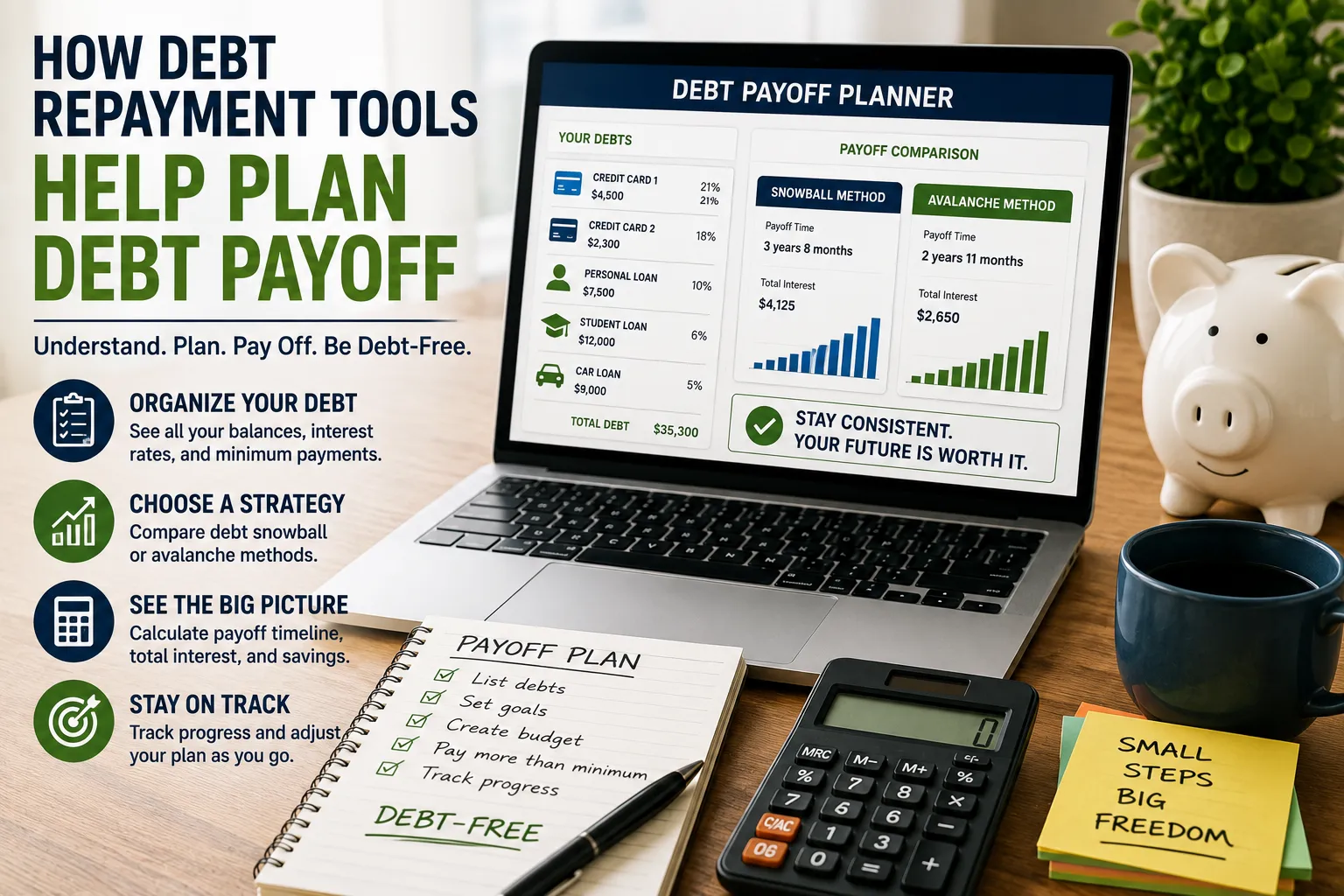
This can make repayment strategies easier to compare.
For example, a household may decide to prioritize high-interest debt while continuing minimum payments on lower-interest obligations.
The important thing is to understand the complete financial picture before deciding how aggressively to repay debt.
Tracking Can Support Savings Goals
Saving becomes easier when a goal has a defined amount and timeline.
Instead of saying:
“We should save more.”
A household can create a specific target:
“We want to save $2,400 for a home repair fund over 12 months.”
That requires approximately $200 per month.
A financial tool can track progress and show whether the household is on schedule.
The same principle can apply to:
- Emergency savings
- Education
- Travel
- Home improvements
- Vehicle purchases
- Retirement
- Business expenses
Financial Dashboards Make Trends Easier to See
A useful dashboard can summarize information such as:
- Total income
- Total spending
- Savings rate
- Debt balances
- Net cash flow
- Account balances
- Spending by category
- Upcoming bills
The benefit is not visual complexity.
It is the ability to see important information quickly.
A good dashboard should answer practical questions without requiring the user to analyze dozens of transactions.
The Best Tool May Be a Simple Spreadsheet
Households do not necessarily need expensive financial software.
A spreadsheet can track:
- Income
- Expenses
- Categories
- Savings
- Debt
- Upcoming bills
- Cash flow
Spreadsheets offer flexibility and can be customized to a household’s exact needs.
They can also be useful for people who prefer manually reviewing transactions rather than linking financial accounts to an application.
Budgeting Apps Can Reduce Manual Work
Dedicated budgeting applications can automate much of the tracking process.
Depending on the product, features may include:
- Account synchronization
- Automatic categorization
- Budget alerts
- Cash flow forecasts
- Goal tracking
- Debt monitoring
- Spending reports
However, features vary considerably between services.
Households should evaluate privacy practices, security features, pricing and data-sharing policies before connecting financial accounts.
Bank Tools Can Be Enough for Some Households
Many banks already provide financial management features.
These may include:
- Spending categories
- Transaction searches
- Budgeting tools
- Account alerts
- Recurring payment information
- Cash flow summaries
Using tools already available through a financial institution can be a convenient starting point.
It also reduces the need to maintain another service.
Choose Tools Based on the Problem You Need to Solve
The most sophisticated tool is not necessarily the best one.
If the main problem is overspending, expense categorization and spending alerts may be enough.
If the problem is irregular income, cash flow forecasting may matter more.
If the goal is saving for multiple objectives, goal tracking may be more useful.
If debt is the main concern, a debt payoff tracker may provide greater value.
Start with the financial problem, then choose the technology.
Privacy Should Be Part of the Decision
Financial data is highly sensitive.
Before connecting accounts to a third-party financial tool, review:
- What information the service collects
- How information is stored
- Whether data is shared with third parties
- Security practices
- Account access permissions
- Data deletion policies
- Whether multi-factor authentication is available
Users should also protect their financial accounts with strong, unique passwords and appropriate security controls.
Convenience should not come at the expense of financial privacy.
Don’t Give Every Tool Full Access Automatically
Account aggregation can make financial tracking convenient, but households should understand what permissions they are granting.
If a tool only needs transaction information, users should understand whether it can also initiate transfers or perform other actions.
Use the minimum access necessary for the intended purpose where the platform allows it.
Review Automatic Categorization
Automatic categorization can save time, but it is not always accurate.
A transaction at a supermarket might be categorized as groceries even if it included household products.
A payment to an online retailer might contain clothing, electronics or other purchases.
Occasionally reviewing categories helps keep spending reports useful.
The quality of financial decisions depends partly on the quality of the underlying data.
Don’t Become Obsessed With Every Transaction
Tracking is useful when it improves decision-making.
It becomes counterproductive when every small purchase creates stress or excessive monitoring.
The goal is not perfect financial surveillance.
The goal is awareness.
For some households, weekly reviews are enough.
Others may prefer a quick daily check.
The right frequency is the one that provides useful information without becoming burdensome.
Use Monthly Reviews to Find Trends
A monthly financial review can be remarkably effective.
Set aside time to examine:
- Total income
- Total expenses
- Major changes
- Savings progress
- Debt payments
- Upcoming expenses
- Unusual transactions
Then ask one simple question:
What should we change next month?
This keeps financial management focused on action rather than simply collecting data.
Turn Financial Data Into Decisions
A tracking tool is only useful if the information leads to better decisions.
For example:
Data: Dining spending increased significantly.
Decision: Set a monthly restaurant budget.
Or:
Data: Several annual bills arrive in the same month.
Decision: Create sinking funds throughout the year.
Or:
Data: Cash consistently becomes tight before payday.
Decision: Build a larger checking-account buffer or adjust payment timing.
The process should always move from information to insight to action.
Use Cash Flow Forecasts for “What If” Scenarios
One of the most powerful applications of cash flow tools is scenario planning.
A household can ask:
What happens if income falls by 10%?
What happens if rent increases?
What happens if we add a car payment?
What happens if childcare costs rise?
What happens if one income temporarily disappears?
Running these scenarios can expose vulnerabilities before they become real problems.
Keep Separate Accounts for Specific Purposes
Some households find it easier to manage cash flow by separating money into different accounts.
For example:
- Bills account
- Everyday spending account
- Emergency savings
- Long-term savings
This is not necessary for everyone, but it can create clearer boundaries.
The key is to avoid opening so many accounts that the system becomes difficult to manage.
Don’t Confuse Net Worth With Cash Flow
Net worth and cash flow measure different things.
Net worth is roughly:
Assets − Liabilities
Cash flow measures:
Money coming in − money going out over a period
A household can have substantial assets but poor monthly cash flow.
Another household may have modest net worth but strong, consistent cash flow.
Both measurements are useful.
Expense and cash flow tools primarily help with the second problem, although some financial platforms also track net worth.
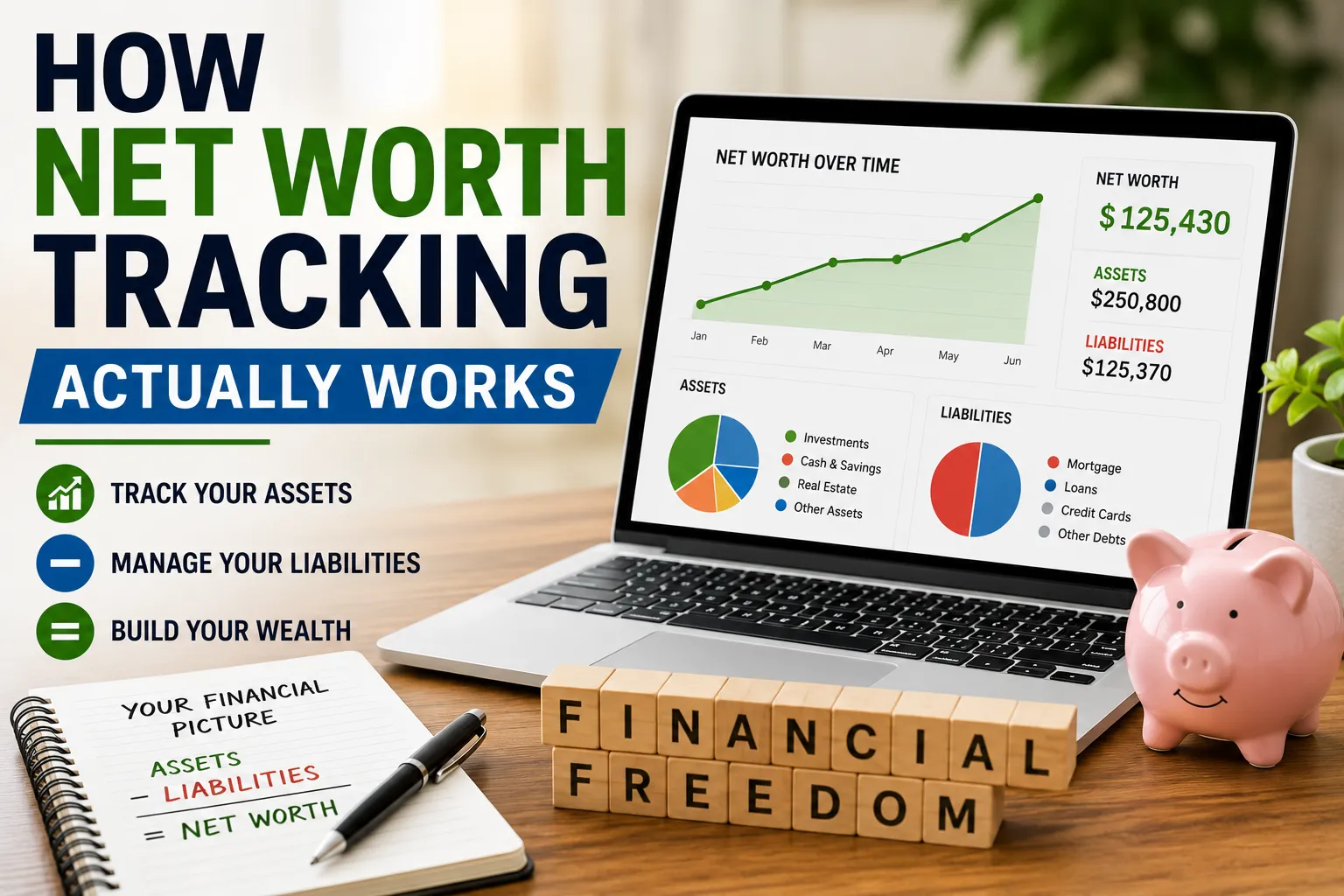
For households interested in understanding the broader picture of assets and liabilities, How Net Worth Tracking Actually Works explains how net-worth monitoring can complement cash-flow management.
Watch the Savings Rate
A household can also track how much of its income is being saved.
A simplified savings-rate calculation is:
Savings ÷ Income × 100
For example, if a household earns $5,000 and saves $750:
$750 ÷ $5,000 × 100 = 15%
The ideal savings rate varies based on household goals, income, debt and life stage.
Tracking the trend can be more useful than focusing on a universal target.
Financial Tools Can Help During Major Life Changes
Expense and cash flow tracking become particularly valuable when circumstances change.
Examples include:
- Marriage
- Having a child
- Moving
- Changing jobs
- Starting a business
- Divorce
- Supporting relatives
- Buying a home
- Preparing for retirement
During these periods, old spending patterns may no longer apply.
A current view of income and expenses can help households adjust quickly.
Keep the System Simple Enough to Maintain
A financial management system that takes hours every week may eventually be abandoned.
The best system is usually one the household can maintain consistently.
A simple setup might require only:
- Tracking income
- Categorizing expenses
- Reviewing upcoming bills
- Checking savings progress
- Reviewing cash flow once a month
More complexity can be added if necessary.
A Practical Household Cash Flow Routine
A simple routine could look like this:
Weekly
Review new transactions and check for unusual spending.
Monthly
Compare actual spending with the budget.
Quarterly
Review recurring expenses, savings goals and debt progress.
Annually
Review insurance, major financial goals, subscriptions and expected large expenses.
This creates a financial rhythm without requiring constant attention.
Common Mistakes to Avoid
Tracking without changing behavior
Recording expenses is not the same as managing them.
Setting unrealistic budgets
A budget should reflect real spending patterns while supporting financial goals.
Ignoring irregular expenses
Annual and occasional expenses still need to be funded.
Focusing only on income
A higher income does not automatically create financial stability if spending rises at the same pace.
Forgetting cash-flow timing
A profitable month on paper can still contain a temporary cash shortage.
Using too many tools
Multiple overlapping apps can create confusion instead of clarity.
Ignoring privacy
Financial convenience should always be weighed against data-security considerations.
How to Get Started
A household that has never tracked expenses can begin with a simple process.
Step 1: Record all income.
List regular and irregular sources.
Step 2: Track every expense for one month.
Do not try to change behavior immediately. First collect reliable information.
Step 3: Categorize transactions.
Group expenses into useful categories.
Step 4: Identify recurring costs.
Look for subscriptions, memberships and automatic payments.
Step 5: Build a cash flow calendar.
Add expected income and major bills.
Step 6: Compare spending with income.
Determine whether cash flow is positive or negative.
Step 7: Choose one or two areas to improve.
Avoid trying to overhaul everything at once.
Step 8: Review the results next month.
Use actual data to refine the budget.
When Technology Becomes a Financial Assistant
The greatest value of expense tracking and cash flow tools is not that they make household finances complicated.
It is that they can make financial information easier to understand.
A good system can show where money is going, identify recurring patterns, highlight upcoming shortages and provide a clearer view of progress toward financial goals.
But technology is only an assistant.
It cannot decide whether a purchase is worthwhile, determine which financial priorities matter most or replace thoughtful household conversations.
Those decisions still belong to the people managing the money.
Turn Financial Visibility Into Better Household Decisions
Managing household finances becomes easier when money stops being an abstract number and becomes something that can be observed, categorized and planned.
Expense tracking shows what has already happened.
Cash flow forecasting helps anticipate what is coming next.
Budgeting connects those insights to financial goals.
Together, these tools can help households identify unnecessary spending, prepare for large expenses, build savings, manage debt and make better decisions about their available cash.
For households that identify unnecessary spending as a recurring problem, a focused strategy such as How to Reduce Unnecessary Household Spending can help turn spending data into practical changes.
The objective is not to monitor every transaction forever. It is to develop enough financial visibility to understand the household’s position and respond before small problems become expensive ones.
The most useful financial tool is ultimately the one that turns better information into better decisions.