How to Choose the Right Bank Account for Your Financial Needs
Choosing a bank account can seem like a straightforward decision. Most accounts allow you to deposit money, withdraw cash and make payments, so it is easy to assume that one account is much like another.
In reality, bank accounts can differ significantly in fees, interest rates, access options, minimum balances and additional features. The account that works well for one person may be a poor fit for someone with very different spending and saving habits.
The right choice starts with understanding what you actually need from a bank account rather than simply choosing the most familiar bank or the account with the most features.
For a broader overview of the different types of bank accounts and how they work, see this complete guide to bank accounts and account types.
Start by Identifying Your Main Financial Goal
Before comparing banks, determine what you want the account to accomplish.
A checking or current account is generally designed for everyday money management, while a savings account is intended to help you set aside money and potentially earn interest.
You may also need an account specifically for:
- Everyday spending
- Building emergency savings
- Saving for a major purchase
- Receiving a salary
- Managing household bills
- Managing a business
- Keeping money separate from everyday spending
- Earning interest on money you do not immediately need
Knowing the primary purpose makes it easier to eliminate accounts that do not fit your needs.
Understand the Different Types of Bank Accounts
Banks offer several types of accounts, and their names and features can vary between institutions.
Checking or Current Accounts
These accounts are generally designed for frequent transactions.
They may provide access to:
- Debit cards
- Online banking
- Mobile banking
- Electronic transfers
- Bill payments
- ATM withdrawals
- Direct deposits
If you regularly receive income and pay household expenses, an everyday transaction account may be the most important account you have.
Savings Accounts
Savings accounts are designed for money that you do not expect to spend regularly.
They may pay interest on your balance and can be useful for emergency funds, planned purchases and other financial goals.
Because savings accounts can have different withdrawal rules and interest structures, compare the conditions carefully.
Fixed-Term or Time Deposit Accounts
These accounts may offer a predetermined interest rate in exchange for keeping money deposited for a specified period.
They can be useful when you have money that you are confident you will not need immediately.
However, early withdrawal may result in penalties, reduced interest or other restrictions depending on the institution and account terms.
Compare Fees Carefully
A bank account that appears free may still involve charges for certain services.
Potential fees can include:
- Monthly maintenance fees
- ATM fees
- Out-of-network withdrawal fees
- Transfer fees
- Overdraft charges
- Card replacement fees
- International transaction fees
- Cash deposit fees
- Account closure fees
- Minimum-balance fees
Read the fee schedule before opening an account.
A small charge may not seem significant individually, but repeated fees can reduce the value of your account over time.
For a detailed breakdown of common charges and strategies for reducing them, see banking fees explained and how to avoid them.
Look at the Minimum Balance Requirement
Some accounts require you to maintain a minimum balance.
If you fall below that amount, the bank may charge a fee or change the account’s benefits.
Consider whether you can comfortably maintain the required balance.
An account offering attractive features is less appealing if you regularly risk paying fees because your balance fluctuates.
Check the Interest Rate
If an account pays interest, do not look only at the headline rate.
Consider how the interest is calculated and paid.
Important questions include:
- Is the rate fixed or variable?
- Is there a minimum balance?
- Does the entire balance earn interest?
- How frequently is interest credited?
- Can the rate change?
- Are there conditions attached to earning the advertised rate?
For savings accounts, these details can make a meaningful difference over time.
Consider How Easily You Can Access Your Money
Convenience matters.
Think about how you normally access your money.
Do you prefer:
- Mobile banking?
- Online banking?
- ATMs?
- Physical branches?
- Debit cards?
- Bank transfers?
- Cash deposits?
If you frequently use cash, access to convenient ATMs or branches may be important.
If you rarely visit a branch, strong digital banking services may matter more.
Evaluate the Mobile Banking Experience
For many customers, a smartphone is effectively their primary connection to their bank.
A useful mobile banking application may allow you to:
- Check balances
- Transfer money
- Pay bills
- Review transactions
- Freeze or manage cards
- Receive account alerts
- Deposit eligible checks
- Contact customer support
Look beyond appearance.
Reliability, security, transaction speed and the availability of essential features are more important than a visually impressive interface.
For more information about how online and mobile banking services work, see how digital banking and online banking work.
Think About ATM Access
ATM availability can make a noticeable difference for people who frequently use cash.
Check:
- How many ATMs are available
- Whether your bank operates its own network
- Whether other ATMs can be used
- What fees apply
- Whether ATM fees are reimbursed
- Whether withdrawal limits meet your needs
Someone who rarely uses cash may not care about extensive ATM access, while a cash-heavy household may consider it essential.
Consider Branch Locations
Digital banking has reduced the need for physical branches for many customers, but branches can still be useful.
You may value branch access if you regularly need:
- Cash deposits
- Large withdrawals
- In-person assistance
- Certified documents
- Complex account services
If branch access is important to you, check whether locations are conveniently situated near your home, workplace or other places you frequently visit.
Review Transfer Options
Moving money efficiently can be just as important as accessing it.
Check whether the account supports the types of transfers you regularly use.
These may include:
- Bank-to-bank transfers
- Mobile money transfers
- Domestic transfers
- International transfers
- Scheduled payments
- Salary deposits
Pay attention to transaction limits and associated charges.
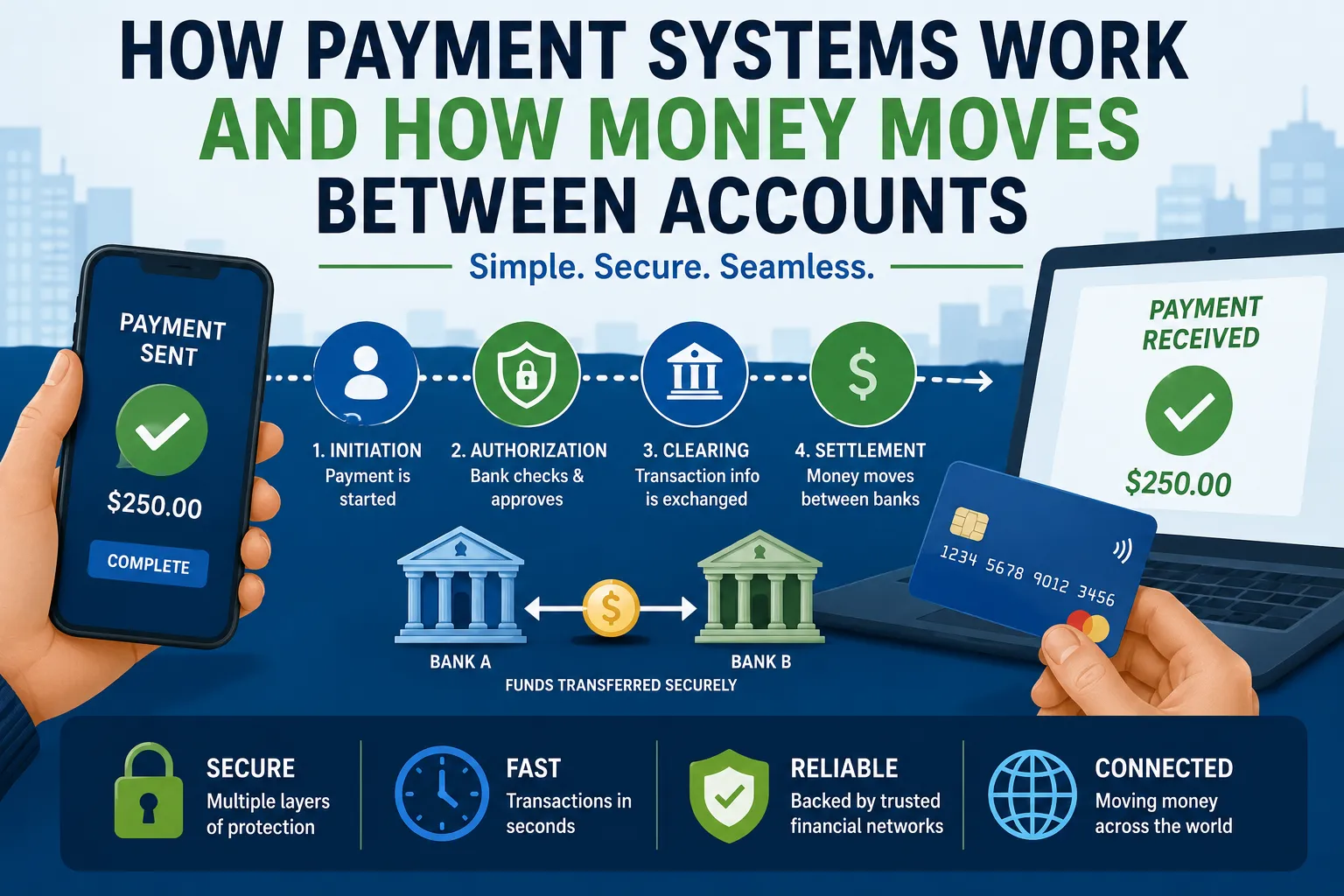
For a deeper explanation of how transfers and other payment methods move money between accounts, see how payment systems work and how money moves between accounts.
Look at Transaction Limits
Some accounts impose limits on certain types of transactions.
These may involve:
- Daily ATM withdrawals
- Online transfers
- Cash deposits
- International transactions
- Card purchases
If your financial activity is unusually high, make sure the account can accommodate your normal transaction volume.
Consider Overdraft Protection Carefully
Overdraft services can prevent certain transactions from being declined when an account lacks sufficient funds.
However, overdraft protection is not necessarily free.
Depending on the account, it can involve fees, interest or transfers from another account.
Rather than viewing overdraft access as extra spending capacity, consider it a backup feature and understand exactly what it costs.
Check Card Features
If your account includes a debit card, examine the card’s practical features.
Consider:
- Where it can be used
- Contactless payment availability
- Online purchase support
- ATM access
- Transaction limits
- Card controls
- Replacement procedures
- International usage
The best card is one that works reliably for the transactions you actually make.
Consider Foreign Transactions
People who travel internationally or regularly receive or send money across borders should pay particular attention to foreign transaction costs.
Possible charges include:
- Currency conversion fees
- International transfer fees
- Foreign ATM charges
- Cross-border payment fees
Exchange rates can also have a significant effect on the amount ultimately received or spent.
Compare the total cost of international transactions rather than looking at one fee in isolation.
Examine Security Features
Security should be one of the most important considerations when selecting a bank.
Look for features such as:
- Two-factor authentication
- Transaction notifications
- Card controls
- Login alerts
- Biometric authentication
- Fraud monitoring
- Secure customer support channels
You should also understand how the bank handles unauthorized transactions and what steps customers must take to report suspicious activity.
Understand Deposit Protection
Depending on the country and banking system, eligible deposits may be protected by a deposit insurance or guarantee scheme up to specified limits.
Before choosing a bank, understand what protection applies to your deposits, what types of accounts qualify and what limits exist.
This can be particularly important if you maintain substantial cash balances.
Compare Customer Service
A bank’s technology can be excellent and its fees competitive, but poor customer service can become frustrating when something goes wrong.
Research how customers can obtain assistance.
Options may include:
- Phone support
- Secure messaging
- Live chat
- Branch assistance
- In-app support
Consider whether support is available when you actually need it.
Don’t Choose a Bank Solely Because It Is Familiar
Many people automatically choose the bank their parents used, the institution closest to their home or the first bank they encountered.
Familiarity is convenient, but it does not necessarily mean the account is suitable.
Compare several options before making a decision.
A few minutes spent examining fees, accessibility and features can reveal significant differences.
Think About Your Typical Monthly Activity
Your banking needs are closely connected to how you use your money.
Consider your average month.
How many deposits do you make?
How often do you withdraw cash?
How many transfers do you send?
Do you regularly use your debit card?
Do you maintain a stable balance?
Do you receive your salary electronically?
The answers can help identify which account features actually matter.
Separate Spending Money From Savings
Keeping all your money in one account can make budgeting harder.
A separate savings account can create a clear distinction between money intended for current expenses and money reserved for future needs.
For example, you might use:
Everyday account: Salary, groceries, transportation, bills and routine spending.
Savings account: Emergency fund, planned purchases and longer-term goals.
This separation can make it easier to see how much money is genuinely available for spending.
Consider Having More Than One Account
There is no rule that says you must keep all your finances with a single account.
Using different accounts can serve different purposes.
For example, one institution might provide a convenient everyday account while another offers more attractive savings terms.
However, having too many accounts can create unnecessary complexity.
Every additional account may require another login, statement, balance and set of terms to monitor.
Choose simplicity unless multiple accounts provide a clear benefit.
Read the Terms Before Opening the Account
Marketing descriptions rarely contain every condition.
Before accepting an account, review the detailed terms.
Pay particular attention to:
- Fees
- Interest conditions
- Minimum balances
- Withdrawal restrictions
- Transaction limits
- Account eligibility
- Card costs
- Closure conditions
If you do not understand a condition, ask the bank to explain it before proceeding.
Be Careful With Promotional Offers
Banks sometimes use introductory rates, fee waivers or other promotions to attract new customers.
These offers can be valuable, but they may not last indefinitely.
Ask:
What happens when the promotional period ends?
An account that looks attractive for several months may become less competitive afterward.
Compare the standard terms as well as the introductory benefits.
Consider the Bank’s Digital and Financial Ecosystem
Some banks offer a broad range of connected services.
Depending on your circumstances, you may value access to:
- Savings products
- Loans
- Credit cards
- Investment services
- Insurance
- Foreign exchange
- Business banking
Having multiple financial services in one place can be convenient.
But convenience should not outweigh poor pricing or unsuitable products.
Avoid Paying for Features You Don’t Use
Premium accounts sometimes offer additional services in exchange for a monthly or annual fee.
Those features may include higher transaction limits, special customer support, travel benefits or other perks.
Ask yourself whether you would actually use them.
If most of the benefits are irrelevant to your financial life, a simpler account may provide better value.
Think About Future Needs
Your financial situation can change.
A student may eventually become a full-time employee.
Someone starting a career may later buy a home or start a business.
A household may begin receiving international income or need additional savings products.
When comparing accounts, consider whether the bank can accommodate reasonable changes in your financial needs.
Review Your Bank Account Periodically
Choosing an account is not necessarily a permanent decision.
Your circumstances can change, and banks can change their fees, rates and services.
Review your account occasionally.
Ask:
- Am I paying unnecessary fees?
- Am I earning a competitive return on savings?
- Does the account still fit my spending habits?
- Do I use the services I am paying for?
- Has another account become more suitable?
- Is customer service meeting my expectations?
If the answer to several questions is no, it may be worth comparing alternatives.
Create a Simple Bank Account Comparison
Before making your choice, put the most important features side by side.
| Feature | Bank A | Bank B | Bank C |
|---|---|---|---|
| Monthly fee | — | — | — |
| Minimum balance | — | — | — |
| Savings interest | — | — | — |
| ATM access | — | — | — |
| Mobile banking | — | — | — |
| Transfer fees | — | — | — |
| Branch access | — | — | — |
| International services | — | — | — |
| Security features | — | — | — |
A simple comparison can make differences much easier to see.
Focus on Total Value
The cheapest account is not automatically the best account.
An account with no monthly fee may have expensive transfer charges.
Another account may charge a small fee but provide better ATM access, customer service or other features that you genuinely use.
Think about the total cost and value rather than one advertised feature.
Match the Account to Your Financial Habits
The right bank account should fit the way you actually manage money.
If you make frequent transactions, prioritize convenience and reasonable transaction costs.
If your primary objective is saving, pay closer attention to interest, withdrawal conditions and account restrictions.
If you travel or move money internationally, examine exchange rates and cross-border fees.
If you prefer handling everything from your phone, prioritize digital banking quality.
There is no universally best bank account.
Choose the Account That Makes Good Money Habits Easier
A bank account is more than a place to store money. It is a tool for managing income, spending, saving and financial goals.
The strongest choice is usually the one that provides the features you need without unnecessary costs or complicated conditions.
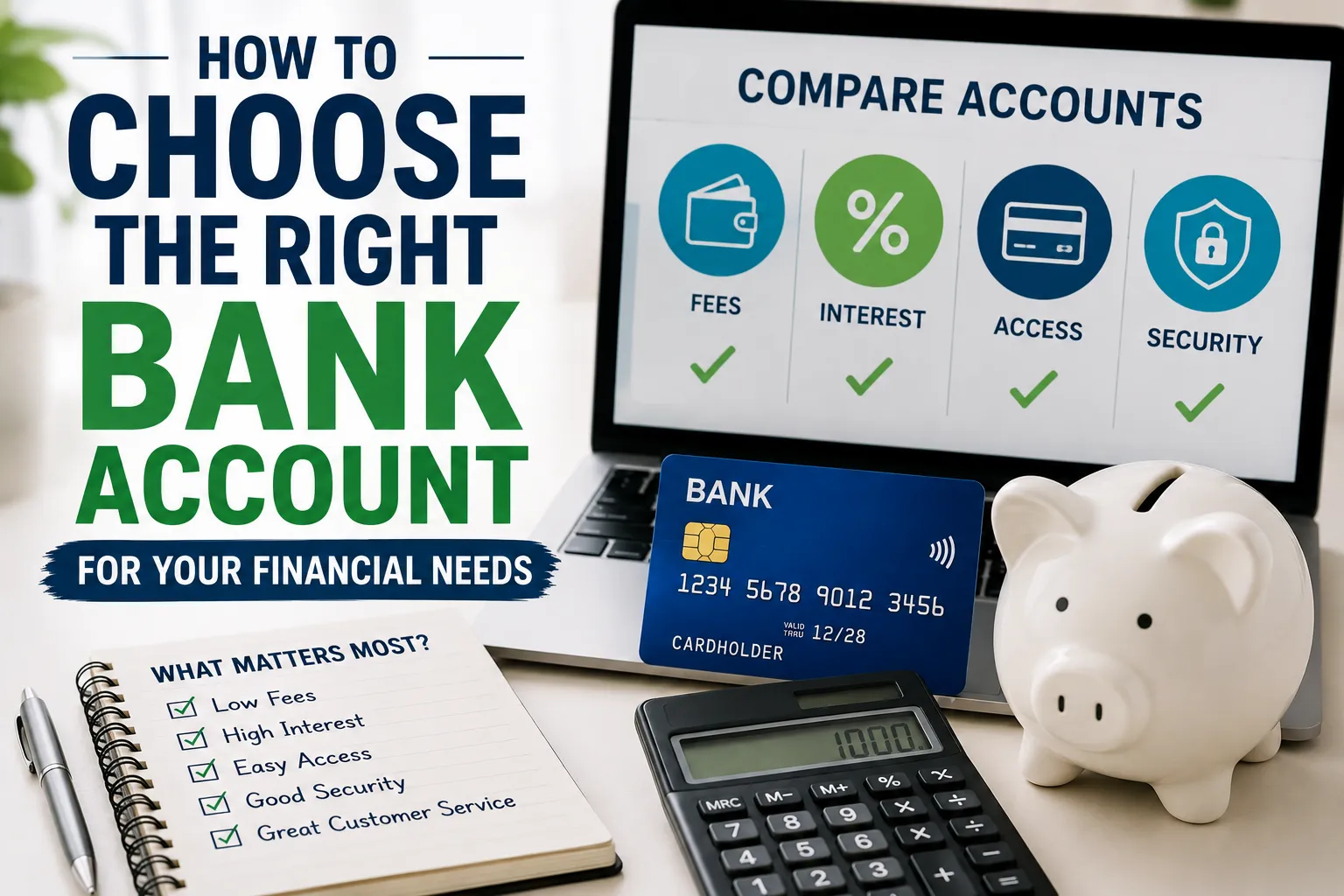
Start by identifying your financial priorities. Compare fees, access, interest, security and customer service. Read the account terms carefully, and consider how your needs may change over time.
The right bank account should quietly support your financial life—not make you work around it. When the account matches your habits and goals, everyday money management can become simpler, more predictable and easier to control.