How Market Liquidity Affects Financial Stability
Financial markets depend on more than rising asset prices and investor confidence. They also need something less visible but extremely important: liquidity.
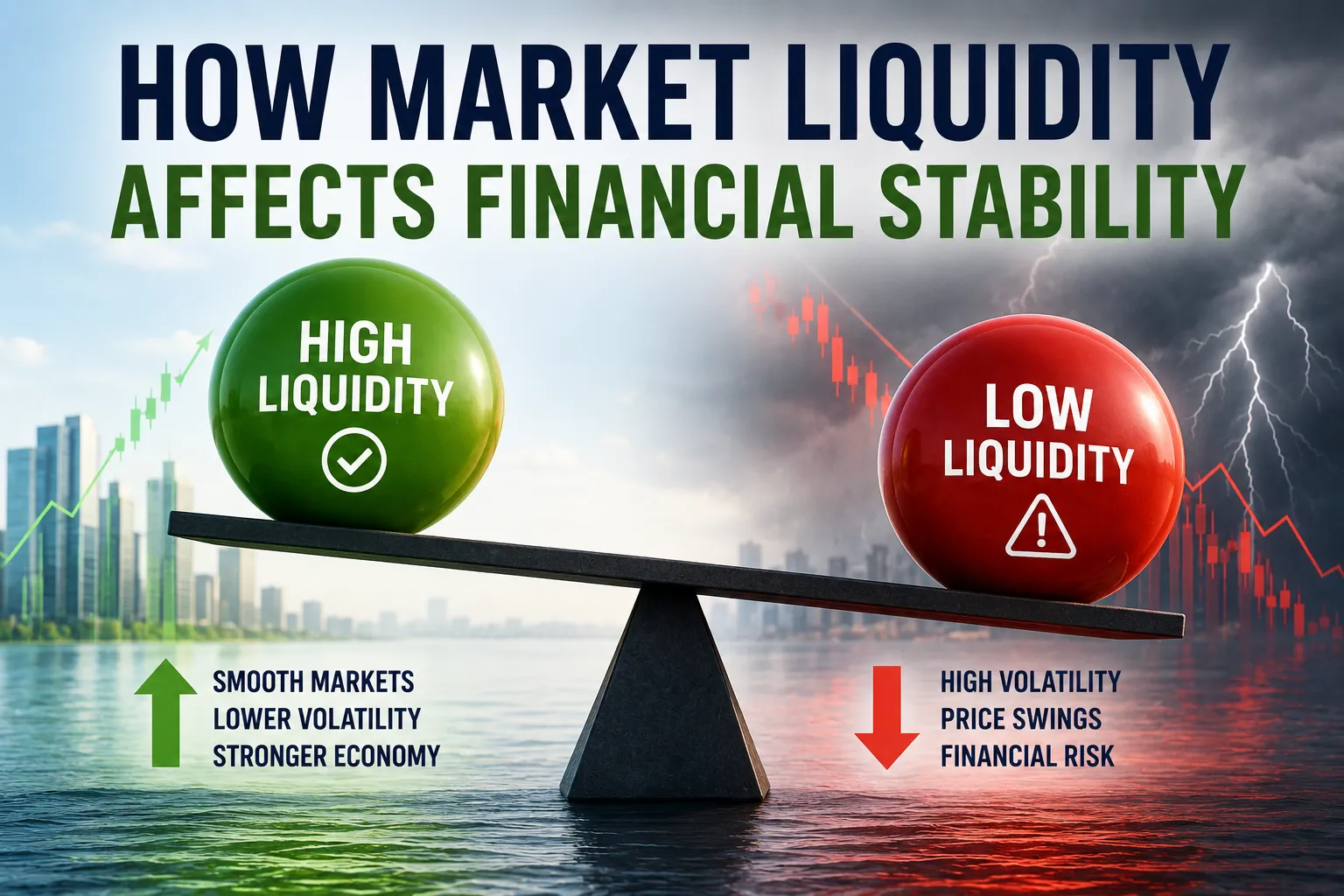
Market liquidity determines how easily assets can be bought or sold without causing large changes in their prices. When liquidity is strong, investors can generally enter and exit positions efficiently. When liquidity disappears, even relatively modest trades can cause sharp price movements.
This makes liquidity an important part of financial stability.
During calm periods, liquidity can be easy to overlook. But when markets become stressed, its importance becomes much more obvious. A sudden shortage of buyers can amplify falling prices, increase borrowing costs and make it harder for financial institutions to manage their obligations.
Understanding how liquidity works helps explain why financial markets can sometimes move rapidly during periods of economic or financial stress.
For a broader look at how different financial markets interact, see the complete guide to financial markets and how they work.
What Is Market Liquidity?
Market liquidity refers to how easily an asset can be bought or sold without significantly affecting its price.
A highly liquid market usually has:
- Many active buyers and sellers
- Frequent trading
- Narrow differences between buying and selling prices
- Large numbers of transactions
- Relatively efficient price discovery
Cash is generally considered highly liquid because it can be used immediately.
Publicly traded stocks in heavily traded companies can also be relatively liquid because large numbers of investors are willing to buy and sell them.
By contrast, assets such as specialized real estate, private businesses or rare collectibles can take considerably longer to sell.
Liquidity therefore exists on a spectrum.
Liquidity Is Not the Same as Solvency
These two concepts are often confused.
Liquidity concerns the ability to access cash or sell assets when needed.
Solvency concerns whether the value of an entity’s assets is sufficient to cover its liabilities over the longer term.
A company can be solvent but temporarily illiquid.
For example, a business might own valuable property but have insufficient cash to pay an immediate bill.
Conversely, an institution might have plenty of short-term cash but still face serious solvency problems if its liabilities are greater than its assets.
The distinction becomes particularly important during financial crises.
Why Liquidity Matters in Financial Markets
Liquidity helps markets function efficiently.
When investors can buy and sell assets relatively easily, prices can adjust to new information without necessarily producing extreme movements.
For example, if a company releases better-than-expected earnings, new buyers can enter the market and purchase shares.
If the market is deep and liquid, that buying activity may cause the share price to rise without creating extreme distortions.
In a thin market, however, even relatively small orders can produce large price changes.
That can make markets more volatile and less predictable.
What Happens When Liquidity Falls?
When liquidity deteriorates, buyers may become less willing to transact.
At the same time, sellers may become more aggressive because they want to raise cash quickly.
This can create a difficult environment.
An investor who needs to sell an asset may discover that there are few buyers at the previous market price.
To complete the sale, the investor may have to accept a lower price.
If many investors are trying to sell at the same time, prices can fall rapidly.
This is one way liquidity problems can turn into broader market stress.
The Bid-Ask Spread Is an Important Signal
One simple way to observe market liquidity is through the bid-ask spread.
The bid is the price a buyer is willing to pay.
The ask is the price at which a seller is willing to sell.
The difference between the two is the bid-ask spread.
In highly liquid markets, spreads are often relatively narrow.
When liquidity deteriorates, spreads can widen because market participants become less willing to take the other side of trades.
A widening spread can therefore be an early indication that trading conditions are becoming more difficult.
Market Depth Also Matters
Liquidity is not only about how close the bid and ask prices are.
It is also about how much buying and selling interest exists around the current market price.
A market may appear liquid for small transactions but become much less liquid when investors attempt to trade large amounts.
Market depth measures how much volume can be absorbed without causing significant price movement.
Deep markets generally provide greater resilience when large orders arrive.
Shallow markets can experience much larger price swings.
Liquidity Can Change Quickly
One of the most important characteristics of financial liquidity is that it is not permanent.
An asset that is easy to trade during normal conditions can become difficult to sell during a crisis.
This can happen because market participants become more risk-averse.
Banks may reduce lending.
Investors may hold more cash.
Market makers may reduce the amount of capital they are willing to commit.
Funds may face redemption requests.
As these behaviors occur simultaneously, liquidity can deteriorate rapidly.
Why Financial Crises Can Become Self-Reinforcing
Liquidity problems can create a feedback loop.
Imagine that an investment fund needs cash to meet investor withdrawals.
The fund sells assets.
Those sales push asset prices lower.
Other investors see prices falling and become concerned.
They also sell.
Prices decline further.
The original fund may then need to sell even more assets to raise the same amount of cash.
This process can create a cycle of selling, falling prices and additional selling.
The problem is no longer simply that investors are changing their opinions about asset values.
It becomes a question of how quickly everyone can obtain cash at the same time.
Forced Selling Can Intensify Price Declines
Forced selling is particularly important during periods of financial stress.
An investor may believe that an asset is fundamentally valuable but still be forced to sell it because of:
- Margin requirements
- Redemption requests
- Debt obligations
- Risk limits
- Regulatory requirements
- Cash-flow problems
When assets must be sold regardless of their underlying value, prices can move substantially away from levels suggested by fundamental conditions.
This can increase volatility across financial markets.
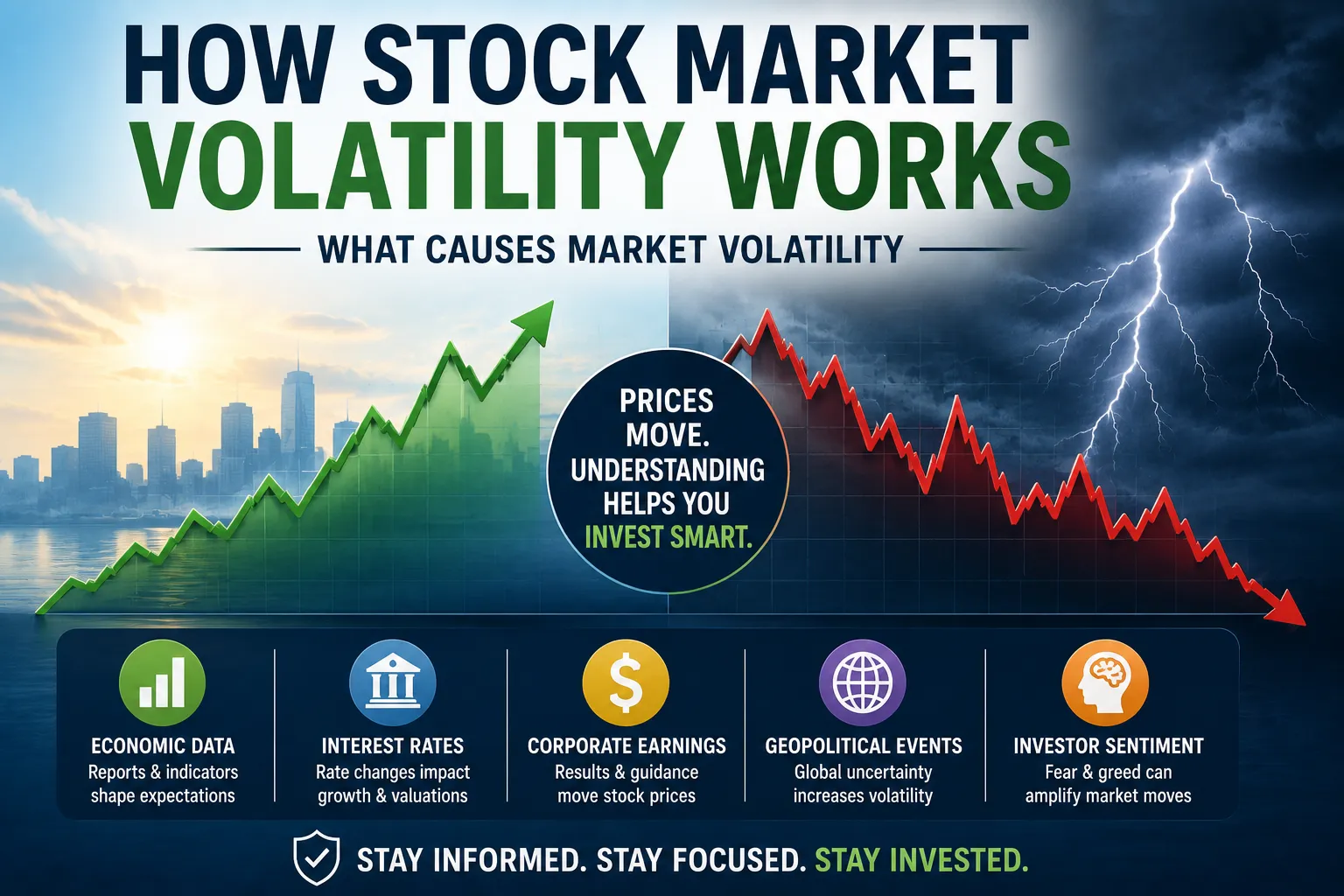
For more on the forces that can produce sharp movements in asset prices, see how stock market volatility works and what causes market volatility.
Banks Play a Central Role in Liquidity
Banks are particularly important because they connect savers, borrowers and businesses.
They accept deposits and provide loans.
They also participate in financial markets and may provide liquidity to other institutions.
During normal periods, banks can help keep credit flowing through the economy.
But during periods of stress, banks may become more cautious about lending.
If banks become concerned about borrowers’ ability to repay, they may tighten credit standards.
That can make it harder for businesses and households to obtain financing.
Credit Market Liquidity Can Affect the Real Economy
Financial market liquidity is not limited to stocks and bonds.
Credit markets are equally important.
Businesses frequently depend on loans and debt markets to finance:
- Expansion
- Equipment purchases
- Payroll
- Inventory
- Acquisitions
- Working capital
If credit markets become less liquid, borrowing can become more expensive or difficult.
A company that would normally refinance its debt might suddenly face much less favorable conditions.
If enough businesses experience this simultaneously, investment and employment can eventually be affected.
Government Bond Markets Are Especially Important
Government bond markets often play a central role in the financial system.
They are used by governments to raise money and are also held by banks, investment funds, insurers and other institutions.
Government bonds are frequently used as collateral in financial transactions.
When these markets become less liquid, the consequences can extend beyond bond investors.
Funding markets, derivatives markets and other financial activities can also be affected.
This is why policymakers pay close attention to liquidity conditions in major government bond markets.
Investors who want to understand the mechanics of these markets can also explore the complete guide to bond markets.
Central Banks Can Provide Liquidity
Central banks can play an important role during severe liquidity disruptions.
Depending on their legal mandates and available tools, central banks may provide emergency funding to financial institutions or purchase financial assets to improve market functioning.
The objective can be to prevent a temporary liquidity problem from becoming a broader financial crisis.
This does not necessarily mean that the underlying economic problems disappear.
Instead, central-bank intervention can provide time for markets and financial institutions to stabilize.
Liquidity Support Is Different From a Bailout
Providing liquidity does not necessarily mean rescuing an institution from insolvency.
A central bank may provide short-term funding against acceptable collateral to an institution that is experiencing a temporary liquidity problem.
A bailout, by contrast, can involve direct financial support intended to prevent an institution from failing.
The distinction matters because liquidity support is generally intended to address a shortage of funding rather than permanently solve an institution’s underlying financial problems.
Interest Rates Influence Liquidity
Interest rates can have a major effect on financial-market liquidity.
When rates rise rapidly, borrowing becomes more expensive.
Investors may also reassess the value of bonds, stocks and other assets.
Higher rates can reduce demand for certain investments and increase the cost of maintaining leveraged positions.
At the same time, tighter monetary conditions can encourage financial institutions to hold more liquid assets.
The result can be a more cautious financial system.
Higher Rates Can Expose Hidden Vulnerabilities
Long periods of low interest rates can encourage investors and businesses to take on more debt or seek higher returns.
When rates subsequently rise, those positions can become more difficult to maintain.
Borrowers may face higher refinancing costs.
Investors may experience losses on existing fixed-income assets.
Financial institutions may become more cautious.
What initially appears to be an interest-rate adjustment can therefore expose liquidity vulnerabilities that were less visible during easier financial conditions.
Leverage Can Make Liquidity Problems Worse
Leverage means using borrowed money to increase exposure to an investment.
It can increase gains when prices rise, but it can also magnify losses when prices fall.
When leveraged investors experience losses, lenders may demand additional collateral.
If the investor does not have enough cash, assets may need to be sold.
Those sales can push prices lower, potentially creating additional margin calls.
This is another example of how liquidity and leverage can interact to amplify financial stress.
Liquidity and Confidence Are Closely Connected
Financial markets depend heavily on confidence.
Banks need confidence that borrowers will repay.
Investors need confidence that markets will remain functional.
Lenders need confidence that collateral can be sold if necessary.
When confidence deteriorates, participants may begin holding more cash and reducing risk.
That behavior can be rational individually but damaging collectively.
If everyone tries to become more liquid at the same time, the system can experience a shortage of liquidity precisely when demand for it is greatest.
The “Dash for Cash”
During severe market stress, investors sometimes engage in what is effectively a dash for cash.
Instead of asking which assets offer the best long-term return, they prioritize immediate liquidity.
This can lead investors to sell assets across different markets.
Even high-quality assets can experience price declines if investors need cash quickly.
The result can be a sharp increase in correlations between assets that normally behave differently.
Liquidity Can Affect Asset Prices
Asset prices are influenced by expectations about future cash flows, interest rates, risk and other fundamental factors.
Liquidity adds another dimension.
An asset may become cheaper not because investors suddenly believe its long-term value has collapsed, but because fewer buyers are willing or able to purchase it.
This can create temporary pricing distortions.
However, those distortions can still have real consequences for institutions that must value their holdings at current market prices.
Mark-to-Market Losses Can Increase Pressure
Financial institutions often have to value certain assets using current market prices.
When prices fall sharply, the institution may have to report losses even if it has not sold the assets.
If those losses weaken capital positions or trigger contractual requirements, the institution may be forced to raise cash or sell additional assets.
This can intensify liquidity pressures.
The process demonstrates how accounting values, market prices, funding requirements and liquidity can become interconnected during periods of stress.
Liquidity Risk Is Different for Different Assets
Not all investments have the same liquidity characteristics.
A widely traded public stock may be sold within seconds during normal market conditions.
A piece of commercial property could take months to sell.
Private equity investments may have even longer holding periods.
Investors should therefore consider liquidity alongside expected returns and risk.
An investment offering attractive long-term returns may still be inappropriate for money that could be needed unexpectedly.
Investors Should Match Liquidity to Their Goals
Personal financial planning provides a useful example.
Money needed for rent, emergency expenses or near-term purchases generally needs to remain accessible.
Long-term retirement savings can potentially be invested in assets that fluctuate more and may be less immediately liquid, depending on the individual’s circumstances.
The basic principle is simple:
Money needed soon should generally be easier to access than money intended for a distant goal.
Ignoring liquidity needs can force investors to sell assets at unfavorable times.
Liquidity Can Influence Financial Stability at Multiple Levels
The effects of liquidity can be considered at three levels.
Individual Level
Investors need access to cash to meet expenses and financial obligations.
Institutional Level
Banks, funds and companies need sufficient liquidity to meet withdrawals, margin calls, debt payments and other obligations.
Systemic Level
The financial system needs markets and institutions to continue functioning even when uncertainty increases.
Problems at one level can spread to another.
For example, a bank’s liquidity problem could reduce lending, affecting businesses that depend on credit. Those businesses could then reduce investment or employment, affecting households.
Financial Stability Depends on Resilience
A stable financial system is not one in which asset prices never fall.
Prices will always fluctuate.
Financial stability is more about whether institutions and markets can absorb shocks without a breakdown in basic functions.
A healthy system should be able to withstand:
- Sudden market losses
- Higher interest rates
- Credit deterioration
- Large trading volumes
- Investor withdrawals
- Funding disruptions
- Economic uncertainty
Liquidity is one of the mechanisms that helps provide that resilience.
Regulation Can Help Reduce Liquidity Risk
Financial regulators monitor liquidity because problems can spread quickly between institutions.
Banks may be required to maintain certain liquidity buffers.
Financial institutions can also face rules concerning capital, risk management and funding structures.
These measures are designed partly to reduce the likelihood that a temporary shock will become a systemic crisis.
However, regulation cannot eliminate liquidity risk completely.
Markets are constantly evolving, and new financial products can introduce new sources of vulnerability.
Transparency Can Support Market Liquidity
Reliable information can make markets more efficient.
Investors are generally more willing to trade when they understand the risks associated with an asset.
Uncertainty about an institution’s financial condition can cause investors to withdraw liquidity.
Clear financial reporting, reliable market information and transparent risk disclosures can therefore contribute to healthier markets.
When participants do not trust available information, they may become less willing to provide funding.
Liquidity Buffers Matter
Financial institutions and businesses can reduce liquidity risk by maintaining sufficient liquid resources.
For a household, that might mean an emergency fund.
For a company, it could involve cash reserves or committed credit facilities.
For a bank, liquidity management can involve cash, high-quality liquid assets and access to funding markets.
The principle is similar at every level:
Having resources available before a crisis is much easier than trying to obtain them after the crisis has already begun.
Why Liquidity Matters More During Stress Than During Calm
Liquidity is easy to appreciate when markets are functioning normally.
Buyers are available.
Sellers are available.
Credit is accessible.
Prices update continuously.
But during periods of uncertainty, participants can simultaneously become more cautious.
Buyers disappear.
Lenders tighten standards.
Investors demand higher compensation for risk.
Trading volumes can become concentrated in certain assets.
The difference between normal liquidity and stressed liquidity can therefore be enormous.
What Investors Should Watch
There is no single indicator that perfectly measures market liquidity.
However, investors and analysts can monitor signals such as:
- Bid-ask spreads
- Trading volumes
- Market depth
- Credit spreads
- Funding costs
- Bank lending conditions
- Bond-market activity
- Volatility
- Investor flows
- Central-bank liquidity operations
A combination of worsening indicators can provide a stronger warning than any individual measure.
Liquidity Does Not Always Mean Stability
It is also possible to have abundant liquidity without complete financial stability.
Large amounts of money can flow into markets while investors take excessive risks.
Cheap financing can encourage leverage and speculation.
Asset prices can rise rapidly even when underlying economic conditions do not justify the pace of appreciation.
In such circumstances, abundant liquidity can contribute to financial vulnerabilities that emerge later.
The goal is therefore not simply more liquidity.
The goal is a financial system with sufficient liquidity and responsible risk management.
How Liquidity Affects Everyday Financial Life
Although market liquidity sounds like a concept reserved for professional investors, its effects can reach ordinary households.
Liquidity conditions can influence:
- Mortgage availability
- Consumer credit
- Business loans
- Investment account values
- Pension and retirement funds
- Employment conditions
- Interest rates
- Housing-market activity
When financial markets function smoothly, credit tends to move more efficiently through the economy.
When liquidity becomes severely impaired, access to financing can become more difficult and expensive.
A Strong Financial System Needs Both Liquidity and Discipline
Market liquidity is one of the foundations of a functioning financial system.
It allows investors to trade, businesses to raise capital, banks to manage funding and markets to respond to new information.
But liquidity can disappear quickly when confidence falls.
That is why financial stability depends not only on the amount of money circulating through markets, but also on the strength of financial institutions, the quality of risk management and the ability of market participants to withstand periods of stress.
For individual investors, the lesson is equally practical: liquidity has value.
Keeping enough accessible savings for short-term needs can prevent forced selling of long-term investments. Understanding how easily an asset can be sold can be just as important as its potential return.
When markets are calm, liquidity may seem like a background feature. When uncertainty arrives, it can become one of the most important forces determining whether financial stress remains contained or spreads across the broader economy.