Complete Guide to Bond Markets
Bond markets are one of the largest and most important parts of the global financial system. Governments use them to finance spending, companies use them to raise capital, and investors use them to generate income, manage risk and diversify portfolios.
Yet bonds can seem complicated at first.
Terms such as coupon, yield, maturity, duration, credit rating, spread and face value can make fixed-income investing appear far more difficult than it needs to be.
At its core, however, a bond is relatively straightforward: an investor lends money to an issuer, and the issuer agrees to make specified payments and return the principal under the terms of the bond.
For a broader explanation of how bonds fit into the wider financial system, see this complete guide to financial markets and how they work.
The bond market becomes more interesting when those securities begin trading between investors. Their prices can rise and fall as interest rates, inflation expectations, economic conditions and perceptions of credit risk change.
This guide explains how bond markets work, the major types of bonds, how prices and yields interact, the risks investors face and how bonds can fit into a broader investment strategy.
Note: This article is for educational purposes and does not constitute personalized investment, tax or financial advice. Bond rules, taxation and market access vary by country.
What Is a Bond?
A bond is a type of debt security.
When you buy a bond, you are effectively lending money to the issuer. In exchange, the issuer generally promises to:
- Pay interest according to the bond’s terms.
- Repay the principal when the bond reaches maturity.
The issuer might be:
- A national government
- A local or municipal government
- A corporation
- A government agency
- Another organization that can legally issue debt
The exact terms are established when the bond is issued.
What Is the Bond Market?
The bond market is the marketplace where debt securities are issued and traded.
It has two broad parts.
Primary Market
This is where new bonds are issued.
An issuer raises money by selling bonds to investors.
For example, a government might issue bonds to finance public expenditure or refinance existing debt.
A company might issue bonds to:
- Build new facilities
- Expand operations
- Finance acquisitions
- Invest in research
- Refinance existing debt
Secondary Market
After a bond has been issued, investors can buy and sell it among themselves.
This creates liquidity and allows investors to change their positions before the bond reaches maturity.
The price in the secondary market can be very different from the bond’s original issue price.
Why Do Governments Issue Bonds?
Governments are major participants in bond markets.
Government borrowing can finance:
- Infrastructure
- Public services
- Budget deficits
- Existing debt refinancing
- Emergency spending
- Long-term development projects
Government bonds can also provide investors with a way to lend to the government in exchange for interest and eventual repayment.
The risk characteristics vary significantly between governments and individual securities.
Why Do Companies Issue Bonds?
Companies can raise money in several ways, including selling shares or borrowing.
Bond issuance allows a company to borrow directly from investors.
Businesses may use bond proceeds to:
- Expand operations
- Purchase equipment
- Build facilities
- Fund research and development
- Refinance existing debt
- Finance acquisitions
- Support other corporate activities
Corporate bonds therefore connect companies seeking capital with investors seeking fixed-income opportunities.
The Basic Anatomy of a Bond
A bond can contain several important features.
Face Value
Also called par value, this is the amount the issuer generally agrees to repay at maturity, subject to the bond’s terms and any default.
Coupon Rate
The coupon rate is the stated interest rate associated with the bond.
Coupon Payment
This is the actual interest payment made to investors.
Maturity Date
The date when the bond’s principal is scheduled to be repaid.
Issue Price
The price at which the bond is initially sold.
Market Price
The price at which the bond trades in the secondary market.
Yield
A measure of the return an investor may receive based on the bond’s price and cash flows.
These concepts are connected, but they are not interchangeable.
Coupon Rate vs. Yield
This is one of the most important distinctions for new bond investors.
Suppose a bond has:
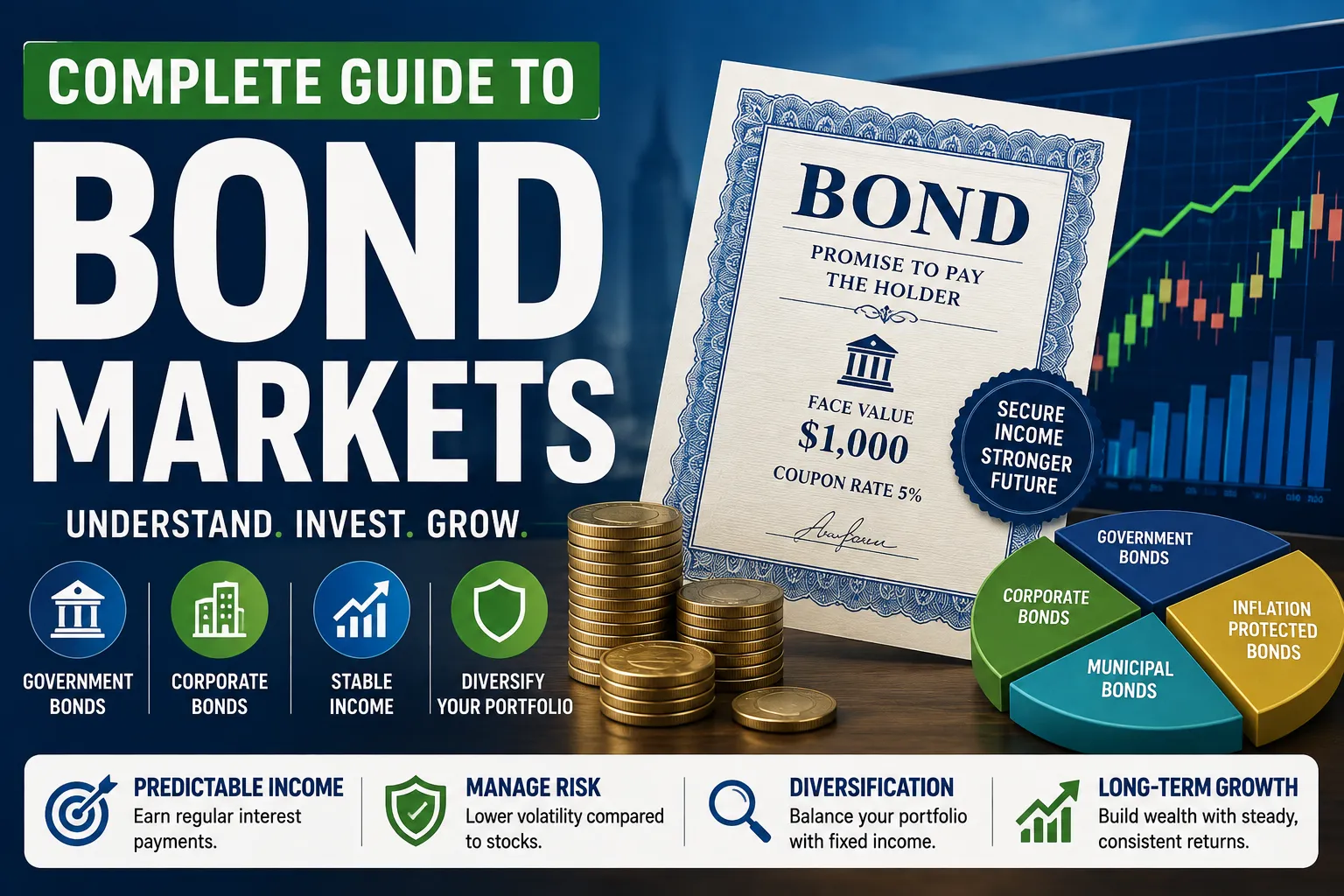
- Face value: $1,000
- Coupon rate: 5%
- Annual interest: $50
The coupon rate remains 5% of the bond’s face value.
But if the bond later trades for $900, a new investor buying it for $900 receives the same $50 annual coupon.
The simple relationship becomes:
$50 ÷ $900 = 5.56%
The investor’s yield based on the current price is therefore higher than the original coupon rate.
If the bond instead trades for $1,100:
$50 ÷ $1,100 = 4.55%
The market yield is lower.
This is why bond prices and yields generally move in opposite directions.
Why Bond Prices and Yields Move in Opposite Directions
Imagine you own a bond paying a fixed 4% coupon.
Then newly issued bonds begin offering 6%.
Your existing bond becomes less attractive because investors can obtain more interest from new securities with similar characteristics.
To make your older bond competitive, its market price generally needs to fall.
The opposite can happen when market interest rates decline.
If new bonds offer lower rates, an older bond with a relatively attractive coupon can become more valuable.
Therefore:
Interest rates rise → existing bond prices generally fall
Interest rates fall → existing bond prices generally rise
This relationship is a fundamental feature of bond markets.
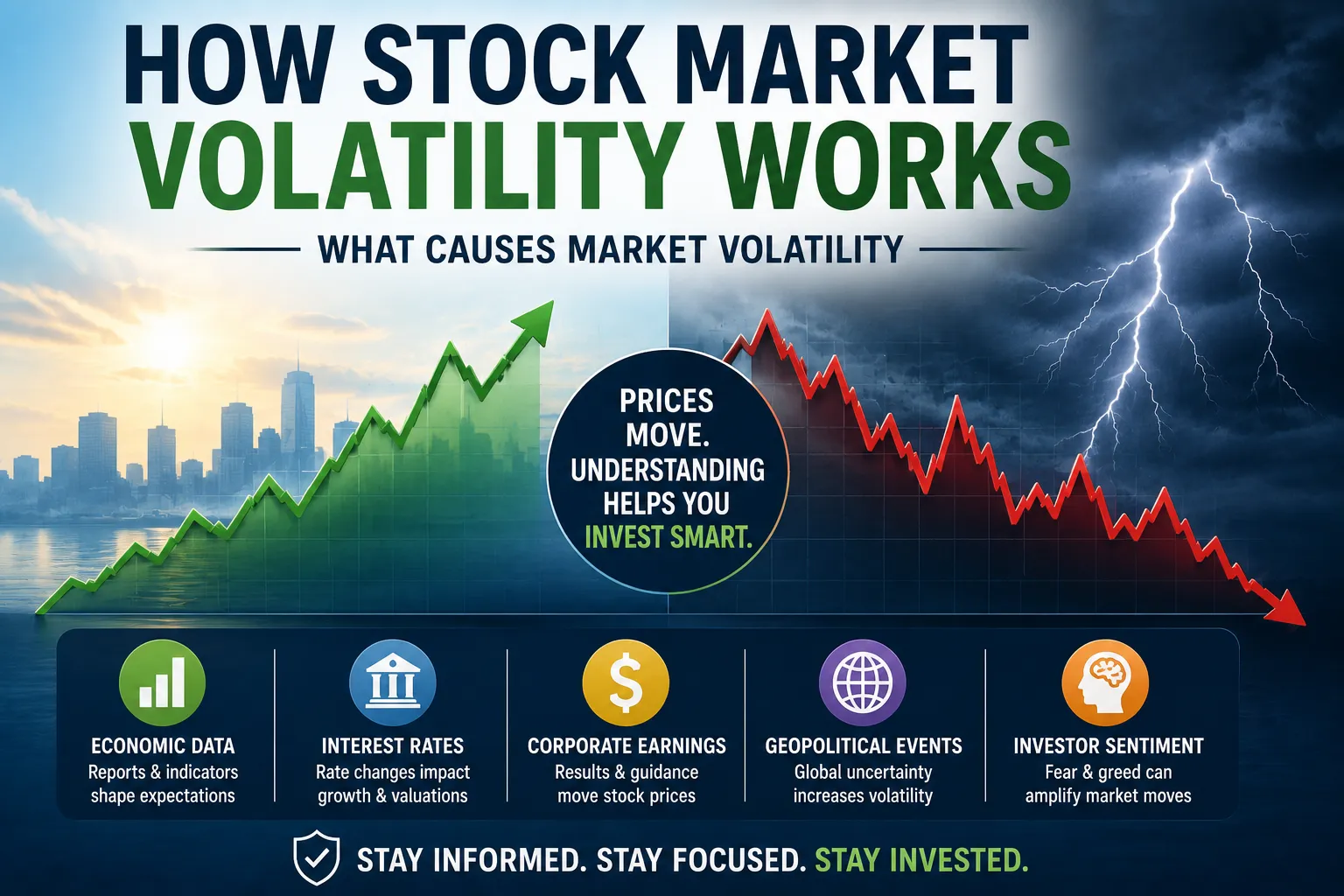
Investors who want to understand the broader causes and consequences of large price movements can also explore how stock market volatility works and what causes market volatility, since changing interest rates can influence both markets.
What Is Bond Yield?
Yield is a way of expressing the return associated with a bond’s price and cash flows.
There are several different yield measures, so investors should not assume that every quoted yield means exactly the same thing.
Common terms include:
- Current yield
- Yield to maturity
- Yield to call
- Yield to worst
- Real yield
Understanding which yield is being quoted is essential when comparing bonds.
Current Yield
Current yield is a relatively simple calculation:
Annual coupon payment ÷ current market price
For example:
- Annual coupon: $60
- Market price: $900
Current yield:
$60 ÷ $900 = 6.67%
This calculation does not fully account for the difference between the purchase price and the amount ultimately received at maturity.
Yield to Maturity
Yield to maturity (YTM) attempts to measure the annualized return an investor could receive if the bond is held until maturity, assuming the issuer makes the required payments and other specified assumptions hold.
It takes into account:
- Purchase price
- Coupon payments
- Time until maturity
- Face value
YTM can therefore provide a more comprehensive way to compare bonds than simply looking at the coupon rate.
Yield to Call
Some bonds can be called, meaning the issuer has the right to repay the bond before its scheduled maturity under specified conditions.
Yield to call estimates the return if the bond is called on a specified date rather than held until maturity.
This matters because investors may receive their principal earlier than expected.
If interest rates fall, an issuer may have an incentive to refinance existing debt at a lower cost and call eligible bonds.
What Is Maturity?
Maturity is the date when the bond’s principal is scheduled to be repaid.
Bonds can broadly be described as:
- Short-term
- Intermediate-term
- Long-term
The exact definitions vary among markets and financial institutions.
Maturity matters because longer-term bonds generally have greater exposure to changes in interest rates.
Short-Term vs. Long-Term Bonds
Short-Term Bonds
Generally have less time until maturity.
They may experience less interest-rate sensitivity than comparable long-term bonds.
Long-Term Bonds
Have more time until the principal is repaid.
They can be more sensitive to changes in market interest rates.
That doesn’t automatically make long-term bonds bad investments.
It simply means investors should understand the additional price volatility that may accompany longer maturities.
What Is Duration?
Duration is one of the most useful concepts for understanding bond price sensitivity.
In simplified terms, duration estimates how sensitive a bond’s price is to changes in interest rates.
A bond with a longer duration will generally experience a larger price movement when interest rates change by a given amount.
For example, if a bond portfolio has a duration of approximately five years, a 1-percentage-point increase in interest rates could produce a rough price decline of about 5%, before considering other factors.
The actual result can differ.
Duration is therefore an approximation, not a guarantee.
Why Duration Matters
Two bonds can have the same maturity but different interest-rate sensitivity.
Similarly, two bond funds can hold securities with very different durations.
When interest-rate uncertainty is high, duration becomes particularly important.
Investors should ask:
How much could this bond or bond fund move if interest rates change?
Duration helps provide an answer.
Credit Risk
Not every bond issuer is equally capable of repaying its debt.
Credit risk is the possibility that an issuer fails to make scheduled interest or principal payments.
A financially strong government or company may have relatively low perceived credit risk.
A highly indebted company with weak cash flow may carry considerably more.
Investors generally expect to receive additional compensation for taking greater credit risk.
Credit Ratings
Credit-rating agencies assess the creditworthiness of many bond issuers.
Ratings can help investors compare relative credit quality.
Broadly, bonds may be described as:
Investment Grade
Generally considered to have stronger credit quality.
High Yield
Generally associated with higher credit risk and potentially higher yields.
High-yield bonds are sometimes called junk bonds.
The higher yield is not free money. It is generally compensation for accepting greater risks, including higher default risk.
Bond Spreads
A bond spread measures the difference in yield between two securities or groups of securities.
A common example is the spread between a corporate bond and a government bond with a comparable maturity.
Suppose:
10-year government bond yield: 4%
10-year corporate bond yield: 6%
The spread is:
2 percentage points, or 200 basis points.
A widening spread can indicate that investors are demanding greater compensation for credit or other risks.
A narrowing spread can indicate improving perceptions of credit conditions, although the interpretation depends on the broader market.
What Is a Basis Point?
A basis point, often abbreviated as bp, is equal to 0.01 percentage point.
Therefore:
- 100 basis points = 1 percentage point
- 50 basis points = 0.50 percentage point
- 25 basis points = 0.25 percentage point
Financial markets use basis points frequently when discussing interest rates and bond yields.
Major Types of Bonds
The bond market contains many different securities.
Some of the most important categories include:
- Government bonds
- Treasury securities
- Municipal bonds
- Corporate bonds
- High-yield bonds
- Inflation-linked bonds
- Agency bonds
- Mortgage-backed securities
- Asset-backed securities
- Convertible bonds
- Zero-coupon bonds
Each has a different risk and return profile.
Government Bonds
Government bonds are issued by national governments.
In the United States, Treasury securities include instruments such as:
- Treasury bills
- Treasury notes
- Treasury bonds
- Treasury Inflation-Protected Securities
Other countries issue their own government debt under different names and structures.
Government bonds are often used as reference points for pricing other forms of debt.
Treasury Bills, Notes and Bonds
U.S. Treasury securities differ primarily by maturity.
Treasury bills are short-term securities.
Treasury notes generally have intermediate maturities.
Treasury bonds generally have longer maturities.
The U.S. Treasury market is closely watched globally because Treasury yields influence pricing across financial markets.
Inflation-Protected Bonds
Inflation can reduce the purchasing power of fixed interest payments.
Some governments therefore issue inflation-linked securities.
In the United States, Treasury Inflation-Protected Securities (TIPS) are designed with adjustments linked to inflation.
These securities can play a role in portfolios where investors want some protection against rising consumer prices.
However, inflation-linked bonds still carry market and interest-rate risks.
Municipal Bonds
Municipal bonds are generally issued by states, cities, counties and other public entities.
They may finance projects such as:
- Roads
- Schools
- Hospitals
- Water systems
- Public transportation
- Infrastructure
In some jurisdictions, municipal bonds can receive favorable tax treatment.
The specific tax benefits depend on local laws and the investor’s circumstances.
Corporate Bonds
Corporate bonds allow businesses to borrow directly from investors.
They generally offer higher yields than comparable government securities when investors perceive greater credit risk.
Corporate bond investors should examine:
- Company financial statements
- Debt levels
- Cash flow
- Credit rating
- Bond covenants
- Maturity
- Yield
- Seniority
- Call provisions
A company’s ability to meet its debt obligations is one of the most important factors affecting the bond’s risk.
Investment-Grade Corporate Bonds
Investment-grade corporate bonds are issued by companies with comparatively stronger credit profiles according to rating agencies.
They generally offer lower yields than high-yield bonds because investors perceive less default risk.
That doesn’t mean investment-grade bonds are risk-free.
A company’s financial condition can deteriorate, and bond prices can still fluctuate significantly when interest rates change.
High-Yield Bonds
High-yield bonds are issued by borrowers with lower credit ratings.
They typically offer higher yields because investors demand more compensation for accepting greater credit risk.
The attraction is obvious:
Higher potential income
But so is the trade-off:
Higher potential losses
High-yield bonds can be particularly sensitive to economic downturns because weaker companies may struggle to meet debt obligations.
Convertible Bonds
Convertible bonds contain features that can allow investors to convert the bond into shares of the issuing company under specified conditions.
This gives the security characteristics of both debt and equity.
Convertible bonds can appeal to investors seeking:
- Bond income
- Potential equity upside
But their structure can be more complicated than ordinary bonds.
Investors should understand the conversion terms before purchasing them.
Zero-Coupon Bonds
Zero-coupon bonds do not make regular coupon payments.
Instead, they are typically issued at a discount to face value and mature at a higher amount.
For example:
Purchase price: $700
Maturity value: $1,000
The difference represents the investor’s return, subject to the bond’s terms.
Zero-coupon securities can be useful for investors with a specific future cash-flow target.
Callable Bonds
A callable bond allows the issuer to repay the debt before maturity under specified conditions.
This creates call risk for investors.
Why would an issuer call a bond?
Suppose a company issued bonds at 8%.
Later, market rates fall to 5%.
The company may want to refinance its debt at the lower rate.
If the bonds are callable, the issuer may be able to repay investors early and issue new debt at a lower cost.
This can be inconvenient for investors who expected to continue receiving the higher coupon.
Putable Bonds
Putable bonds provide investors with the right to sell the bond back to the issuer under specified conditions.
This can provide additional protection when market conditions or the issuer’s credit quality change.
As with callable bonds, investors need to understand the precise terms.
Secured vs. Unsecured Bonds
Some corporate debt is backed by specific assets.
This is known as secured debt.
Other bonds are unsecured and depend primarily on the issuer’s overall creditworthiness.
If a company fails, the priority of different creditors can matter significantly.
Bondholders may have a higher claim on company assets than common shareholders in a bankruptcy, although recovery depends on the security’s terms and the company’s financial condition.
What Happens When a Bond Defaults?
A default occurs when an issuer fails to meet its contractual obligations.
For example, it might:
- Miss an interest payment
- Fail to repay principal
- Violate certain debt terms
A default does not necessarily mean investors lose everything.
Depending on the circumstances, bondholders may recover some portion of their investment through restructuring, asset sales or other proceedings.
But recovery can be uncertain and may take considerable time.
The Main Risks of Bonds
Bonds are often described as more predictable than stocks, but they are not risk-free.
Important risks include:
- Interest-rate risk
- Credit/default risk
- Inflation risk
- Liquidity risk
- Call risk
- Reinvestment risk
- Currency risk
- Market risk
Understanding these risks is essential.
Interest-Rate Risk
Interest-rate risk is the possibility that changing market rates will cause the market value of a bond to change.
Generally:
Rates rise → bond prices fall
Rates fall → bond prices rise
Longer-duration bonds are generally more sensitive to rate changes.
This is one of the most important risks for investors holding bonds before maturity or investing through bond funds.
Inflation Risk
Inflation reduces purchasing power.
Suppose a bond pays a fixed 4% annual interest rate while inflation runs at 5%.
The investor receives the contractual 4%, but the purchasing power of that income is being eroded.
This is why investors should consider real returns, not simply nominal yields.
Liquidity Risk
Liquidity refers to how easily an asset can be bought or sold without significantly affecting its price.
Some bonds trade frequently.
Others trade relatively infrequently.
A bond with limited liquidity may be difficult to sell quickly at an attractive price.
This can become particularly important during periods of market stress.
For a deeper look at this issue, see how market liquidity affects financial stability.
Reinvestment Risk
Suppose you own a bond paying 7% and it matures.
If market rates have fallen to 4%, you may not be able to reinvest the returned principal at the same 7% rate.
This is reinvestment risk.
It can also occur when coupon payments need to be reinvested.
Currency Risk
Investing in bonds denominated in another currency introduces exchange-rate risk.
Imagine an investor whose home currency is the Kenyan shilling buying a bond denominated in U.S. dollars.
Even if the bond performs well in dollar terms, a significant movement in the exchange rate could reduce the investor’s return when converted back into shillings.
Foreign bonds therefore involve both bond-market risk and currency considerations.
Bond Funds vs. Individual Bonds
Investors can gain bond exposure in different ways.
One approach is to buy individual bonds.
Another is to invest through:
- Bond mutual funds
- Bond ETFs
- Other fixed-income funds
Bond funds pool investors’ money and use it to purchase portfolios of bonds or other debt securities.
They can make diversification easier.
But they have important differences from owning a single bond.
Do Bond Funds Mature?
Generally, a conventional bond fund does not have a fixed maturity date like an individual bond.
The fund continually buys and sells securities according to its investment strategy.
This means investors cannot simply wait for the fund’s bonds to mature and expect the fund’s share price to return to a particular value.
Bond funds remain exposed to market movements.
Why Investors Use Bond Funds
Bond funds can offer:
- Diversification
- Professional management
- Convenient access
- Regular income distributions
- Exposure to different maturities
- Exposure to different issuers
Instead of researching dozens of individual bonds, an investor can purchase one fund holding many securities.
The Downsides of Bond Funds
Bond funds also have disadvantages.
They may involve:
- Management fees
- Interest-rate risk
- Credit risk
- Liquidity risk
- Market-price fluctuations
- Distribution variability
A fund’s yield can also change as the securities in its portfolio mature or are replaced.
Investors should read the fund’s prospectus and understand its strategy, duration, credit quality and expenses before investing.
Bond ETFs
Bond ETFs trade on stock exchanges like other ETFs.
They can provide convenient access to diversified bond portfolios.
Investors can potentially buy and sell shares throughout the trading day.
However, the market price of an ETF can differ from its underlying net asset value, and the fund remains exposed to the risks associated with its holdings.
How Bond Markets Affect the Stock Market
Bond and stock markets are separate but closely connected.
Bond yields influence the cost of capital for businesses and governments.
When bond yields rise significantly, investors may reconsider the relative attractiveness of stocks.
For example, if relatively low-risk government securities offer substantially higher yields, some investors may demand greater potential returns before accepting stock-market risk.
Bond yields can also influence:
- Corporate borrowing costs
- Mortgage rates
- Valuations
- Currency markets
- Economic expectations
This makes bond markets important even for investors who don’t own bonds directly.
Why the 10-Year Government Bond Yield Matters
The 10-year U.S. Treasury yield is one of the most closely watched rates in global finance.
It is frequently used as a reference point for:
- Mortgage pricing
- Corporate borrowing
- Investment valuations
- Other fixed-income securities
Movements in longer-term yields can therefore have effects far beyond the Treasury market itself.
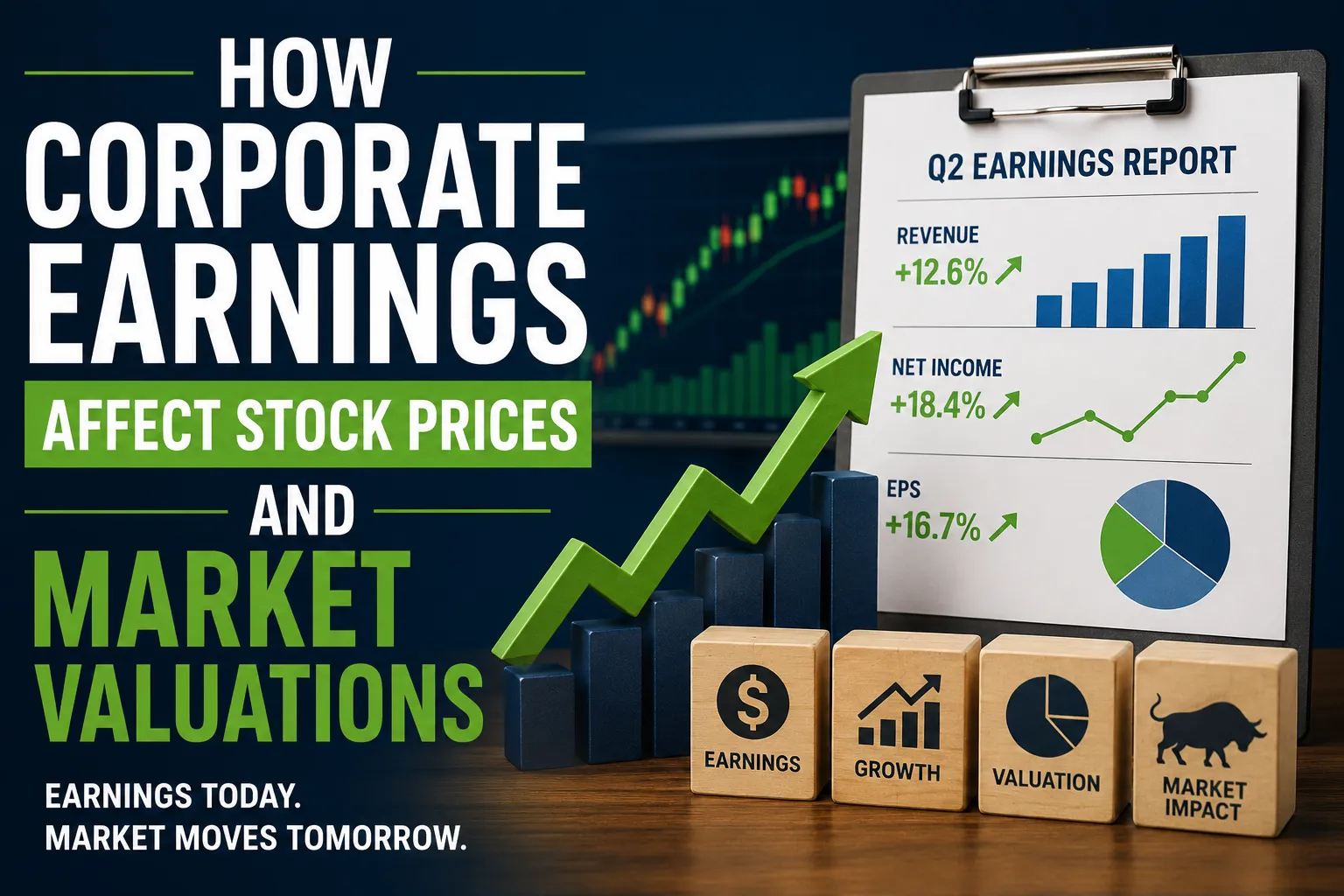
The relationship between Treasury yields and equity valuations is also important when considering how corporate earnings affect stock prices and market valuations.
What Drives Bond Yields?
Bond yields can be influenced by many factors.
Central Bank Policy
Changes in short-term interest rates can affect the broader yield curve.
Inflation Expectations
Investors generally demand compensation for expected loss of purchasing power.
Economic Growth
Strong growth can influence expectations for inflation, borrowing and monetary policy.
Government Borrowing
Changes in the supply of government debt can influence market pricing.
Credit Conditions
Investors may demand greater yields when perceived credit risk rises.
Global Capital Flows
International investors can influence demand for major bond markets.
Understanding the Yield Curve
The yield curve plots bond yields against maturities.
A normal yield curve generally slopes upward, meaning longer-term securities offer higher yields than shorter-term ones.
But the curve can take different shapes.
Upward-Sloping
Longer maturities have higher yields.
Flat
Yields are relatively similar across maturities.
Inverted
Shorter-term yields are higher than longer-term yields.
Humped
Intermediate maturities have higher yields than both shorter and longer maturities.
The yield curve is closely watched because it contains information about market expectations and the relative pricing of different maturities.
What Is a Steep Yield Curve?
A steep yield curve means there is a relatively large difference between short- and long-term yields.
This can reflect expectations about:
- Economic growth
- Inflation
- Monetary policy
- Government borrowing
- Term premiums
The exact reason depends on the economic environment.
What Is an Inverted Yield Curve?
An inverted yield curve occurs when shorter-term yields exceed longer-term yields.
Investors often pay attention to inversions because they have historically appeared before some economic downturns.
However, an inverted curve should not be interpreted as a guaranteed recession signal.
Market conditions, monetary policy and the causes of the inversion all matter.
What Is a Bond Ladder?
A bond ladder involves purchasing bonds with different maturity dates.
For example:
- Bond A matures in one year
- Bond B in two years
- Bond C in three years
- Bond D in four years
- Bond E in five years
As each bond matures, the investor can decide whether to:
- Spend the principal
- Reinvest it
- Extend the ladder
The strategy can help spread interest-rate and reinvestment risk across different dates.
Why Bond Ladders Can Be Useful
A ladder can provide:
- Predictable maturity dates
- Regular access to principal
- Diversification across maturities
- Reduced dependence on a single interest-rate environment
It may be particularly useful for investors who expect to need money at specific future dates.
Bond Diversification
Buying one bond exposes you to the financial health of one issuer.
A diversified bond portfolio can spread exposure across:
- Issuers
- Industries
- Countries
- Maturities
- Credit qualities
- Currencies
Diversification cannot eliminate losses, but it can reduce concentration risk.
How to Research a Bond
Before purchasing an individual bond, examine its documentation and market information.
Important questions include:
- Who issued it?
- What is the maturity?
- What is the coupon?
- What is the current price?
- What is the yield?
- What is the credit rating?
- Is it callable?
- Is it secured?
- What are the bond’s covenants?
- How liquid is the market?
- What are the tax implications?
Don’t Buy a Bond Based Only on Yield
A high yield can look attractive.
But yield is compensation for risk as well as a potential source of return.
A bond offering 10% may be much riskier than one offering 5%.
Before focusing on yield, investigate why the market demands such a high return.
Ask:
Is the issuer financially weak?
Is the bond difficult to trade?
Is the maturity unusually long?
Is the security callable?
Is the currency volatile?
A higher yield should prompt more questions, not fewer.
Bond Market News to Watch
Bond investors should follow economic and financial developments that can affect rates and credit conditions.
Important indicators include:
- Inflation data
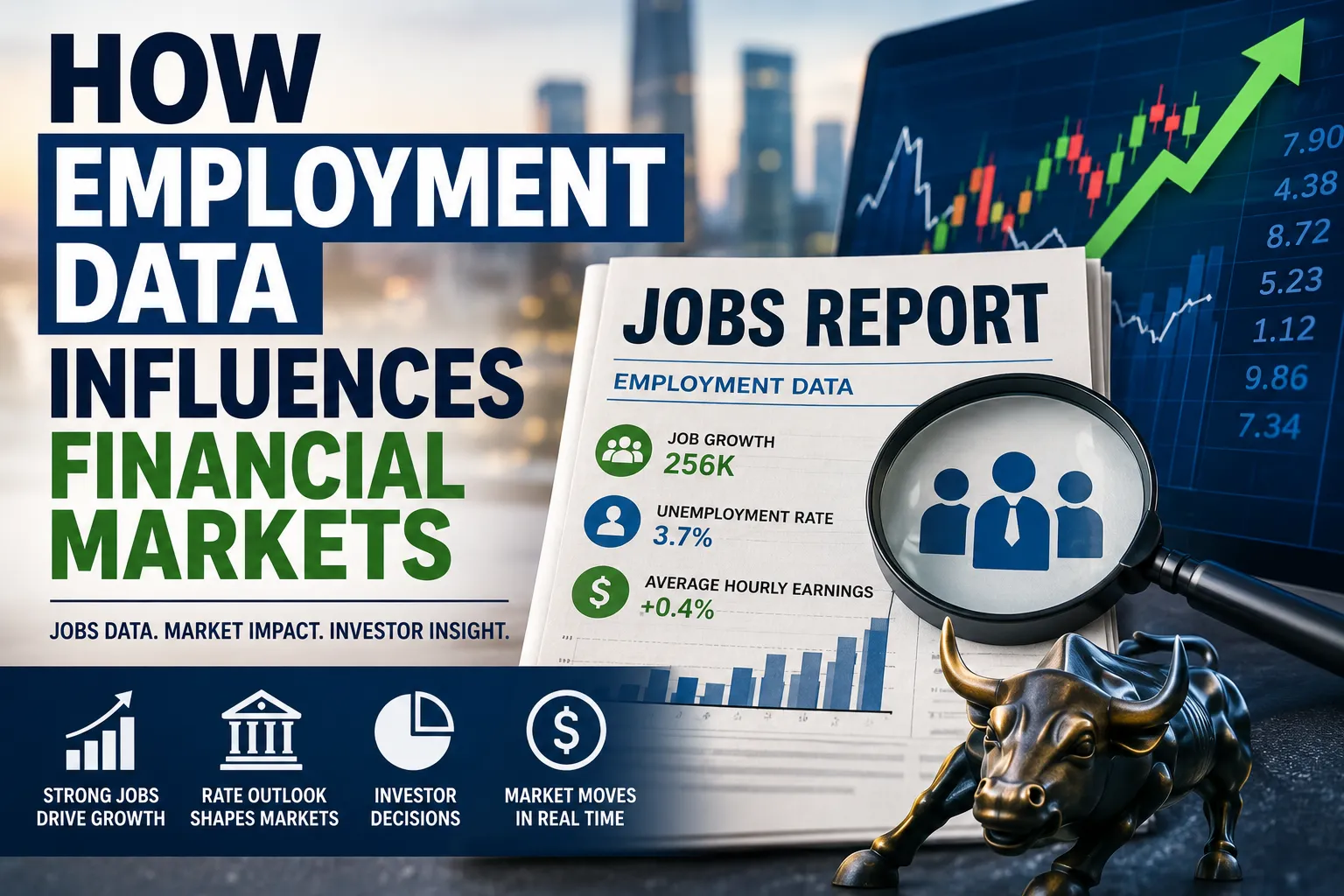
- Employment reports
- Central-bank decisions
- Economic growth
- Government borrowing
- Credit-rating changes
- Corporate earnings
- Geopolitical developments
- Currency movements
A single headline can move bond yields if it materially changes expectations about inflation, growth or monetary policy.
How Central Banks Influence Bond Markets
Central banks influence short-term interest rates through monetary policy.
When policymakers tighten monetary conditions, short-term yields often respond.
When policymakers ease conditions, short-term rates can fall.
Long-term yields are influenced by more than central-bank policy alone.
They also reflect:
- Expected future rates
- Inflation expectations
- Economic growth
- Government debt supply
- Investor demand
- Term premiums
This is why a central-bank rate change does not automatically produce an identical move across every maturity.
Bond Markets and Inflation
Inflation is one of the biggest forces affecting fixed-income investors.
If inflation unexpectedly rises, investors may demand higher yields to compensate for reduced purchasing power.
Higher yields generally mean lower prices for existing fixed-rate bonds.
This creates a challenging environment for long-duration bonds.
Inflation-linked bonds can provide another tool for investors who want exposure designed to respond differently to changes in consumer prices.
Bonds During Economic Downturns
Bonds do not all behave the same way during recessions.
High-quality government bonds can sometimes benefit when investors seek safer assets and expect lower interest rates.
Corporate bonds may behave differently because recession can increase concerns about defaults.
High-yield bonds can be particularly sensitive to economic weakness.
The key lesson is:
“Bonds” are not one single asset class with one predictable behavior.
The issuer, maturity, credit quality and structure matter.
Bonds and Portfolio Diversification
Investors often use bonds alongside stocks and other assets.
The goal may be to:
- Generate income
- Reduce portfolio volatility
- Preserve capital
- Fund future expenses
- Diversify exposure
The appropriate allocation depends on factors such as:
- Investment horizon
- Risk tolerance
- Income needs
- Financial goals
- Existing assets
- Tax situation
There is no universally correct percentage of bonds for every investor.
Investors building a broader long-term strategy may also benefit from learning how to build an investment plan for long-term goals.
Bonds for Income
One of the traditional reasons investors buy bonds is to generate income.
For example, a bond paying a fixed coupon can provide scheduled interest payments.
However, investors should distinguish between:
Income received
and
Total investment return
A bond can generate interest while simultaneously losing market value.
Likewise, a bond purchased at a discount can potentially produce a gain if held to maturity, subject to the issuer meeting its obligations.
Holding a Bond to Maturity
An investor who holds an individual bond until maturity generally expects to receive the scheduled coupon payments and principal at maturity, assuming the issuer does not default and other conditions are satisfied.
That does not mean the investment has no risk.
The investor still faces:
- Default risk
- Inflation risk
- Opportunity cost
- Reinvestment risk
- Currency risk where applicable
And selling before maturity exposes the investor to market-price changes.
Buying Bonds at a Discount
A bond can trade below face value.
For example:
Face value: $1,000
Market price: $950
If the issuer remains solvent and the bond is held to maturity under its terms, the investor may receive $1,000 in principal.
The $50 difference contributes to the investment return.
However, the market price can fall further before maturity, and the issuer could default.
Buying Bonds at a Premium
A bond can also trade above face value.
Suppose:
Face value: $1,000
Market price: $1,050
The investor is paying more than the amount scheduled to be repaid at maturity.
The higher purchase price must be considered when calculating yield to maturity.
A high coupon does not automatically mean a high overall return.
Bond Market Risks for Beginners
New investors often make several assumptions that can cause problems.
“Bonds Can’t Lose Money”
False.
Bond prices can fall, and issuers can default.
“A Higher Yield Is Always Better”
False.
Higher yields often reflect higher risk.
“Government Bonds Are Risk-Free”
This statement is too broad.
Government bonds can carry interest-rate, inflation, currency and other risks. Credit risk may differ depending on the government and security.
“Bond Funds Are the Same as Individual Bonds”
They are not.
Bond funds have portfolios that continuously change and generally do not have a fixed maturity like an individual bond.
“The Coupon Rate Is My Return”
Not necessarily.
The purchase price, sale price, maturity and reinvestment of payments all matter.
A Simple Bond Example
Imagine a company issues a bond with:
- Face value: $1,000
- Coupon rate: 6%
- Annual coupon: $60
- Maturity: 10 years
An investor buys it at $1,000.
The investor receives $60 per year if the issuer makes the scheduled payments.
If the bond later trades at $900, the investor who buys it at that price receives the same $60 coupon.
The current yield would be:
$60 ÷ $900 = 6.67%
If market interest rates rise, the bond’s price could fall further.
If market rates decline, its price could rise.
This simple example illustrates the core relationship between coupon, price and yield.
How to Read a Bond Quote
A bond quote may contain several pieces of information.
| Term | Example |
|---|---|
| Coupon | 5.00% |
| Maturity | 2036 |
| Price | 98.50 |
| Yield | 5.20% |
| Credit rating | Investment grade |
| Callable | Yes |
The price of 98.50 can indicate 98.50% of face value.
For a $1,000 face-value bond:
$1,000 × 98.50% = $985
The precise conventions vary by market.
What Is Accrued Interest?
When bonds pay periodic interest, the seller may have earned part of the next interest payment by the time the bond is sold.
The buyer may compensate the seller for that accrued interest.
This is known as accrued interest.
It means the amount you pay for a bond transaction can include more than simply the quoted market price.
Understanding settlement conventions and accrued interest is important when buying individual bonds.
Bond Market Liquidity
Some bonds are highly liquid.
Others can be difficult to trade.
Liquidity can depend on:
- Issue size
- Issuer
- Credit quality
- Market conditions
- Trading volume
- Maturity
- Investor demand
During periods of financial stress, liquidity can deteriorate.
That means an investor may have to accept a less favorable price to sell quickly.
How Investors Access Bond Markets
Depending on their country and financial institution, investors can access bonds through:
- Banks
- Brokerages
- Government securities platforms
- Bond dealers
- Mutual funds
- ETFs
- Retirement accounts
- Other regulated investment platforms
Access varies considerably by country.
Investors should verify the regulatory status and fee structure of the platform they use.
Individual Bonds vs. Bond Funds: A Quick Comparison
| Feature | Individual Bond | Bond Fund |
|---|---|---|
| Maturity | Specific maturity | Usually no fixed maturity |
| Diversification | Depends on number of holdings | Typically diversified |
| Price fluctuation | Yes | Yes |
| Credit exposure | Specific issuer(s) | Multiple issuers |
| Professional management | No, generally | Usually yes |
| Fees | Trading/transaction costs may apply | Fund expenses may apply |
| Liquidity | Varies | Often easier to trade |
| Principal repayment | At maturity if issuer pays | No guaranteed maturity repayment |
Neither approach is automatically better.
The appropriate choice depends on the investor’s objectives, knowledge and circumstances.
The Role of Bonds in Long-Term Financial Planning
Bonds can serve different purposes at different stages of life.
A younger investor with a long investment horizon may emphasize growth assets.
Someone approaching a major financial goal may place greater emphasis on capital preservation and predictable cash flows.
A retiree may use bonds as part of an income strategy.
These are broad examples rather than rules.
The right allocation depends on the individual investor’s financial plan.
How to Think About Bond Investing
A useful framework is to ask five questions:
1. Who Is Borrowing My Money?
Evaluate the issuer.
2. When Do I Get My Money Back?
Look at maturity.
3. How Much Am I Being Paid?
Examine the yield, not just the coupon.
4. What Could Go Wrong?
Consider credit, interest-rate, inflation and liquidity risks.
5. Does It Fit My Portfolio?
Consider how the bond interacts with your other investments.
This framework can make an otherwise complicated security easier to understand.
A Bond Investing Checklist
Before buying an individual bond, consider:
- Issuer
- Credit quality
- Face value
- Coupon
- Current price
- Yield to maturity
- Maturity date
- Duration
- Call provisions
- Liquidity
- Currency
- Tax treatment
- Transaction costs
- Default risk
- Role in your overall portfolio
For a bond fund, add:
- Average maturity
- Duration
- Credit quality
- Fund strategy
- Expense ratio
- Holdings
- Distribution policy
- Prospectus
The Bigger Picture Behind Bond Markets
Bond markets are essentially a giant network connecting borrowers who need capital with investors who have capital to lend.
When governments need to finance deficits, companies need money for expansion or investors need income and diversification, the bond market provides a mechanism for those needs to meet.
But bonds are not simply “safe investments.”
Their behavior depends on the interaction between:
Interest rates + inflation + credit quality + maturity + liquidity + investor expectations
A high-quality short-term government bond and a long-term high-yield corporate bond may both technically be bonds, but they can behave very differently.
Understanding the Signals Behind Bond Markets
Bond markets often provide an early indication of how investors view the economy.
Changes in government yields can reflect shifting expectations about inflation, economic growth and monetary policy. Credit spreads can reveal changing perceptions of corporate risk. The shape of the yield curve can provide clues about how investors view different maturities.
For individual investors, the most important lesson is not to treat every bond as interchangeable.
Before investing, understand who issued the debt, what return you are actually receiving, when the principal is due, how sensitive the security is to interest rates, and what could prevent you from getting your expected payments.
Bonds can play an important role in income generation, diversification and financial planning, but they work best when investors understand the risks behind the yield.
The bond market may look complicated from the outside, but its central idea remains simple: money moves from investors to borrowers, and the price of that borrowing changes as markets reassess interest rates, inflation, credit risk and the future of the economy.