How Stock Market Volatility Works and What Causes Market Volatility
Stock market volatility is one of the most visible features of financial markets. Prices can rise sharply one day, fall the next and move repeatedly in response to new information, changing expectations and shifts in investor sentiment.
For investors, volatility can be unsettling. A portfolio that looked stable yesterday can suddenly be worth considerably more or less today. Yet volatility is not necessarily a sign that something is fundamentally wrong with the market.
In simple terms, **stock market volatility measures how much and how quickly stock prices fluctuate over time**. Understanding what causes those fluctuations can help investors put market movements into perspective and make more informed decisions.
For a broader explanation of how stocks, bonds and other markets fit together, see this complete guide to financial markets and how they work.
**## **What Is Stock Market Volatility?****
Stock market volatility refers to the degree of variation in stock prices over a particular period.
A market with relatively small and predictable price movements is considered less volatile. A market experiencing large and frequent price swings is considered more volatile.
Volatility can occur in:
-
Individual stocks
-
Industry sectors
-
Major stock indexes
-
Bond markets
-
Commodity markets
-
Foreign exchange markets
-
Cryptocurrency markets
A single company’s stock can be highly volatile even when the broader market is relatively calm.
Likewise, the entire stock market can experience significant volatility when investors respond to major economic, political or financial developments.
**## **Why Do Stock Prices Move?****
At the most basic level, stock prices change because buyers and sellers continually reassess what a company or market is worth.
Investors place buy and sell orders based on their expectations.
If more investors are willing to buy a stock at higher prices, the price can rise.
If more investors want to sell and buyers are unwilling to pay previous prices, the price can fall.
But supply and demand are influenced by expectations about the future.
Investors are not simply asking what a company is worth today. They are trying to estimate what its earnings, cash flow, competitive position and growth prospects could look like months or years from now.
That makes financial markets highly sensitive to new information.
**## **Volatility Is Driven by Changing Expectations****
Suppose a company reports much stronger earnings than investors expected.
The new information could cause investors to raise their estimates of the company’s future profits.
More buyers may enter the market, pushing the stock price higher.
Now imagine the company warns that demand is weakening.
Investors may revise their expectations in the opposite direction.
The stock could fall rapidly.
In both cases, the price movement is not necessarily caused by the immediate change in the company’s current financial position. It can be caused by a change in expectations about the future.
**## **Volatility and Uncertainty Are Closely Connected****
Markets tend to become more volatile when investors have difficulty determining what will happen next.
Uncertainty can come from many sources, including:
-
Economic data
-
Interest-rate decisions
-
Inflation
-
Corporate earnings
-
Government policy
-
Geopolitical events
-
Financial crises
-
Recessions
-
Technological changes
-
Unexpected news
When uncertainty rises, investors may disagree more strongly about what assets are worth.
That disagreement can produce larger price movements.
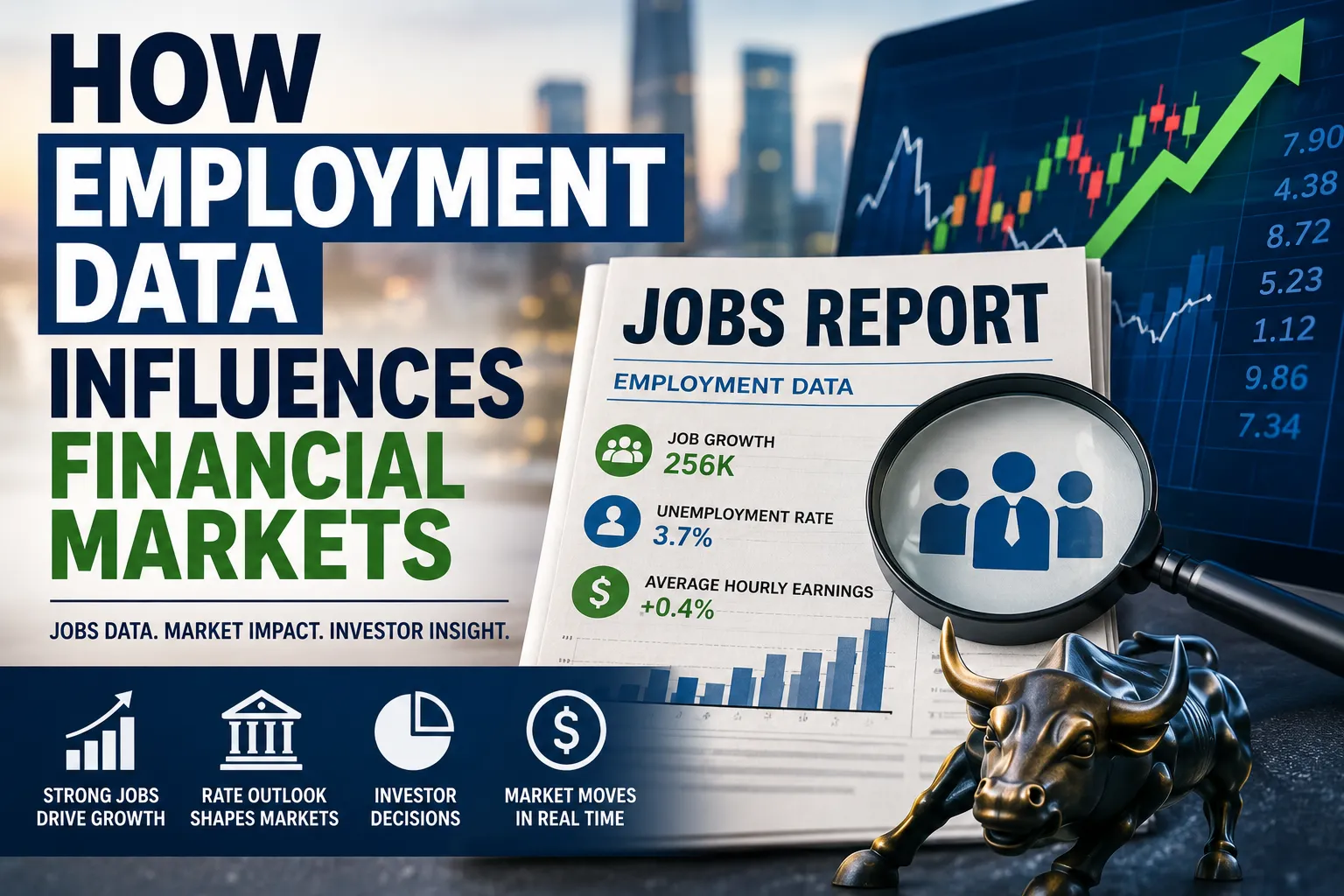
**## **Economic Data Can Move Markets****
Investors closely watch economic indicators because they provide information about the health and direction of the economy.
Important data can include:
-
Employment reports
-
Inflation figures
-
Economic growth
-
Consumer spending
-
Manufacturing activity
-
Housing data
-
Retail sales
-
Business investment
A single report can sometimes produce a substantial market reaction if it differs significantly from expectations.
For example, unexpectedly strong inflation could cause investors to reconsider the likely path of interest rates.
That can affect stocks, bonds, currencies and other financial assets simultaneously.
**## **Interest Rates Are a Major Source of Volatility****
Interest rates have a powerful influence on financial markets.
When interest rates rise, borrowing generally becomes more expensive.
Higher rates can increase financing costs for businesses and households.
They can also affect how investors value future corporate earnings.
Growth companies can be particularly sensitive because a larger portion of their perceived value may depend on profits expected several years into the future.
When rates fall, the opposite pressures can emerge.
Lower borrowing costs can support economic activity and potentially make stocks more attractive relative to certain fixed-income investments.
Because markets continuously anticipate changes in monetary policy, even comments from central bank officials can trigger significant price movements.
**## **Inflation Can Increase Market Uncertainty****
Inflation affects companies, consumers and financial markets in several ways.
When input costs rise, companies may experience pressure on profit margins.
Businesses may respond by raising prices, reducing costs or accepting lower margins.
Meanwhile, persistent inflation can influence central bank policy.
If investors believe inflation will remain elevated, they may expect interest rates to stay higher for longer.
That expectation can affect stock valuations and increase volatility.
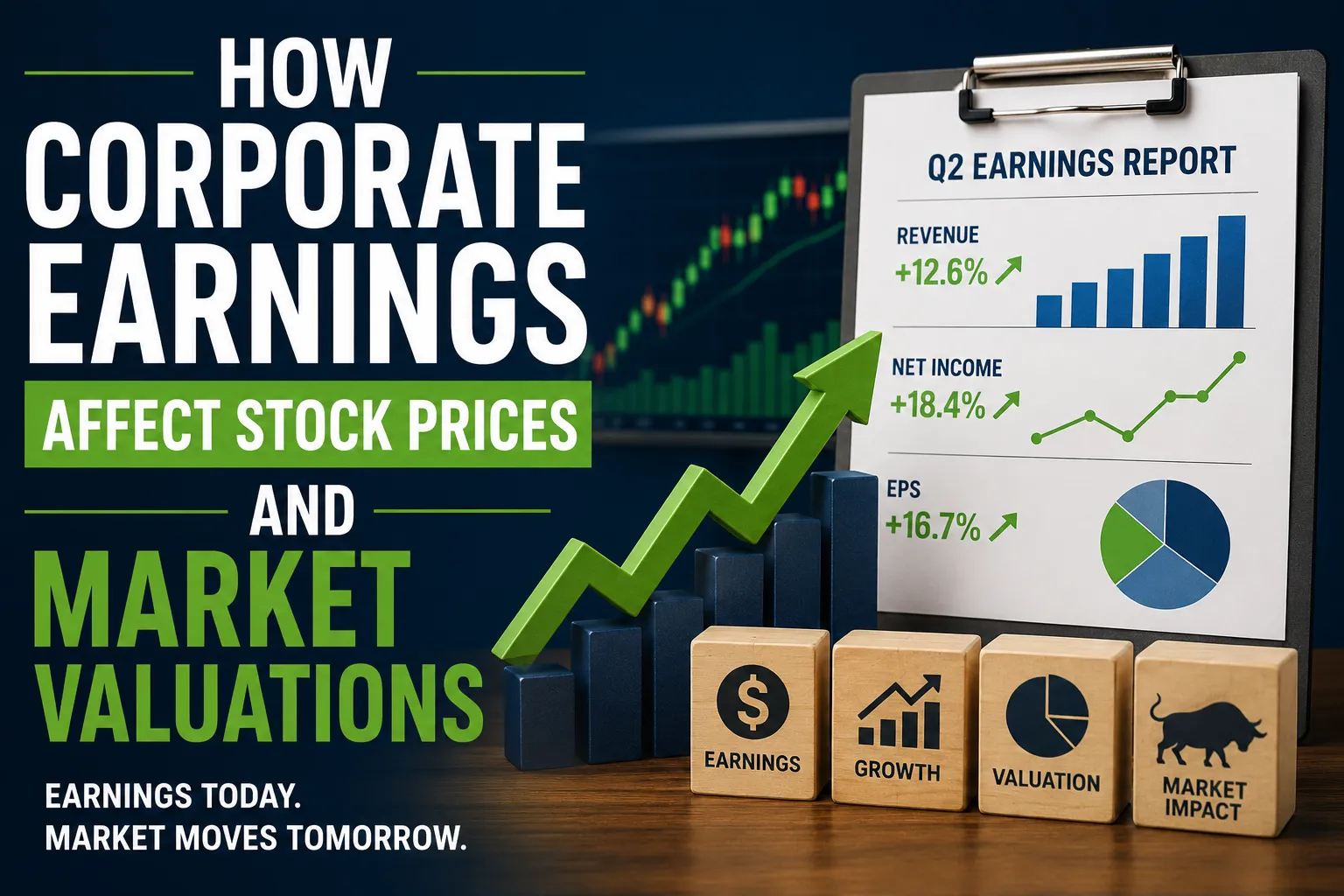
**## **Corporate Earnings Matter****
A company’s earnings are among the most important factors influencing its stock price.
Investors regularly compare actual results with expectations.
A company can report record profits and still see its stock fall if investors expected even better results.
Likewise, a company can report lower profits than the previous year while its stock rises if the results were better than analysts anticipated.
This is why the phrase **“better than expected”** can be more important than whether a number increased or decreased in absolute terms.
**## **Earnings Guidance Can Create Large Moves****
Investors also pay close attention to what company executives say about the future.
A company’s earnings report may include guidance concerning:
-
Revenue
-
Profit margins
-
Demand
-
Capital spending
-
Hiring
-
Product launches
-
Future earnings
If management lowers its expectations, investors may quickly reassess the company’s valuation.
This can create significant volatility even when the latest quarter’s results were relatively strong.
**## **Investor Sentiment Can Amplify Price Movements****
Not every market movement can be explained by changes in corporate fundamentals alone.
Investor psychology also matters.
When investors become optimistic, they may become more willing to buy stocks at increasingly higher prices.
When fear spreads, investors may rush to reduce risk.
This can create feedback loops.
Falling prices can increase fear, which can trigger more selling, causing prices to fall further.
The reverse can happen during strong rallies.
Rising prices can increase optimism, attracting additional buyers and pushing prices higher.
**## **Fear and Greed Can Influence Markets****
Financial markets are made up of millions of individual decisions.
Investors do not always make those decisions with perfect information or complete rationality.
Fear of losing money can lead some investors to sell quickly.
Fear of missing out can cause others to buy aggressively during a rally.
These emotional responses can contribute to short-term volatility.
This does not mean market movements are purely emotional. Fundamentals remain important, but psychology can influence the speed and magnitude of price changes.
**## **Geopolitical Events Can Trigger Volatility****
Markets can react quickly to wars, political conflicts, trade disputes, sanctions and other geopolitical developments.
The economic consequences of geopolitical events can be difficult to predict.
Investors may need to consider potential effects on:
-
Energy prices
-
Supply chains
-
Trade
-
Government spending
-
Currency markets
-
Interest rates
-
Corporate profits
Even before the economic consequences become clear, uncertainty itself can influence investor behavior.
**## **Political Developments Can Affect Expectations****
Government policy can influence companies and markets through taxes, regulation, spending and trade policy.
Elections can therefore create periods of uncertainty, particularly when investors believe a change in government could materially affect particular industries.
However, markets do not respond simply to whether a political development is viewed as positive or negative.
They respond to how the development compares with what investors had already anticipated.
An event that appears significant may produce little market movement if it was already fully reflected in prices.
**## **Market Volatility Can Come From Unexpected News****
Financial markets are constantly processing new information.
A sudden corporate announcement, unexpected economic figure, regulatory decision or technological breakthrough can change investor expectations within minutes.
The faster information reaches investors, the faster prices can adjust.
Modern electronic markets can therefore react almost immediately to major developments.
**## **Trading Volume Can Increase During Volatile Periods****
Periods of heightened uncertainty often produce increased trading activity.
Some investors may be selling while others see lower prices as buying opportunities.
This disagreement can increase the number of transactions taking place.
However, high trading volume and high volatility are not exactly the same thing.
A market can have substantial trading volume without enormous price movements, while some securities can experience large price changes with relatively limited trading.
**## **What Is Implied Volatility?****
Implied volatility is a concept commonly associated with options markets.
Rather than simply measuring past price movements, implied volatility reflects the level of future volatility that is embedded in options prices.
Investors can use options to express views about future price movements or to hedge risk.
When demand for options protection increases, implied volatility can rise.
This is why options markets are often watched for clues about investor expectations concerning future market uncertainty.
**## **The VIX and Market Volatility****
One of the best-known measures of U.S. stock market volatility is the **Cboe Volatility Index**, commonly known as the VIX.
The VIX is derived from options prices on the S&P 500 and is designed to reflect expectations for near-term market volatility.
It is sometimes called the “fear gauge,” although that nickname can be misleading.
A higher VIX generally indicates that investors are pricing in greater expected volatility, while a lower VIX generally indicates lower expected volatility.
The VIX does not predict whether the market will rise or fall.
It primarily reflects expectations about the magnitude of future movements.
**## **Historical Volatility Versus Expected Volatility****
There are two important ways to think about volatility.
**Historical volatility** measures how much an asset has actually moved over a previous period.
**Implied volatility** reflects expectations about future volatility based on options prices.
The two can differ significantly.
A stock may have experienced relatively calm trading recently while investors suddenly expect major price movements ahead.
Conversely, a stock can experience a period of dramatic volatility and then return to calmer conditions.
**## **Why Small Markets Can Be More Volatile****
Not all stocks have the same level of liquidity.
Large companies with substantial trading activity may have many buyers and sellers available at different prices.
Smaller companies can have fewer participants.
When fewer buyers and sellers are available, relatively modest orders can sometimes produce larger price movements.
This is one reason smaller or less liquid stocks can be significantly more volatile than large, heavily traded companies.
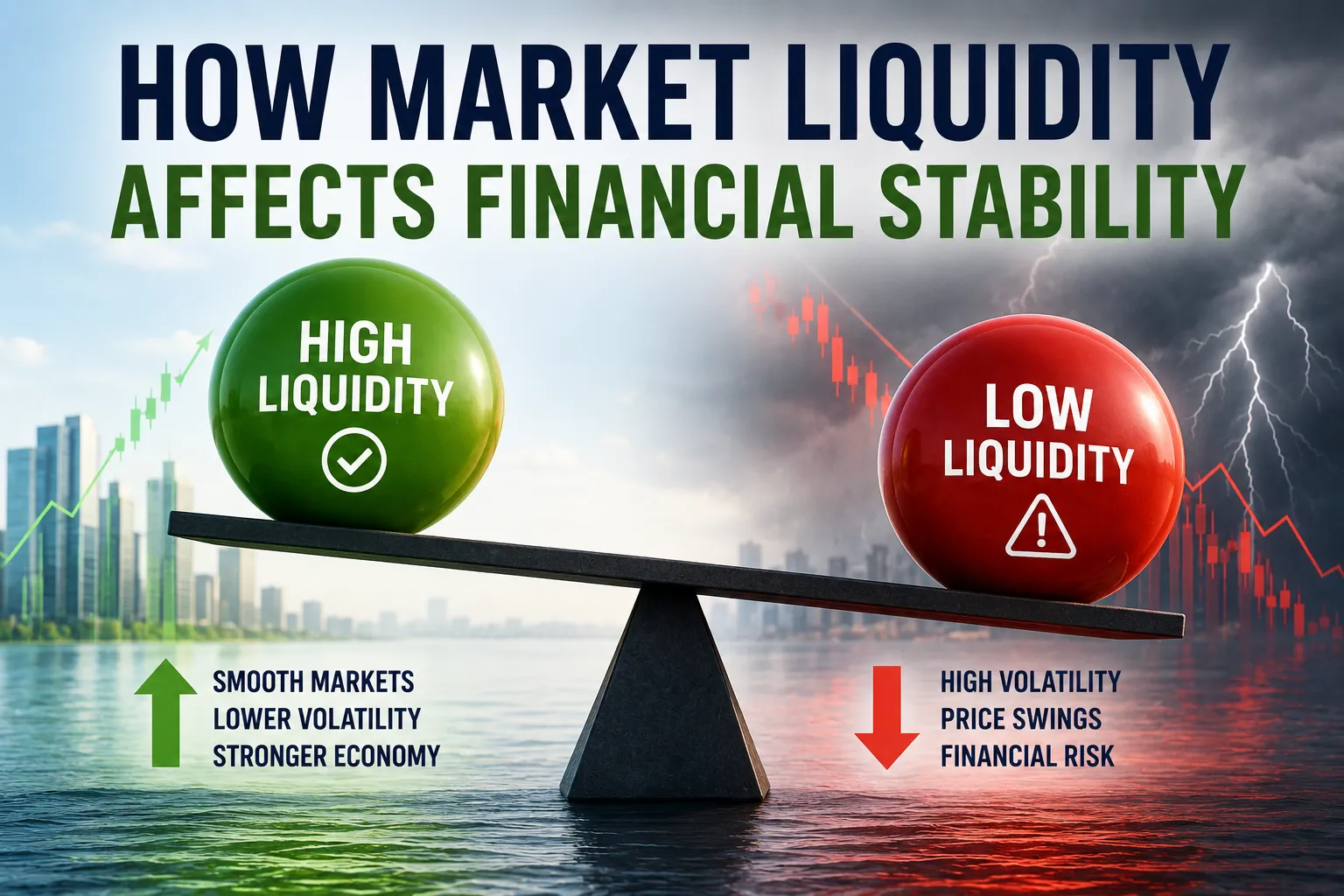
**## **Liquidity Matters During Market Stress****
Liquidity refers broadly to how easily an asset can be bought or sold without causing a large change in its price.
During normal market conditions, liquidity can help absorb buying and selling pressure.
During periods of stress, however, some investors may simultaneously try to exit risky positions.
If buyers become less willing to transact, prices can move rapidly.
This can contribute to sudden market declines.
For a deeper look at how declining liquidity can amplify market stress and affect the broader financial system, see how market liquidity affects financial stability.
**## **Algorithmic and High-Speed Trading****
Modern financial markets rely heavily on automated trading systems.
Algorithms can analyze information and execute trades at extremely high speeds.
These systems provide important liquidity and efficiency under many circumstances, but automated trading can also influence short-term market dynamics.
When many systems respond to the same information or market signals, price movements can accelerate.
That does not mean algorithms are responsible for every market crash or spike. Major volatility generally has multiple causes.
**## **Options and Leverage Can Magnify Movements****
Financial instruments such as options, futures and leveraged products can increase exposure to market movements.
Leverage allows investors to control a larger position with a smaller amount of capital.
This can increase potential gains but also increases potential losses.
When highly leveraged positions move against investors, forced selling or position adjustments can contribute to additional market pressure.
**## **Volatility Can Rise During Financial Crises****
Financial crises often produce extreme volatility because uncertainty becomes unusually high.
Investors may question:
-
Whether banks are financially stable
-
Whether companies can refinance debt
-
Whether consumers will continue spending
-
Whether unemployment will rise
-
Whether governments will intervene
-
Whether financial institutions can meet their obligations
When the answers are unclear, investors can rapidly reassess risk.
This can lead to sharp movements across multiple asset classes.
**## **Market Volatility Is Not the Same as Market Risk****
Volatility and risk are related but not identical.
Volatility measures price fluctuations.
Risk is broader and refers to the possibility of losing money or failing to achieve a financial objective.
A highly volatile asset may produce significant gains over time, while a relatively stable asset can still carry meaningful risks.
Investors should therefore avoid treating volatility as the only measure of investment risk.
**## **Why Long-Term Investors Experience Volatility Differently****
An investor with a long time horizon may view a short-term market decline differently from someone who needs their money immediately.
Suppose an investor is saving for a goal several decades away.
A temporary decline in stock prices may have limited immediate consequences if the investor does not need to sell.
Someone who needs to withdraw a large amount of money during a market downturn faces a very different situation.
This is one reason asset allocation and time horizon matter.
For investors thinking about how their time horizon, risk tolerance and financial goals should shape their strategy, how to build an investment plan for long-term goals provides a useful companion guide.
**## **Diversification Can Reduce the Impact of Volatility****
Diversification involves spreading investments across different assets rather than concentrating a portfolio in one company or sector.
A diversified portfolio can include combinations of:
-
Stocks
-
Bonds
-
Cash
-
Real estate-related investments
-
Domestic assets
-
International assets
Diversification does not eliminate losses or guarantee positive returns.
However, assets do not always move in exactly the same direction at the same time.
Spreading exposure can therefore reduce the effect of a sharp decline in any single investment.
**## **Volatility Can Create Opportunities and Risks****
Market volatility is not automatically bad for investors.
Falling prices can create opportunities for investors who believe particular assets have become undervalued.
Rising volatility can also provide opportunities for sophisticated investors using strategies designed around changing market conditions.
But volatility can increase the risk of making emotional decisions.
Buying simply because prices are rising or selling because prices are falling can undermine a long-term investment strategy.
**## **Why Timing the Market Is Difficult****
Volatility often makes market timing seem attractive.
An investor might think:
“I will sell before the next decline and buy again when prices recover.”
The problem is that investors must correctly predict both the exit and the re-entry.
Markets can recover unexpectedly quickly.
Missing a relatively small number of strong market days can significantly affect long-term investment results.
This is one reason many long-term investors focus on consistent strategies rather than attempting to predict every short-term movement.
**## **How Investors Can Respond to Volatility****
Investors cannot control market volatility, but they can control how they respond to it.
Useful practices can include:
-
Maintaining an appropriate asset allocation
-
Diversifying investments
-
Keeping an emergency fund outside the investment portfolio
-
Avoiding unnecessary leverage
-
Reviewing investment goals regularly
-
Understanding the time horizon for each goal
-
Limiting impulsive trading
-
Rebalancing when appropriate
-
Focusing on long-term objectives
The appropriate approach depends on an individual’s circumstances, financial goals and tolerance for investment losses.
**## **Volatility Is Part of Investing****
Stocks are not savings accounts with guaranteed values.
Investors accept uncertainty in exchange for the potential for long-term returns.
That means periods of rising and falling prices are an inherent part of investing in financial markets.
Trying to eliminate volatility completely can also mean giving up potential opportunities for growth.
The important question is not whether volatility can be avoided entirely. It is whether an investment strategy is designed to withstand the level of volatility that an investor is likely to encounter.
**## **What Investors Should Watch****
When markets become unusually volatile, it can be useful to separate **new information from market noise**.
Investors can pay attention to developments that have a meaningful effect on:
-
Corporate earnings
-
Interest rates
-
Inflation
-
Economic growth
-
Employment
-
Credit conditions
-
Government policy
-
Long-term business fundamentals
Not every dramatic market move represents a permanent change in the value of an investment.
Some movements reflect temporary shifts in sentiment or positioning.
**## **Understanding the Forces Behind Market Swings****
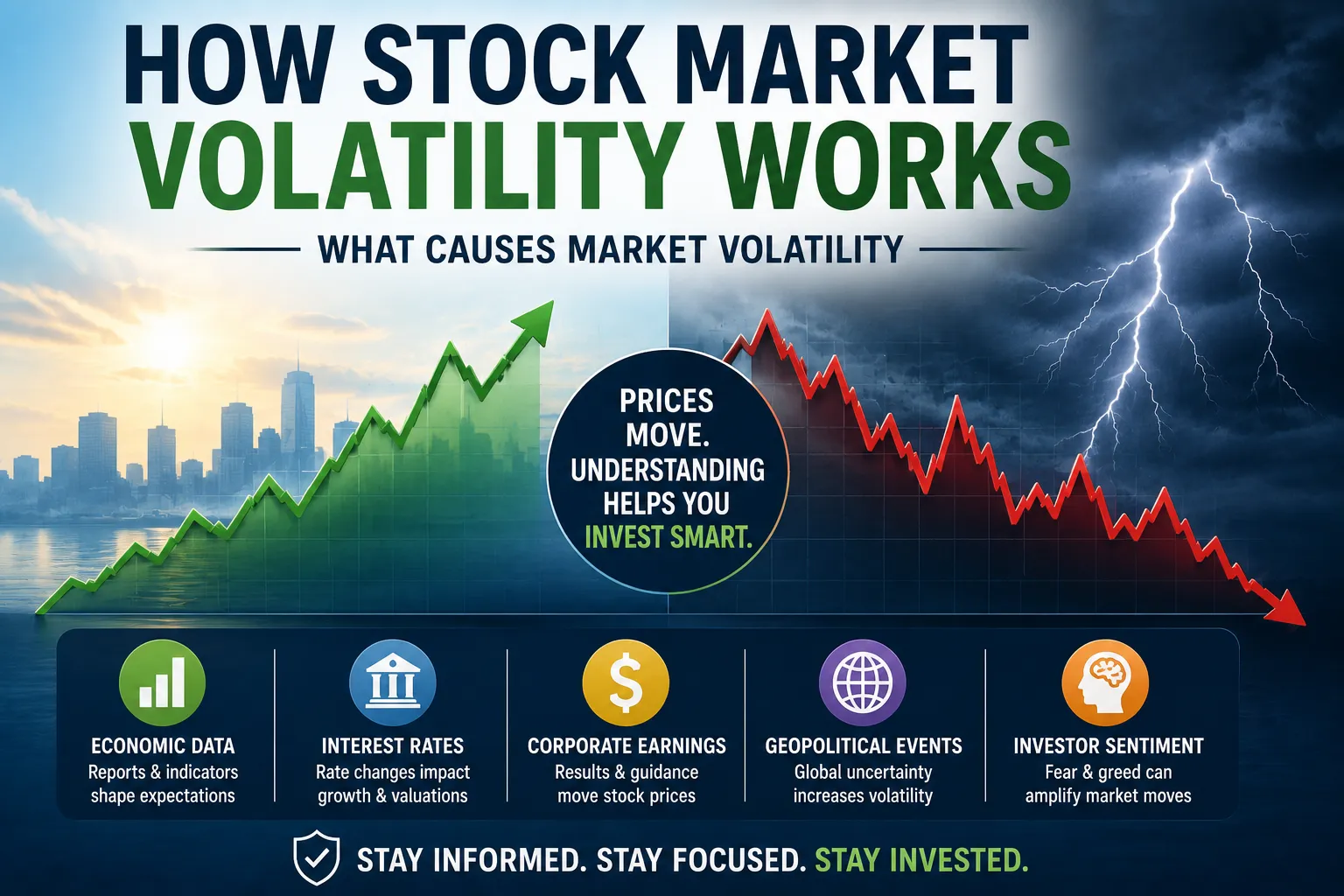
Stock market volatility is ultimately the result of constantly changing expectations.
Economic data changes the outlook for growth and inflation. Central bank decisions influence interest rates. Corporate earnings alter expectations about profits. Political and geopolitical developments change perceptions of risk. Investor psychology can amplify all of these forces.
The result is a market that is continuously repricing assets as new information arrives.
**Volatility is therefore not an unusual interruption to the stock market—it is a normal feature of how markets discover prices.**
For investors, understanding that process can make sharp market movements easier to interpret. Instead of reacting automatically to every rise or fall, investors can ask what changed, whether the change affects their long-term assumptions and whether their portfolio remains appropriate for their goals.
That perspective can turn market volatility from something that simply causes anxiety into a useful reminder of why diversification, appropriate risk management and a long-term financial plan matter.