How Iran-Related Oil Risks Could Affect Energy Stocks and Investors
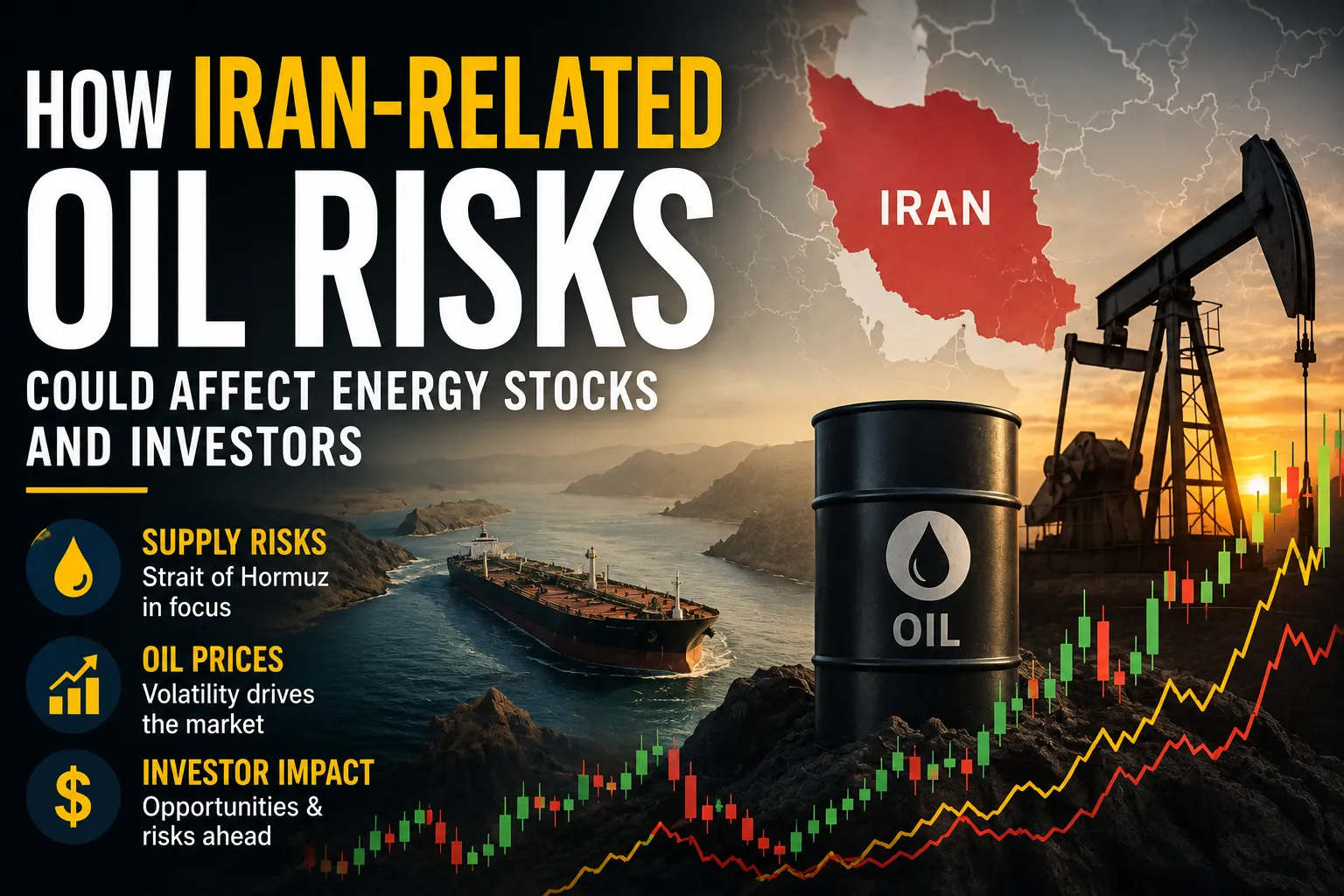
Oil markets have spent much of 2026 reacting to developments involving Iran, the Persian Gulf and the Strait of Hormuz. For investors, the situation has created an unusual combination of opportunity and risk: higher crude prices can boost the earnings outlook for many energy companies, while the same shock can raise inflation, pressure consumers and businesses, and increase volatility across financial markets.
The latest developments illustrate just how quickly the market can change. On August 25, oil prices moved lower after investors judged new U.S. sanctions against Iran to be less disruptive to immediate oil supplies than a military escalation. Brent crude was around $91.82 a barrel and West Texas Intermediate was around $84.60. At the same time, concerns remained over the possibility of disruptions to shipping through the Strait of Hormuz.
For investors, the important question is therefore not simply whether Iran will push oil prices higher. It is how long supply risks persist, how much crude is actually removed from the market, and how energy companies and the wider economy respond.
## Why Iran Matters to Oil Markets
Iran is an important oil producer, but its significance extends beyond its own production.
The country sits alongside the Strait of Hormuz, a critical maritime chokepoint connecting the Persian Gulf with the wider global oil market. Disruptions in the area can affect shipments from several major oil-producing countries, not just Iran.
The International Energy Agency reported in August that Gulf production had recovered somewhat in July but remained substantially below pre-war levels. It also said regional exports fell sharply after the Strait of Hormuz was effectively closed again in early July.
That creates a potentially powerful mechanism for oil prices:
Geopolitical tension → supply disruption → tighter oil market → higher crude prices → increased energy-sector revenue and inflation pressure.
The actual outcome depends on how severe and prolonged the disruption becomes.
## Oil Prices Have Become Extremely Sensitive to Headlines
The oil market has demonstrated how quickly prices can react to changes in expectations.
The IEA said benchmark crude prices traded within an unusually wide range during July, with North Sea Dated crude rising by more than $25 a barrel during the month before easing back toward the low-$90 range. The agency attributed much of the volatility to changing expectations surrounding the Iran conflict and the possibility of reopening the Strait.
That means investors should be careful about treating a sudden oil-price jump as a permanent change in the earnings environment for energy companies.
A headline suggesting escalation can send crude higher.
A diplomatic breakthrough can send it lower just as quickly.
This creates an important distinction between a temporary geopolitical premium and a sustained structural increase in oil prices.
Investors looking at these sharp moves should also understand how stock market volatility works and what causes market volatility, because geopolitical developments can quickly affect prices well beyond the energy sector.
## Energy Stocks Could Benefit From Higher Oil Prices
Oil producers are among the most obvious potential beneficiaries when crude prices rise.
Companies that produce oil and gas generally receive higher realized prices when commodity prices increase, assuming production costs do not rise by the same amount.
That can translate into:
- Higher revenue
- Higher operating cash flow
- Stronger profits
- Greater ability to return money to shareholders
- Improved balance sheets
- Increased investment in production
This explains why energy stocks have recently attracted investors looking for exposure to the oil-price rally.
The broader energy sector reached a record high during an August rally as Brent crude climbed amid renewed Iran-related tensions.
But higher oil prices do not automatically mean every energy stock will outperform.
Investors should also understand how corporate earnings affect stock prices and market valuations, because a higher commodity price only matters to shareholders if it ultimately improves a company’s earnings, cash flow or long-term financial position.
## Integrated Oil Companies May Have Some Protection
Large integrated energy companies can be less dependent on a single part of the oil business.
Their operations may span:
- Oil and gas production
- Refining
- Transportation
- Petrochemicals
- Marketing
- Trading
This diversification can help cushion the effect of changing commodity prices.
For example, an upstream producer can benefit substantially from rising crude prices, while a refiner may experience a different set of pressures because higher crude becomes an input cost.
Investors therefore need to look beyond the headline oil price and understand where a company generates its profits.
## Refiners Face a Different Equation
Refining companies can experience both benefits and challenges from an oil-market disruption.
If refined-product prices rise faster than crude input costs, refiners can enjoy stronger margins.
That has already become an important part of the current market. The IEA reported that disruptions to fuel supplies pushed refining margins and product cracks sharply higher, with some Atlantic Basin refining margins reaching records in July.
However, if crude prices rise substantially without a comparable increase in product prices, refiners can face margin pressure.
That is why investors should examine refining margins, not simply the price of crude oil.
## Oilfield Services Companies Have Another Exposure
Oilfield services companies can benefit from higher spending by exploration and production companies.
If producers believe elevated oil prices will persist, they may become more willing to spend money on:
- Drilling
- Well completion
- Equipment
- Offshore projects
- Maintenance
- Production technology
But this response usually takes time.
An oil-price spike caused by a sudden geopolitical event does not necessarily lead producers to immediately launch new projects. Companies may wait to determine whether prices remain elevated.
## The Bigger Risk Is That High Oil Prices Spread Into the Economy
For investors outside the energy sector, the story becomes more complicated.
Oil is an input into a huge portion of the global economy.
Higher energy prices can increase the cost of:
- Transportation
- Aviation
- Manufacturing
- Shipping
- Agriculture
- Chemicals
- Plastics
- Construction
- Consumer goods
Companies with thin profit margins may find it difficult to pass those higher costs on to customers.
That can create a negative earnings environment even while energy producers are benefiting.
## Airlines Are Particularly Sensitive
Fuel is one of the largest costs for airlines.
When crude oil and jet-fuel prices rise, airlines can face higher operating expenses.
They may respond by increasing ticket prices, reducing capacity or accepting lower margins.
The effect on individual airlines depends on factors such as fuel-hedging strategies, pricing power, routes and balance-sheet strength.
For investors, this is an example of why an oil shock can create both winners and losers within the stock market.
## Transportation Companies Could Also Feel Pressure
Trucking, delivery and logistics companies are exposed to fuel costs.
Higher diesel prices can increase operating expenses, particularly for businesses that have limited ability to pass those costs through to customers.
The same principle applies to other businesses with large transportation requirements.
A prolonged oil shock could therefore become an earnings issue well beyond traditional energy companies.
## Inflation Is the Critical Second-Round Effect
Perhaps the biggest concern for the broader market is not simply expensive gasoline.
It is what higher energy prices can do to inflation.
If energy becomes substantially more expensive, businesses may increase prices to protect margins.
Workers may then demand higher wages to compensate for increased living costs.
That can create a broader inflationary cycle.
For investors, this matters because central banks may respond to persistent inflation by keeping interest rates higher for longer.
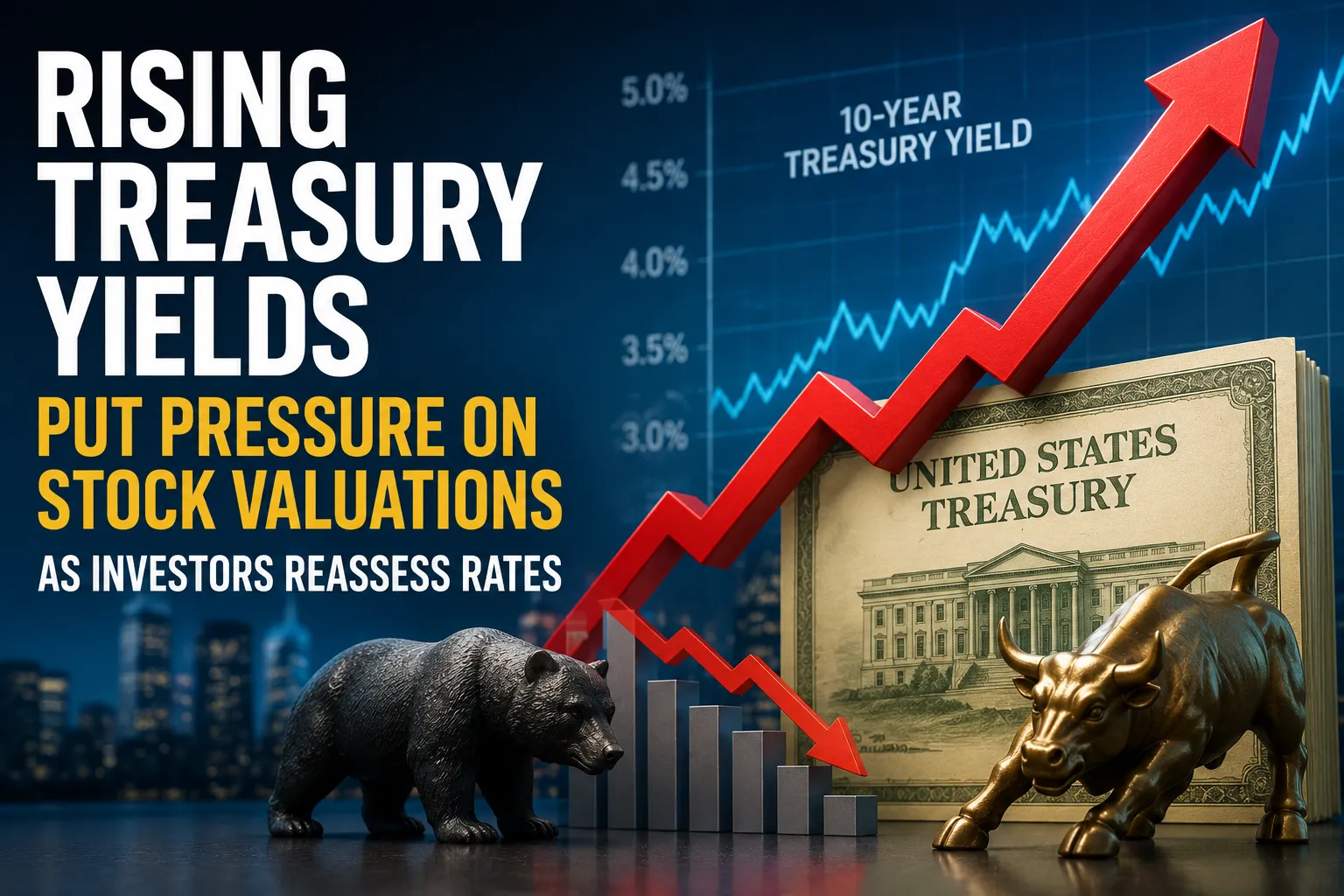
## Higher Rates Can Pressure Stock Valuations
Interest rates influence how investors value future corporate earnings.
When bond yields rise, future profits can become less attractive relative to safer fixed-income investments.
Higher rates can be particularly challenging for companies whose valuations depend heavily on expectations of strong earnings growth far into the future.
That means an Iran-related oil shock could produce a strange market environment:
Energy stocks may benefit while growth stocks and interest-rate-sensitive sectors come under pressure.
The broader market impact would depend on the magnitude and duration of the oil-price increase.
The relationship between bonds, yields and other asset classes is also important here, making a complete guide to bond markets useful context when assessing how an energy shock could move through financial markets.
## The Federal Reserve Becomes Important
For U.S. investors, the Federal Reserve’s response could become an important part of the story.
A temporary oil-price spike caused by geopolitical uncertainty may have a different policy implication from a prolonged increase that spreads throughout the economy.
If inflation expectations remain contained, policymakers may be able to look through a temporary energy shock.
If higher energy prices begin affecting broader inflation, however, the policy response could become more complicated.
That creates an additional layer of uncertainty for investors.
## Energy Stocks Are Not a Simple “Buy Oil” Trade
It can be tempting to assume that rising crude prices automatically mean buying any energy stock will work.
The reality is more complicated.
Energy companies differ significantly in terms of:
- Production costs
- Geographic exposure
- Debt
- Dividend commitments
- Production growth
- Hedging
- Refining operations
- Natural-gas exposure
- Capital spending
- Government regulation
Two companies can therefore respond very differently to the same oil-price move.
## Low-Cost Producers May Have an Advantage
When oil prices rise, low-cost producers can experience particularly strong improvements in profitability.
Their production costs may remain relatively stable while selling prices increase.
But investors should also consider what happens if prices fall again.
A company that only looks attractive at very high oil prices may carry more commodity risk than a producer with a stronger balance sheet and lower operating costs.
## Dividends and Buybacks Could Become More Important
Higher energy prices can provide producers with additional cash.
Companies may use that cash to:
- Increase dividends
- Repurchase shares
- Pay down debt
- Invest in production
- Build cash reserves
For income-focused investors, this can make energy companies particularly interesting during periods of strong commodity prices.
However, investors should distinguish between sustainable shareholder returns and payouts that depend on unusually high commodity prices.
## Oil Volatility Can Create Opportunities—and Traps
The speed of oil-price movements can make the energy sector particularly volatile.
A stock may rise sharply when crude jumps.
It can then fall just as quickly when diplomatic developments reduce the perceived supply risk.
That creates a difficult environment for investors attempting to trade headlines.
The market may price in an expected disruption before the disruption actually happens.
If the event fails to materialize, oil can fall even though the geopolitical situation remains tense.
## Watch the Strait of Hormuz Closely
For oil investors, the Strait of Hormuz is arguably one of the most important indicators to monitor.
The IEA has warned that continued disruption to the waterway has already affected global supply, inventories and demand. It reported that global observed oil inventories fell by 69 million barrels in July, with stocks down by roughly 410 million barrels from the start of the war.
The longer transportation remains disrupted, the more important inventory levels become.
Large inventories can provide a cushion.
Rapidly declining inventories can make the market increasingly sensitive to additional disruptions.
## Spare Production Capacity Matters
Investors should also watch how much spare production capacity is available elsewhere.
If another producer can quickly increase output, the impact of an Iranian supply disruption may be partially offset.
If spare capacity is limited, removing even a relatively modest amount of supply can have a larger effect on prices.
This is one reason oil-market analysis cannot focus on Iran alone.
The relevant question is:
How much additional supply can the global market access if Iranian or Gulf production is disrupted?
## U.S. Producers Could Become More Important
A sustained period of high oil prices can encourage producers outside the Middle East to increase production.
That could include U.S. shale producers and other non-OPEC suppliers.
The IEA expects production growth from the Americas to help offset some losses from the Middle East and Russia, although its August outlook still projected global oil supply to decline substantially in 2026.
This creates a potential balancing mechanism.
Higher prices encourage more supply, which can eventually reduce the shortage.
But bringing new production online takes time, meaning the short-term market can remain tight.
## Investors Should Watch Demand Too
Oil prices are determined by both supply and demand.
High prices can eventually destroy some demand.
Consumers may drive less.
Businesses may reduce fuel consumption.
Airlines may adjust capacity.
Manufacturers may seek more efficient processes.
The IEA has already lowered its 2026 global oil-demand forecast, citing the impact of elevated fuel prices and continued disruption around the Strait of Hormuz.
That means an initially bullish oil story can eventually become more complicated.
Higher prices encourage additional supply while simultaneously discouraging demand.
## Three Scenarios Investors Could Consider
Rather than trying to predict exactly what happens next, investors can think in scenarios.
### Scenario 1: Tensions Ease
If diplomatic progress reduces the threat to oil transportation, the geopolitical premium in crude prices could unwind.
Potential effects could include:
- Lower oil prices
- Pressure on energy stocks
- Relief for airlines and transportation companies
- Lower inflation expectations
- Potential support for rate-sensitive sectors
This is the main risk for investors who buy energy stocks after a sharp oil rally.
### Scenario 2: Disruption Continues
If the situation remains unstable but does not escalate dramatically, oil could remain elevated.
Energy producers could continue generating strong cash flow, while the broader economy absorbs higher fuel costs.
This could create a prolonged period of relative strength for energy stocks.
### Scenario 3: Major Supply Disruption
A significant disruption to Gulf production or shipping could produce a much larger oil-price shock.
In that environment, energy companies could initially benefit from surging crude prices.
But the broader economic consequences could become considerably more severe.
Inflation could rise, economic growth could weaken and financial-market volatility could increase.
In that scenario, even energy stocks would not necessarily be immune to a broader market selloff.
## What Investors Should Watch Next
Several indicators can provide clues about where the market is heading.
### 1. Brent and WTI Prices
Watch whether oil remains elevated or quickly gives back geopolitical gains.
### 2. Strait of Hormuz Shipping Activity
Changes in tanker traffic can provide an indication of whether physical supply risks are improving or worsening.
### 3. Global Oil Inventories
Falling inventories would suggest that the market has less protection against additional disruptions.
### 4. OPEC+ Production
Additional production could help offset supply losses.
### 5. Refining Margins
Strong margins can indicate that refined-product markets remain tight.
### 6. Inflation Expectations
If energy prices begin influencing broader inflation expectations, interest-rate-sensitive assets could become more vulnerable.
### 7. Energy Company Cash Flow
Investors should focus on whether higher commodity prices are actually translating into stronger free cash flow and shareholder returns.
## Why Diversification Matters More During Geopolitical Shocks
Geopolitical events are notoriously difficult to predict.
An investor can correctly identify the direction of oil prices and still lose money by choosing the wrong company or entering at the wrong time.
Diversification can reduce the impact of a single commodity or geopolitical event on a portfolio.
Instead of treating Iran as a reason to make a dramatic portfolio change, investors can consider how their existing exposure behaves under different oil-price scenarios.
That is a more durable way to think about geopolitical risk.
## The Market Is Already Pricing in a Lot of Uncertainty
One of the most important lessons from the latest oil moves is that markets respond to expectations, not simply events.
On August 25, oil prices fell despite continuing Iran-related tensions because traders viewed the latest sanctions as less immediately damaging to supply than a military escalation.
That demonstrates why simply reading a headline and assuming the market will react in the obvious direction can be dangerous.
Sometimes a seemingly negative development causes prices to fall because investors had already priced in something worse.
## The Bigger Investment Question
Iran-related oil risk is ultimately a test of how investors manage uncertainty.
Energy stocks could benefit if crude remains elevated for an extended period. Refiners may benefit if fuel shortages keep margins high. Oilfield-service companies could gain if producers increase capital spending.
At the same time, airlines, transportation companies, manufacturers and other fuel-intensive businesses could face higher costs.
And if the oil shock becomes large enough to push inflation significantly higher, the consequences could spread to interest rates and equity valuations across the market.
The IEA’s August outlook underscores the scale of the challenge: it expects global oil supply to fall by 4.3 million barrels a day on average in 2026, while warning that inventories have already been substantially depleted by the ongoing disruption.
What the Oil Shock Could Mean for Portfolios
The most useful way to approach Iran-related oil risk is not to assume that energy stocks will simply keep rising.
Instead, investors should watch the duration of the supply disruption, oil inventories, shipping through the Strait of Hormuz, OPEC+ production, refining margins and the inflation response.
If tensions ease, some of the geopolitical premium could disappear quickly. If disruptions persist, energy companies may continue benefiting from elevated commodity prices. If the situation escalates into a much larger supply shock, however, the economic consequences could become more important than the initial boost to oil producers.
For investors, that makes Iran less a single-stock story than a global risk factor affecting commodities, inflation, interest rates, corporate earnings and market valuations at the same time.
For broader context on how these forces interact across asset classes, investors can also refer to the complete guide to financial markets and how they work.