How to Increase Your Earning Potential Throughout Your Career
Building a higher income is rarely the result of one big career move. For most people, earning potential develops gradually through a combination of valuable skills, relevant experience, professional relationships, strategic job changes and a willingness to adapt as the economy changes.
A first job can provide useful experience, but the skills that make someone valuable early in a career may not be enough to sustain income growth decades later. Technology changes, industries evolve and employers increasingly place a premium on people who can solve difficult problems and produce measurable results.
The good news is that earning potential is not entirely determined by a job title or starting salary. There are practical ways to strengthen your position over time and create more opportunities to earn.
What Earning Potential Really Means
Earning potential is the amount of income a person could reasonably generate based on their skills, experience, industry, qualifications, professional network and ability to create value.
It is different from current income.
Someone earning a modest salary in a rapidly growing field may have greater long-term earning potential than someone earning more today in an industry with limited advancement opportunities.
Several factors can influence earning potential, including:
- Technical and professional skills
- Industry demand
- Work experience
- Leadership ability
- Education and qualifications
- Communication skills
- Professional reputation
- Geographic location
- Negotiation ability
- Business and entrepreneurial skills
- Ability to adapt to technological change
Thinking about these factors can help turn career development into a deliberate financial strategy rather than a series of unrelated job decisions.
Start by Understanding What the Market Values
One of the most important steps toward increasing income is understanding what employers and customers are actually willing to pay for.
Not every skill has the same economic value.
A skill that is relatively rare and directly connected to revenue generation, cost reduction, risk management or business growth can command more compensation than a skill that is widely available.
This does not mean people should chase every high-paying trend.
Instead, it is useful to identify the intersection between what you are good at, what you enjoy doing and what the market needs.
That intersection can provide a sustainable foundation for career growth.
Develop Skills That Solve Expensive Problems
Businesses tend to spend more money solving problems that have significant financial consequences.
For example, professionals who can help a company:
- Increase sales
- Reduce operating costs
- Improve cybersecurity
- Automate repetitive work
- Analyze important data
- Develop valuable products
- Manage major projects
- Reduce regulatory risk
- Improve customer retention
may have opportunities to command higher compensation.
The principle is simple: the more valuable the problem you can reliably solve, the stronger your earning potential can become.
Build a Combination of Skills
A single skill can make someone employable, but a combination of complementary skills can make them considerably more valuable.
Consider someone who understands data analysis.
Adding business knowledge can make that person better at explaining what the data means.
Adding communication skills can make it easier to present recommendations to executives.
Adding project management skills can help turn those recommendations into action.
This creates a valuable combination rather than relying on one isolated capability.
Skill combinations can be particularly powerful because fewer people possess the exact same mix.
Technical Skills Are Only Part of the Equation
Technical expertise can increase earning potential, but technical ability alone is not always enough.
Employers also value people who can:
- Communicate clearly
- Work with different teams
- Negotiate
- Manage projects
- Solve ambiguous problems
- Make decisions
- Lead others
- Understand customers
- Explain complex subjects simply
These are often called soft skills, but their financial impact can be substantial.
A highly skilled professional who cannot communicate effectively may struggle to demonstrate their value.
Someone with strong technical and interpersonal abilities can often take on broader responsibilities.
Communication Can Become a Career Multiplier
Clear communication is valuable in almost every profession.
Being able to write a concise report, explain a complicated idea, deliver a persuasive presentation or communicate with customers can expand the range of roles a person can perform.
Communication also becomes increasingly important as someone moves into management.
Technical specialists often focus on solving problems themselves. Leaders need to help other people understand problems, coordinate solutions and make decisions.
Improving communication can therefore increase both immediate effectiveness and long-term career mobility.
Learn to Demonstrate Results
Employers generally care about outcomes, not just activity.
Saying that you “managed a marketing campaign” is less informative than explaining that you managed a campaign that increased qualified leads or reduced customer acquisition costs.
Instead of simply documenting responsibilities, keep track of measurable results.
Examples might include:
- Revenue generated
- Costs reduced
- Time saved
- Customers acquired
- Projects delivered
- Processes improved
- Errors reduced
- Productivity increased
- Customer satisfaction improved
Quantifiable achievements can make it easier to demonstrate professional value during performance reviews, job applications and salary negotiations.
Become Better at Negotiating Compensation
A strong career can still produce disappointing financial results if compensation is never negotiated.
Many employees accept the first salary offer without asking whether there is room for improvement.
Negotiation does not guarantee a higher salary, but preparation can improve the odds of receiving a better offer.
Before negotiating, research the market value of the role, consider your experience and qualifications, and identify the results or capabilities that distinguish you from other candidates.
Compensation can also include more than salary.
Depending on the employer, the total package may include:
- Bonuses
- Equity
- Retirement contributions
- Health benefits
- Paid leave
- Flexible working arrangements
- Professional development
- Additional allowances
Understanding total compensation provides a more complete picture of an offer.
For a deeper look at compensation discussions, see how to negotiate your salary and compensation.
Do Not Wait for an Annual Raise
Traditional salary increases may be relatively modest.
For some professionals, a significant increase in earning power can come from taking on higher-value responsibilities, moving into a more specialized role or changing employers.
That does not mean people should constantly change jobs.
Frequent moves without a clear strategy can create instability and prevent the development of deep expertise.
The better question is whether a career move increases your long-term value.
Know When a Job Change Makes Sense
A job change may be worth considering when:
- There is little opportunity for advancement
- Compensation is significantly below the market
- Your responsibilities have grown without corresponding recognition
- The industry has limited future prospects
- You have developed skills that are valuable elsewhere
- A new position offers substantially greater responsibility
- Your current organization cannot provide the experience needed for your next career stage
The strongest job changes are usually strategic rather than impulsive.
Specialization Can Increase Your Value
General knowledge can be useful early in a career, but specialization can become increasingly valuable as experience grows.
A professional who understands a particular industry, technology, regulatory environment or business problem deeply may be difficult to replace.
Specialization can also make it easier for employers and clients to understand exactly what you offer.
For example, “software developer” is broad.
A professional specializing in a specific technical area, industry or type of high-value business problem may be able to differentiate themselves more effectively.
But Avoid Becoming Too Narrow
Specialization has a potential downside.
If a skill becomes obsolete or demand disappears, excessive specialization can make career transitions more difficult.
The goal is therefore not to become narrowly dependent on one skill.
A better approach is to build a specialized core with transferable supporting skills.
For example, a professional might develop deep expertise in one technology while also learning project management, data analysis and communication.
That creates both specialization and flexibility.
Keep Learning as Technology Changes
Technology continually changes the skills employers need.
Artificial intelligence, automation, cloud computing, data analytics and other technologies are changing how many jobs are performed.
The most resilient professionals are often those who learn how technology affects their work rather than simply trying to compete against it.
Someone who learns how to use new tools to improve productivity can potentially become more valuable than someone who refuses to adapt.
Continuous learning does not necessarily mean earning a new degree every few years.
It can involve:
- Online courses
- Professional certifications
- Industry conferences
- Books
- Workshops
- Practical projects
- Mentorship
- Internal training
- Independent research
The most useful learning is usually connected to real problems and practical application.
For people deciding which capabilities to prioritize, high-income skills to learn and monetize provides another useful perspective.
Use Artificial Intelligence as a Productivity Tool
Artificial intelligence is increasingly becoming part of professional workflows.
Rather than viewing AI only as a threat to employment, workers can also learn how to use it to increase their productivity.
Depending on the profession, AI can help with:
- Research
- Data analysis
- Drafting
- Coding
- Customer support
- Documentation
- Brainstorming
- Process automation
- Information organization
The valuable skill is not simply knowing that AI exists. It is understanding how to integrate it responsibly into a workflow while maintaining quality, accuracy, security and human judgment.
Build a Professional Reputation
Your professional reputation can become an economic asset.
People who consistently produce high-quality work and solve difficult problems tend to become easier to recommend.
A strong reputation can lead to:
- Better job opportunities
- Referrals
- Consulting work
- Speaking opportunities
- Partnerships
- Leadership roles
- Higher-value clients
Reputation takes time to build, but it can continue producing opportunities long after a particular project has ended.
Build Relationships Before You Need Them
Professional networking is often misunderstood as asking strangers for favors.
Effective networking is more about building genuine professional relationships over time.
Stay in contact with former colleagues. Participate in industry communities. Help people when you can. Share useful knowledge. Attend relevant events.
When relationships are established before someone needs a job, referral or introduction, future opportunities can develop more naturally.
Your professional network can become especially valuable during career transitions.
Find Mentors and Learn From Experienced People
A good mentor can help shorten the learning curve.
Experienced professionals can provide insight into:
- Career paths
- Industry trends
- Common mistakes
- Negotiation
- Leadership
- Skill development
- Professional positioning
Mentorship does not have to be formal.
It can begin with observing people whose careers you respect, asking thoughtful questions and learning from their experiences.
Consider the Economic Value of Your Industry
The same skill can have very different earning potential depending on the industry where it is applied.
For example, analytical skills might be used in education, finance, healthcare, technology or manufacturing.
The underlying skill may be similar, but the economic environment and compensation structures can differ substantially.
This does not mean everyone should move into the highest-paying industry.
It does mean that professionals should periodically evaluate whether their skills are being used in an environment where they are highly valued.
Location Can Influence Compensation
Where you work can affect earning potential.
Some cities and regions have higher wages because of differences in industry concentration, demand for specialized skills, cost of living and competition for talent.
Remote work has changed this equation for some professions by allowing workers to access opportunities beyond their immediate geographic area.
However, remote employment also increases competition because employers may recruit from a much larger talent pool.
The best strategy depends on the profession and labor market.
Create a Portfolio of Work
A résumé tells employers what you have done.
A portfolio can show them.
This is particularly useful for professionals working in areas such as:
- Design
- Writing
- Software development
- Photography
- Marketing
- Data analysis
- Consulting
- Research
A portfolio allows potential employers or clients to evaluate actual work rather than relying entirely on descriptions.
Even internal projects can become valuable examples if they demonstrate meaningful results.
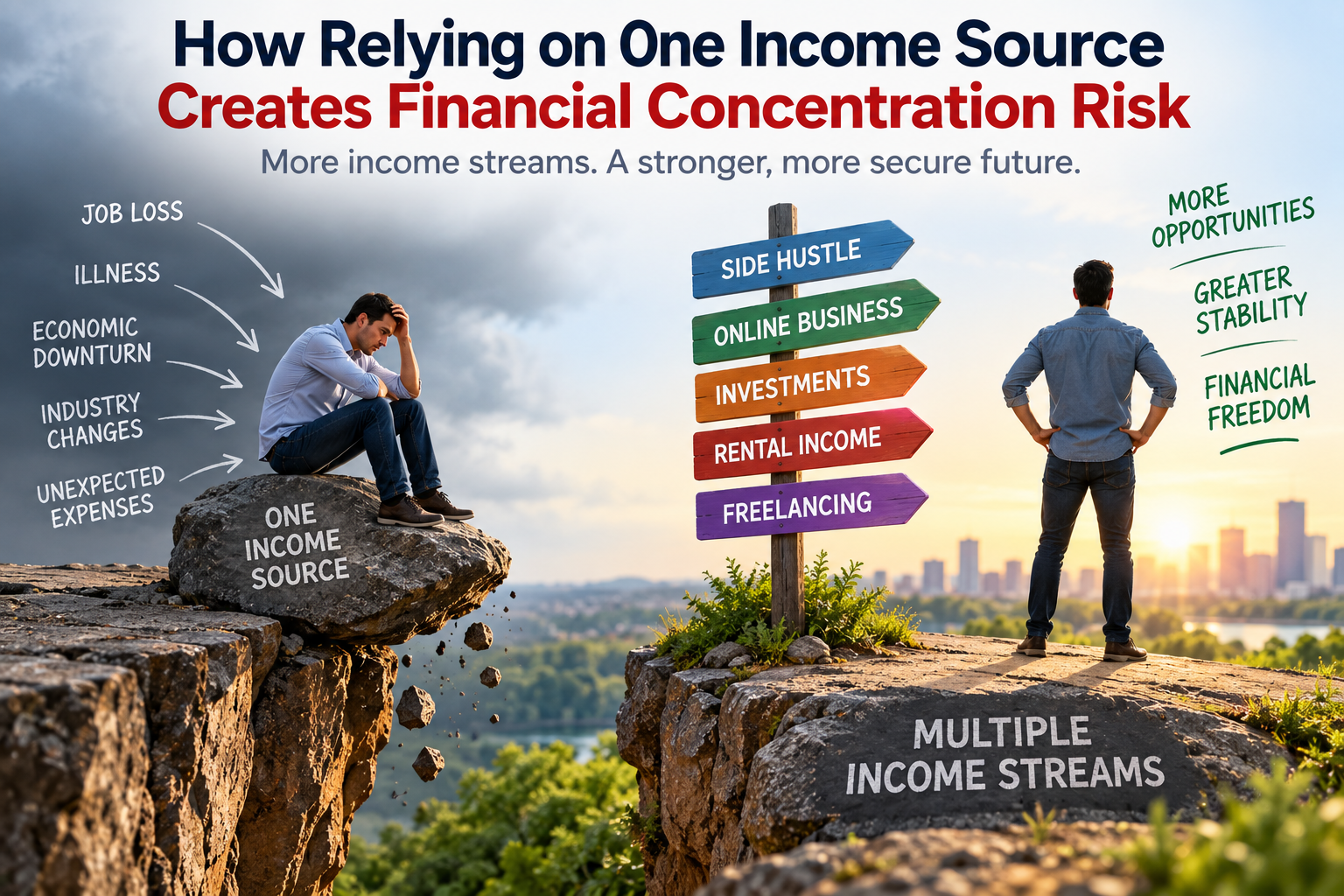
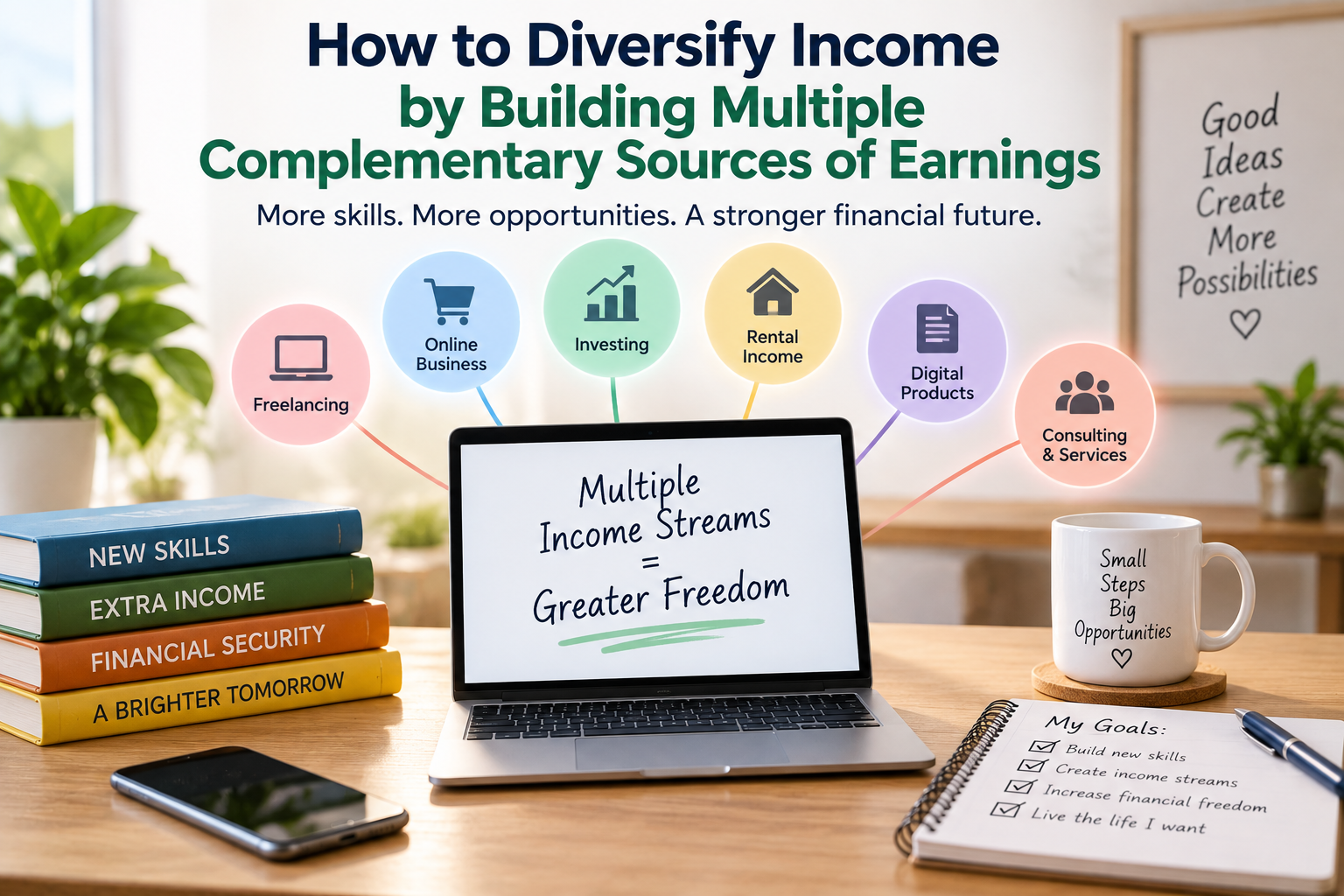
Consider Multiple Sources of Income
Increasing earning potential does not necessarily mean relying entirely on a salary.
Depending on your skills and circumstances, additional income might come from:
- Freelancing
- Consulting
- Teaching
- Digital products
- Licensing
- Small business ownership
- Investment income
- Specialized services
A side income can provide additional cash flow while also testing whether a particular skill has commercial demand.
However, additional income should not come at the expense of your primary career if the long-term opportunity is significantly greater there.
For a broader strategy around diversifying earnings, see how to create multiple income streams.
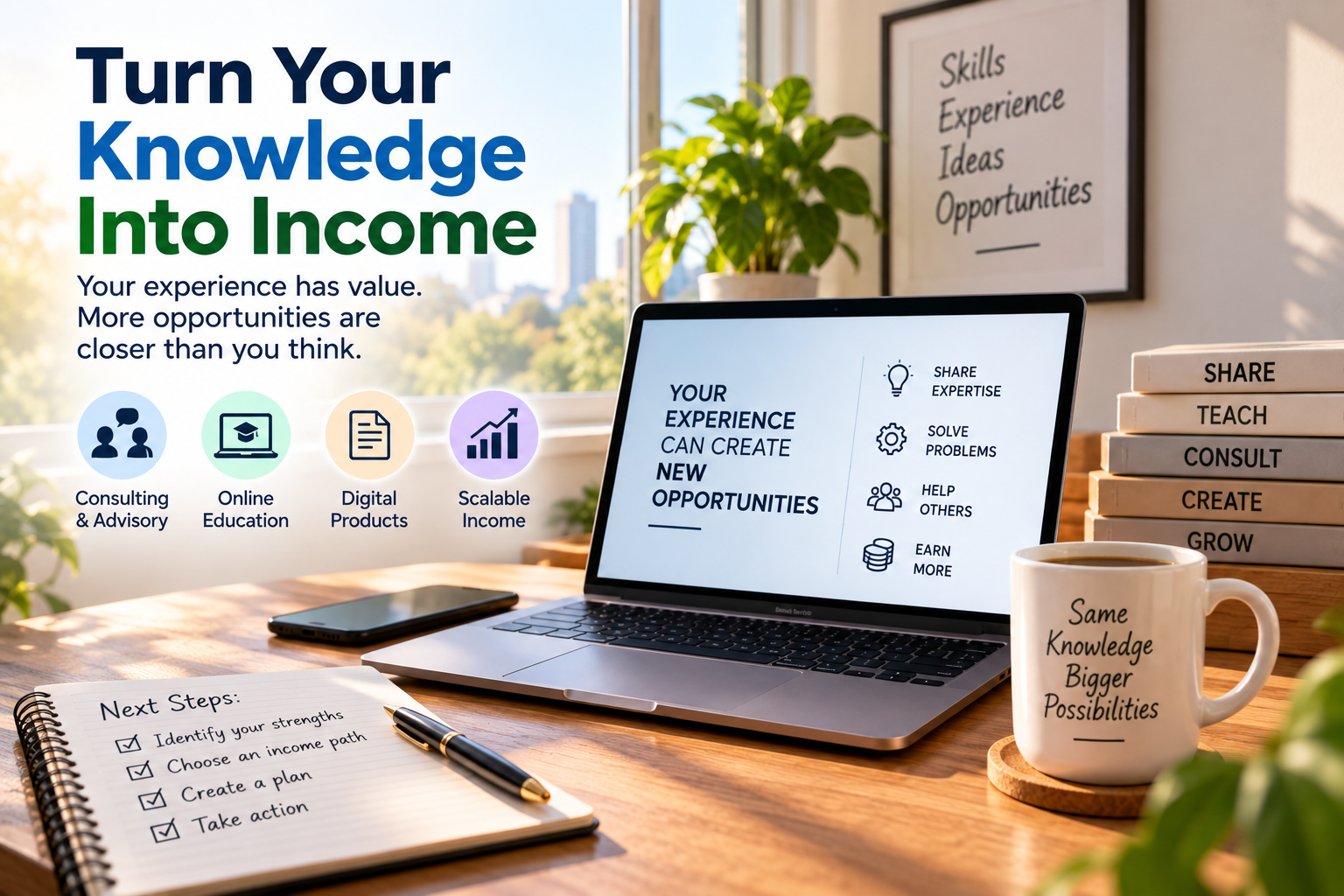
Turn Expertise Into Services
One of the simplest ways to monetize professional knowledge outside traditional employment is to package it as a service.
For example, someone with expertise in marketing might offer consulting.
A designer might provide specialized design services.
A software professional might build applications for clients.
An experienced accountant might provide advisory services.
The key is to solve a clearly defined problem for a specific customer rather than simply offering “skills.”
Customers generally pay for outcomes.
Learn Basic Business Skills
Business knowledge can increase earning potential even for people who never plan to start a company.
Understanding concepts such as revenue, margins, customer acquisition, pricing and profitability helps professionals understand how their work affects the organization.
This can make it easier to connect individual contributions to business outcomes.
For entrepreneurs and freelancers, these skills become even more important because earning income requires not only producing something valuable but also finding customers and managing costs.
Improve Your Financial Literacy
Higher income does not automatically create financial security.
Someone can earn a large salary and still struggle financially if spending, debt and saving are poorly managed.
Understanding personal finance can help ensure that increased earnings translate into greater financial resilience.
Important areas include:
- Budgeting
- Emergency savings
- Debt management
- Investing
- Taxes
- Retirement planning
- Insurance
- Cash-flow management
Career development and financial planning work best when they support each other.
Avoid Lifestyle Inflation
One challenge that often accompanies career growth is lifestyle inflation.
As income increases, spending can increase as well.
A larger home, more expensive car, frequent travel and higher recurring expenses can absorb much of the additional income.
Some lifestyle improvements are perfectly reasonable.
The problem occurs when every raise immediately becomes a permanent increase in spending.
Keeping at least part of each income increase available for saving and investing can allow higher earnings to produce lasting financial benefits.
Invest in Skills Before Credentials
Qualifications can be valuable, but collecting credentials without developing practical ability is unlikely to maximize earning potential.
Before paying for a course, degree or certification, consider what economic value it is likely to create.
Ask:
- Is the qualification required for the career I want?
- Do employers actually value it?
- Will it help me qualify for higher-paying roles?
- Can I apply what I learn?
- What is the expected return relative to its cost?
Education is an investment.
Like any investment, it deserves careful evaluation.
Build Leadership Skills
Leadership can create another path toward higher earnings.
As professionals gain experience, they may have opportunities to manage projects, teams, budgets or business functions.
Leadership requires more than technical expertise.
It involves:
- Delegating
- Decision-making
- Conflict management
- Coaching
- Strategic thinking
- Communication
- Accountability
People who can consistently help teams perform well can become valuable candidates for senior positions.
Learn to Think Strategically
Early-career professionals often focus on completing assigned tasks.
More senior professionals are expected to understand why those tasks matter.
Strategic thinking means connecting individual actions to larger goals.
Instead of asking only, “How do I complete this task?” a strategic thinker might ask:
“What problem are we actually trying to solve, and what approach creates the greatest value?”
This shift can help professionals move from task execution toward higher-level decision-making.
Protect Your Professional Reputation
Earning potential can take years to build and only moments to damage.
Reliability, honesty, professionalism and quality work matter.
Avoiding unnecessary workplace conflicts, meeting commitments and treating colleagues respectfully can have long-term career benefits.
Professional reputation is especially important in industries where people frequently move between organizations and rely heavily on referrals.
Track Your Career Like an Investment
It can be useful to review your career periodically.
Every six or twelve months, ask:
- What valuable skills have I developed?
- What measurable results have I produced?
- Has my market value increased?
- What skills are becoming more important?
- Which responsibilities should I pursue next?
- Is my current compensation competitive?
- What opportunities could significantly improve my trajectory?
This turns career development into an ongoing process.
Focus on Long-Term Compounding
Career growth has a compounding effect.
A skill learned today can create a better job opportunity next year.
That job can provide experience that qualifies you for a more senior position.
That position can expand your network and leadership experience.
Those relationships and skills can then create opportunities for consulting, entrepreneurship or executive roles.
The process can continue for decades.
This is why small, consistent improvements can matter more than occasional dramatic career decisions.
Build a Career That Gives You Options
The strongest earning position is not necessarily the job with the highest salary today.
It may be the position that gives you valuable experience, respected skills, strong relationships and multiple paths forward.
A career becomes more resilient when you can move between employers, industries, roles or income sources without starting over from scratch.
That flexibility is itself a form of earning power.
A Practical Career Earning Strategy
A useful approach is to think about career development in stages.
Early Career
Focus on learning, building foundational skills and gaining practical experience.
Mid-Career
Develop specialization, increase responsibility, negotiate compensation and build a strong professional network.
Senior Career
Focus on leadership, strategic decision-making, mentoring, high-value expertise and potentially consulting or entrepreneurship.
Throughout the Career
Continue learning, monitor market demand and protect your professional reputation.
The exact timeline will differ from person to person, but the underlying principle remains consistent: increase the value you can create while maintaining the flexibility to adapt.
Turning Career Growth Into Financial Progress
Increasing earning potential is ultimately about more than chasing a larger paycheck.
It means building skills that remain valuable, understanding what the market rewards, communicating your results, developing relationships and making deliberate decisions about where to apply your expertise.
The most successful career strategies are rarely based on one spectacular opportunity. They are built through years of learning, experimentation and gradually taking on more valuable problems.
When higher earnings are combined with sensible saving, investing and financial planning, career growth can become a powerful engine for long-term financial independence.
The goal is not simply to earn more next year. It is to build a career in which your skills, experience, reputation and opportunities become increasingly valuable as time goes on.