How Strong Demand Can Cause Inflation
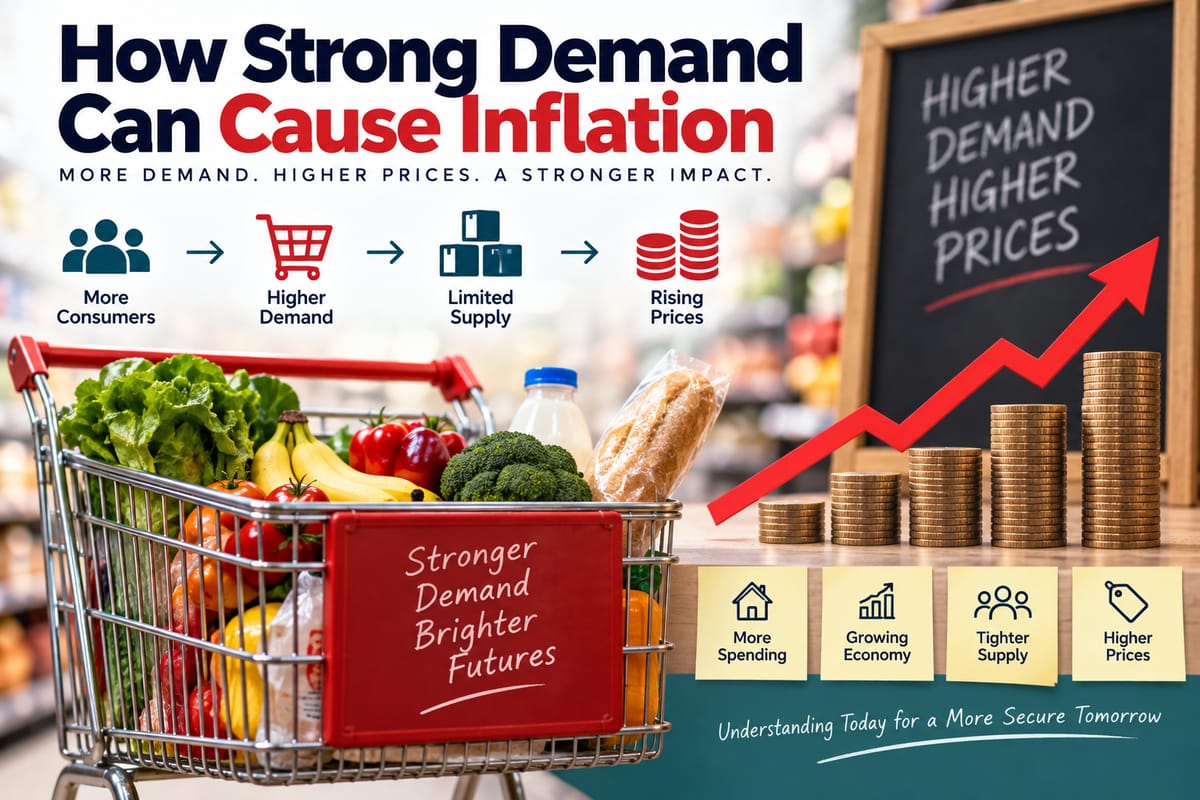
Inflation can develop when the overall demand for goods and services grows faster than an economy’s ability to produce them. When households, businesses, and governments compete for a limited amount of available output, businesses may respond by raising prices.
This is commonly known as demand-pull inflation.
Strong demand is not necessarily a sign of economic trouble. In many circumstances, rising demand reflects higher incomes, increased business investment, stronger consumer confidence, or expanding economic activity. The problem can arise when demand grows rapidly while production capacity, labor availability, materials, or other resources cannot keep pace.
Understanding this relationship helps explain why a growing economy can sometimes experience increasing price pressures.
What Is Demand-Pull Inflation?
Demand-pull inflation occurs when aggregate demand for goods and services rises faster than the economy’s productive capacity.
In simple terms, there is too much spending chasing too few goods and services.
Demand can increase for many reasons. Consumers may have more disposable income, businesses may increase investment, governments may spend more, or exports may rise.
When producers cannot increase output quickly enough to satisfy the additional demand, shortages or bottlenecks can emerge. Businesses may then have greater pricing power, allowing them to charge more.
The resulting increase in prices can spread through the wider economy.
How Strong Demand Affects Prices
Consider an economy in which businesses are already operating close to their available production capacity.
If consumers suddenly begin purchasing substantially more goods, businesses have several possible responses. They can increase production, hire additional workers, expand operating hours, use existing inventories, or raise prices.
If production cannot increase sufficiently, higher prices become one way markets respond to excess demand.
For example, suppose a popular product normally sells for $50 and a retailer has enough inventory to meet typical demand. If demand suddenly increases while the retailer cannot obtain additional supplies quickly, the product may become scarce.
The retailer may raise its price.
When similar pressures occur across many sectors, the result can contribute to broader inflation.
The Role of Aggregate Demand
Economists often analyze demand across the entire economy rather than looking only at individual products.
Aggregate demand includes spending from several major sources:
- Consumer spending
- Business investment
- Government spending
- Net exports
When these components increase substantially, overall demand can rise.
If the economy has unused resources and businesses have plenty of capacity, producers may be able to increase output without immediately raising prices.
But when the economy is already operating near its productive limits, additional demand can generate stronger price pressures.
Strong Consumer Spending Can Drive Inflation
Consumer spending represents a major part of economic activity in many countries.
When households feel financially secure, they may spend more on housing, vehicles, food, travel, entertainment, electronics, and other goods and services.
Several factors can encourage stronger consumer demand, including:
- Rising wages
- Lower unemployment
- Increased household wealth
- Consumer confidence
- Easier access to credit
- Government transfers or tax reductions
- Accumulated household savings
If businesses can increase supply at roughly the same pace, stronger spending can support economic growth without creating substantial inflation.
If supply cannot keep up, however, prices may begin to rise.
Businesses Can Add to Demand
Households are not the only source of demand.
Businesses also purchase equipment, buildings, software, vehicles, raw materials, and professional services. When companies become optimistic about future growth, they may increase investment.
A surge in business investment can raise demand for construction services, machinery, technology, skilled workers, and other inputs.
If many companies attempt to expand simultaneously, competition for limited resources can push costs higher.
Businesses may then pass some of those increased costs on to customers.
Government Spending Can Increase Demand
Government spending can also affect aggregate demand.
When governments increase spending on infrastructure, public services, transfers, defense, or other programs, additional money can flow into the economy.
This can support employment and economic activity, particularly when an economy has significant unused capacity.
However, if the economy is already operating near full capacity, a large increase in government demand can add to existing pressure on goods, services, and labor.
The inflationary effect therefore depends partly on the condition of the economy when additional spending occurs.
Economic Growth and Inflation Are Connected but Different
Economic growth and inflation are not the same thing.
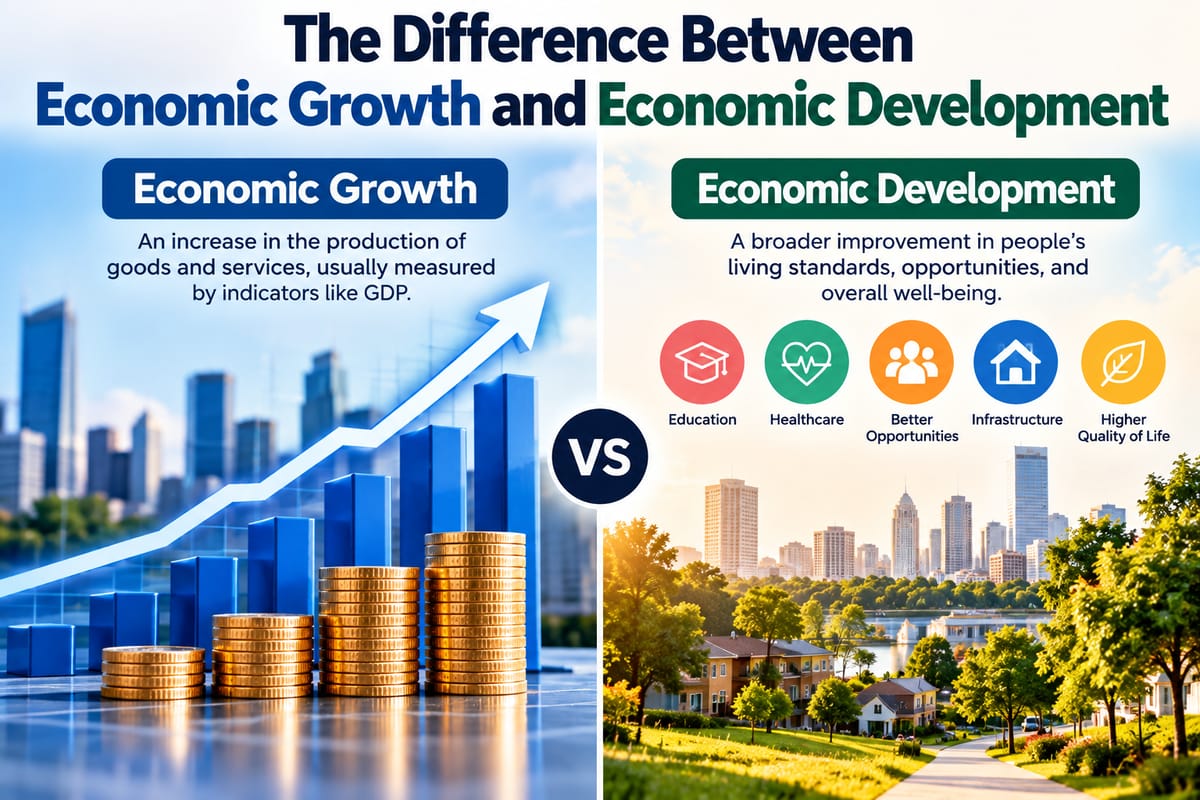
Economic growth generally refers to an increase in the amount of goods and services an economy produces over time. Inflation refers to a sustained increase in the general level of prices.
An economy can experience strong growth with relatively stable inflation if businesses can expand production efficiently.
Productivity is particularly important in this relationship. The discussion in What Drives Economic Growth and How Productivity Affects Living Standards explains why an economy’s ability to produce more with its available resources can influence long-term growth and living standards.
When productivity increases, businesses may be able to satisfy higher demand without increasing prices as quickly.
Why Productive Capacity Matters
The economy’s productive capacity determines how much additional output businesses can provide.
If factories have unused capacity, companies may be able to increase production relatively quickly.
But when factories are already operating near maximum levels, expanding output becomes more difficult.
The same applies to labor.
If there are many available workers, businesses may be able to hire more people to meet increasing demand. If labor markets are already tight, companies may need to offer higher wages to attract additional workers.
Higher labor costs can eventually contribute to higher prices, particularly when businesses cannot absorb the additional expense through greater productivity or reduced margins.
Labor Markets Can Amplify Demand Pressures
A strong economy can create competition for workers.
When companies are expanding and unemployment is low, employers may have difficulty filling open positions. They may increase wages, offer bonuses, or improve benefits to attract and retain employees.
Higher wages can support household purchasing power, which can further increase demand.
At the same time, businesses may face higher labor costs.
If productivity does not increase enough to offset those costs, companies may raise prices for their products and services.
This creates one potential channel through which strong labor demand can contribute to inflation.
Housing Markets Provide a Clear Example
Housing can illustrate how strong demand interacts with limited supply.
Suppose many households want to buy homes at the same time while relatively few properties are available.
Buyers may compete against one another, pushing home prices higher.
Construction companies may also face increased demand for labor, land, building materials, and equipment.
If housing supply cannot respond quickly, prices can rise significantly.
The same principle can affect rents when demand for available rental properties exceeds supply.
Services Can Experience Demand Inflation Too
Demand-pull inflation is not limited to physical goods.
Services can also become more expensive when demand increases faster than available capacity.
Examples include:
- Restaurants
- Hotels
- Transportation
- Healthcare services
- Entertainment
- Professional services
- Childcare
- Construction
- Personal services
Service businesses often depend heavily on labor. If demand rises while there are limited workers available, wages and operating costs can increase.
Businesses may then raise prices to maintain profitability.
Supply Constraints Can Make Strong Demand More Inflationary
Strong demand becomes particularly inflationary when supply is constrained.
Imagine consumers suddenly increase spending on a particular category while manufacturers are dealing with shortages of components and transportation capacity.
The increase in demand occurs at the same time that supply is unable to respond.
Prices may therefore rise faster than they would under normal circumstances.
This is why economists often examine both sides of the economy when analyzing inflation. Strong demand alone does not explain every price increase.
The interaction between demand and supply is crucial.
How Interest Rates Can Influence Demand
Central banks often use interest rates to influence borrowing and spending.
Lower interest rates can make borrowing cheaper. Households may be more willing to purchase homes, vehicles, and other goods, while businesses may find it easier to finance investments.
This can stimulate economic activity.
If demand becomes excessively strong relative to available supply, however, easier financial conditions can contribute to additional inflationary pressure.
Higher interest rates can have the opposite effect by making borrowing more expensive and encouraging saving rather than spending.
The timing and size of these effects can vary, and monetary policy typically works with a delay.
How Credit Can Boost Spending
Credit availability can influence the strength of demand.
When banks and other lenders are willing to provide credit on relatively favorable terms, consumers and businesses may have greater purchasing power.
A household might finance a vehicle or home, while a business might borrow to purchase equipment or expand its operations.
If credit growth becomes widespread, overall spending can increase.
Again, the effect on prices depends on whether the economy has enough capacity to accommodate the additional demand.
Fiscal Stimulus Can Affect Demand
Governments sometimes introduce tax cuts, transfers, subsidies, or spending programs to support households and businesses.
These measures can increase disposable income or directly increase demand.
During periods of economic weakness, this can help support employment and production.
However, if stimulus remains substantial after an economy has recovered and supply is already constrained, it can contribute to stronger demand pressures.
The economic impact therefore depends heavily on timing and circumstances.
How GDP Helps Measure Economic Activity
Gross domestic product, or GDP, measures the value of final goods and services produced within an economy over a particular period.
It is widely used to track changes in economic activity.
The guide to how GDP measures economic activity and economic growth explains how GDP is used to assess changes in economic output.
GDP growth can occur alongside inflation, but rising GDP does not automatically mean prices will increase.
If production grows rapidly enough to meet increasing demand, an economy can expand without experiencing the same degree of demand-driven price pressure.
Economic Indicators Help Track Demand Pressures
Economists and policymakers monitor a range of indicators when assessing whether demand is becoming unusually strong.
These can include:
- Consumer spending
- Retail sales
- Employment
- Wage growth
- Unemployment
- Business investment
- Housing activity
- Industrial production
- Capacity utilization
- Consumer confidence
- GDP growth
- Inflation expectations
The Complete Guide to Economic Indicators provides a broader explanation of how these measurements can help describe economic conditions.
No single indicator provides a complete picture. Analysts generally examine several measures together.
Strong Demand Does Not Always Cause High Inflation
It is important not to assume that every increase in demand produces inflation.
Businesses can respond to stronger demand by increasing production.
New workers can enter the labor market. Companies can invest in additional machinery. Supply chains can become more efficient. Imports can increase. Productivity can improve.
When these responses expand supply alongside demand, price pressures may remain relatively contained.
This is why the economy’s available capacity matters so much.
Productivity Can Help Absorb Higher Demand
Productivity measures how efficiently an economy uses resources to produce goods and services.
When workers and businesses become more productive, output can increase without requiring a proportional increase in labor and other inputs.
This can allow businesses to meet stronger demand while limiting increases in production costs.
Technological improvements, better management, worker training, infrastructure, and more efficient production processes can all contribute to productivity.
Over the longer term, productivity growth can therefore expand an economy’s capacity and reduce the risk that demand growth consistently exceeds supply.
Inflation Can Affect Household Finances
When strong demand contributes to broader inflation, households can experience rising costs for everyday necessities and discretionary purchases.
Prices for food, housing, transportation, services, and other expenses may increase.
The impact on individual households depends on how quickly their incomes change relative to prices and which goods and services make up their spending.
For a closer look at these household effects, How Inflation Affects Everyday Finances examines how changes in the general price level can influence purchasing power, budgets, savings, and financial decisions.
Expectations Can Influence Inflation
Expectations can become an important part of the inflation process.
If households and businesses expect prices to continue rising, they may adjust their behavior.
Workers may seek higher wages to compensate for anticipated increases in living costs. Businesses may adjust prices in anticipation of higher future costs. Consumers may bring purchases forward if they believe products will become more expensive later.
These behaviors can influence actual demand and pricing.
For this reason, central banks and economists often pay attention not only to current inflation but also to measures of inflation expectations.
When Strong Demand Becomes a Warning Sign
Strong demand can be a positive feature of an expanding economy. Consumers spending more and businesses investing more can support production, employment, and incomes.
The concern arises when demand persistently exceeds the economy’s ability to increase output.
Warning signs can include rapidly rising prices across multiple categories, persistent capacity constraints, intense competition for workers, strong wage growth without corresponding productivity gains, and unusually rapid growth in spending.
These indicators do not prove that demand is causing inflation on their own, but together they can provide evidence that demand pressures are becoming significant.
The Balance Between Spending and Production
Inflation caused by strong demand ultimately reflects an imbalance between how much the economy wants to buy and how much it can produce at prevailing prices.
When demand rises and production expands alongside it, economic growth can occur with relatively limited inflation.
When demand rises much faster than productive capacity, businesses and consumers compete for scarce goods, services, labor, and resources. Prices can then rise as markets adjust.
This relationship explains why strong demand can be both a sign of economic strength and, under certain conditions, a source of inflationary pressure. The outcome depends on how quickly supply, productivity, investment, labor markets, and businesses can respond to changing levels of economic activity.