How Do Commodity Markets Work?
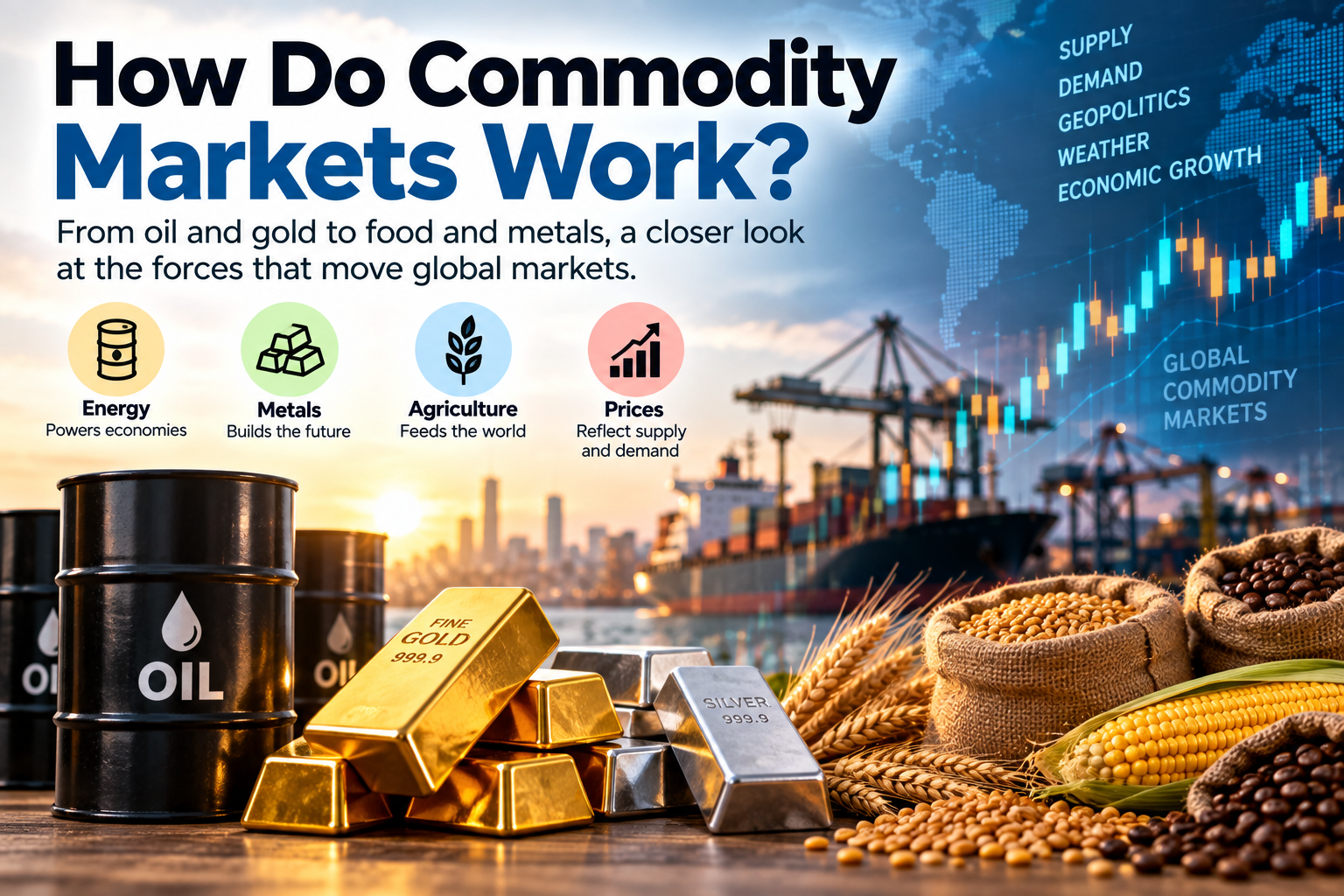
Commodity markets play an important role in the global economy, connecting producers, businesses, traders, investors, and consumers through the buying and selling of essential raw materials.
From crude oil and natural gas to gold, wheat, coffee, copper, and livestock, commodities are the basic inputs behind much of modern economic activity. Their prices can influence everything from household energy bills and food costs to corporate profits, inflation, interest rates, and investment returns.
But commodity markets can appear complicated because they involve physical goods, financial contracts, global supply chains, exchanges, producers, speculators, and constantly changing expectations.
Understanding how these markets work provides a useful foundation for understanding financial markets more broadly.
What Is a Commodity?
A commodity is a basic good that can generally be traded with other units of the same type of good.
Unlike a manufactured product with a specific brand or design, commodities are typically standardized according to characteristics such as quality, grade, weight, purity, or location.
Common commodities include:
- Crude oil
- Natural gas
- Gold
- Silver
- Copper
- Wheat
- Corn
- Soybeans
- Coffee
- Sugar
- Cotton
- Cattle
- Lumber
Commodities are often divided into several broad categories.
Energy Commodities
Energy commodities include crude oil, natural gas, gasoline, heating oil, and other fuels.
They are particularly important because transportation, manufacturing, electricity generation, and many other economic activities depend on energy.
Metals
Metals can be divided into precious metals and industrial metals.
Precious metals include gold and silver, while industrial metals include copper, aluminum, nickel, and zinc.
Gold is often viewed as both a commodity and a financial asset because investors may use it as a store of value or portfolio diversifier.
Agricultural Commodities
Agricultural commodities include crops and livestock.
Examples include wheat, corn, soybeans, coffee, sugar, cocoa, cotton, cattle, and hogs.
Weather, planting decisions, harvest conditions, transportation, and global food demand can all influence their prices.
Other Commodities
There are also commodities such as lumber and certain industrial raw materials that do not fit neatly into the major energy, metals, and agricultural categories.
Together, these markets form an important part of the global economic system.
How Commodity Markets Connect Buyers and Sellers
At their most basic level, commodity markets exist to connect supply with demand.
A producer supplies a commodity, while another participant wants to purchase it.
For example, an oil producer may extract crude oil from the ground while a refinery needs crude oil as an input for producing fuels and other petroleum products.
Similarly, a farmer produces wheat while food manufacturers, grain processors, exporters, and other buyers need wheat.
The market provides a mechanism through which these participants can establish prices and arrange transactions.
This is one reason commodity prices can change rapidly. When expectations about supply or demand change, buyers and sellers adjust the prices they are willing to accept.
Physical Commodity Markets vs. Financial Commodity Markets
One of the most important distinctions is between physical commodity trading and financial commodity trading.
In a physical transaction, the underlying commodity is actually bought, sold, transported, stored, or delivered.
A refinery purchasing crude oil is participating in the physical commodity market.
A grain company purchasing wheat for processing is another example.
Financial commodity markets, however, allow participants to gain exposure to commodity prices without necessarily taking physical possession of the commodity.
These markets include:
- Futures contracts
- Options
- Commodity-linked funds
- Exchange-traded products
- Swaps
- Other derivatives
This distinction helps explain why commodity markets can involve participants who never handle a barrel of oil, a kilogram of gold, or a bushel of wheat.
What Are Commodity Futures?
Futures contracts are among the most important instruments in commodity markets.
A futures contract is an agreement to buy or sell a specified amount of a commodity at a predetermined price for delivery at a specified future date, subject to the contract’s terms.
For example, a futures contract could be based on a particular grade of crude oil.
The contract specifies important details such as:
- The underlying commodity
- Quantity
- Quality or grade
- Delivery location
- Contract month
- Pricing mechanism
- Settlement terms
Most futures contracts are not ultimately used by traders to take physical delivery. Many positions are closed or offset before expiration.
This makes futures markets useful for both commercial participants and financial traders.
Why Producers Use Commodity Futures
Producers face a major financial problem: they often do not know what their commodity will be worth when it is eventually produced.
Consider a farmer preparing to harvest wheat several months from now.
If wheat prices fall sharply before harvest, the farmer could receive substantially less revenue than expected.
The farmer may use futures contracts to reduce some of this price uncertainty.
This practice is known as hedging.
A producer may effectively lock in or protect against a particular price environment, allowing the business to plan with greater confidence.
Hedging does not necessarily guarantee a specific final profit. There can be differences between futures prices and actual local prices, known as basis risk, as well as other costs and risks.
Nevertheless, hedging can help businesses manage exposure to commodity price movements.
Why Businesses Buy Commodity Futures
Commodity consumers face the opposite problem.
A company that depends on a commodity may worry that prices will rise.
For example, an airline is exposed to fuel costs. A food manufacturer may depend on agricultural commodities. A construction company may be exposed to steel, copper, or lumber prices.
If input costs rise significantly, profitability can decline.
Businesses can therefore use derivatives to manage some of their commodity price exposure.
The goal is usually not to predict the market perfectly. It is to make future costs or revenues more predictable.
The Role of Speculators
Commodity markets also contain participants who are not producing or consuming the physical commodity.
These participants are often called speculators.
A speculator might purchase a futures contract because they believe the commodity price will rise. Another might sell or short a contract because they expect prices to fall.
Speculators accept price risk in an attempt to earn a financial return.
Although speculation is sometimes criticized when prices become extremely volatile, speculative participation can provide important liquidity to markets.
A market with more willing buyers and sellers can make it easier for commercial participants to enter or exit positions.
This connects commodity trading with the broader concept of how market liquidity affects financial stability.
How Commodity Prices Are Determined
Commodity prices are primarily influenced by supply and demand, but the forces affecting those two sides can be extremely complicated.
Supply
Commodity supply can be influenced by:
- Production levels
- Weather
- Natural disasters
- Geopolitical conflicts
- Transportation disruptions
- Labor shortages
- Government policies
- Production costs
- Inventory levels
- Technological changes
- New discoveries
- Export restrictions
For agricultural commodities, weather can be particularly important.
For energy commodities, production decisions by major producers can have a significant effect.
For metals, mining capacity, industrial activity, and investment in new production can influence supply.
Demand
Demand can change because of:
- Economic growth
- Population growth
- Consumer behavior
- Industrial production
- Technology
- Government policies
- Seasonal patterns
- Currency movements
- Changes in substitution between products
When global economic activity increases, demand for many industrial commodities may rise.
When economic activity weakens, demand can fall.
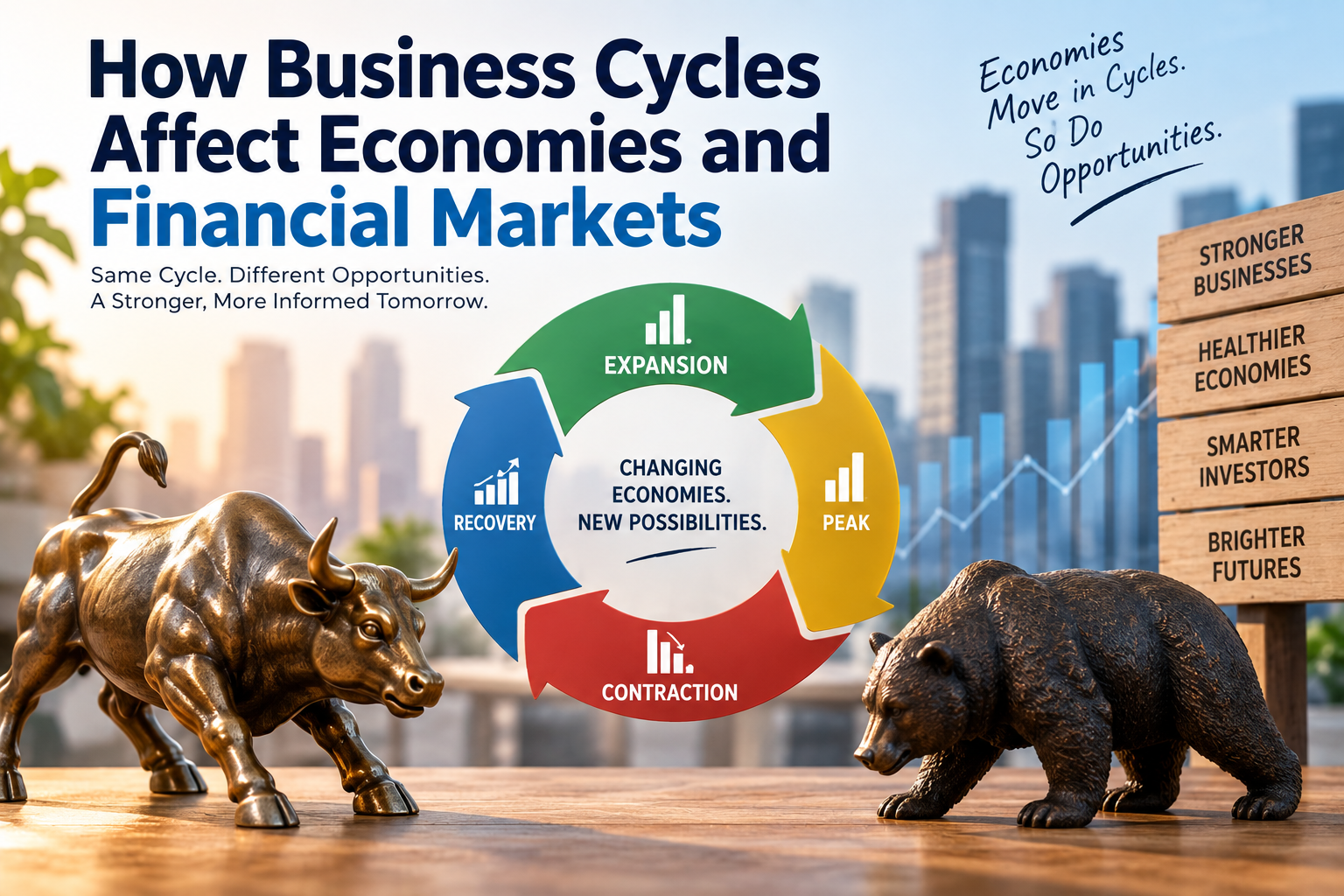
This relationship between economic conditions and markets is explored more broadly in how economic and financial market cycles work.
Why Commodity Prices Can Be So Volatile
Commodity prices can experience significant swings because supply and demand are often relatively difficult to adjust quickly.
Suppose a major disruption suddenly reduces oil production.
Consumers cannot immediately stop using fuel, and producers cannot necessarily replace the lost supply overnight.
Prices may therefore rise sharply as the market attempts to balance available supply with demand.
The same principle can apply to agricultural commodities after severe weather damages crops.
Commodity markets can also move ahead of actual changes in supply or demand because prices reflect expectations.
Traders may buy or sell based on what they believe will happen months from now.
The Importance of Inventories
Inventories are another important part of commodity pricing.
When inventories are high, buyers generally have more available supply to draw from. This can reduce immediate scarcity.
When inventories are low, even a relatively small disruption can create significant price pressure.
For example, if petroleum inventories are already tight and a supply disruption occurs, market participants may become much more concerned about shortages.
Inventory data can therefore influence commodity prices even when current production has not changed dramatically.
What Is Contango?
Commodity futures prices do not always move in the same way as current or spot prices.
One market condition is known as contango.
Contango occurs when futures prices are generally higher than the current spot price, although the exact relationship can vary across contracts and maturities.
One reason this can happen is the cost of carrying a physical commodity over time.
Those costs can include:
- Storage
- Insurance
- Financing
- Transportation
- Other holding expenses
For commodities that are expensive to store, these costs can have an important influence on futures pricing.
What Is Backwardation?
The opposite condition is known as backwardation.
Backwardation generally occurs when futures prices are lower than the current spot price for relevant maturities.
It can occur when immediate supply is particularly valuable or scarce.
For example, a temporary shortage can increase the value of having a commodity available today compared with receiving it later.
The relationship between spot and futures prices is important for businesses and investors because it can influence the returns associated with holding commodity-related positions.
How Commodity Exchanges Work
Many commodity futures contracts are traded on organized exchanges.
An exchange provides a standardized marketplace where participants can buy and sell contracts under established rules.
Modern electronic markets allow participants from different parts of the world to submit orders and execute trades rapidly.
Exchanges generally establish contract specifications and trading rules designed to create an orderly marketplace.
This standardization makes futures contracts easier to trade than individually negotiated physical contracts.
What Is the Spot Price?
The spot price is the price associated with buying or selling a commodity for relatively immediate delivery.
The exact meaning of “spot” can differ between markets because delivery arrangements vary.
The spot market is important because it reflects the value of the commodity available now.
Futures prices, meanwhile, incorporate expectations about future supply, demand, financing, storage, and other factors.
The relationship between spot and futures prices provides valuable information about market conditions.
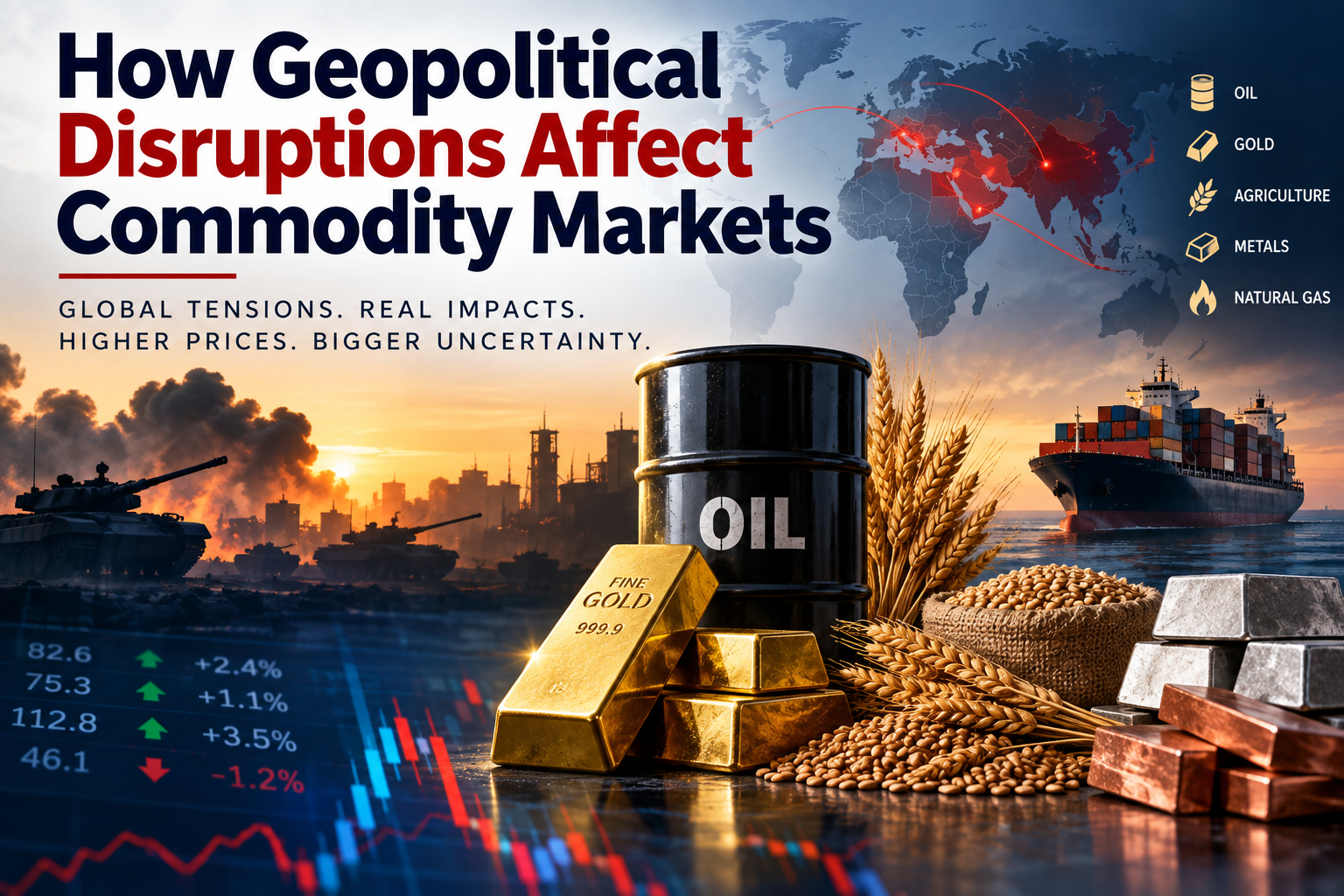
How Geopolitics Affects Commodity Markets
Commodity markets are highly sensitive to geopolitical events because many commodities are produced in specific geographic regions.
Oil is a particularly important example.
A conflict, sanctions, shipping disruption, political crisis, or diplomatic development in a major producing or transit region can change expectations about future supply.
That can cause prices to move even before any physical shortage occurs.
For example, changes in geopolitical expectations can have an immediate effect on oil markets, as demonstrated by developments discussed in Oil Nears $90 as Iran Talks Stall.
The same principle can apply to natural gas, metals, grains, and other globally traded commodities.
How Currency Movements Affect Commodities
Currency markets can also influence commodity prices.
Many globally traded commodities are priced in U.S. dollars.
When the dollar changes in value relative to other currencies, the effective cost of a commodity can change for international buyers.
A stronger dollar can make dollar-denominated commodities more expensive for buyers using other currencies, potentially affecting international demand.
Currency movements can therefore interact with commodity prices in complicated ways.
How Commodity Markets Affect Consumers
People may never trade a futures contract but can still be affected by commodity markets.
When commodity prices rise, businesses may face higher input costs.
Those costs can eventually influence prices for finished goods and services.
For example:
Higher crude oil prices → higher fuel costs → higher transportation expenses → higher business costs → potential increases in consumer prices
Similarly:
Higher agricultural commodity prices → higher food production costs → higher wholesale costs → potential increases in food prices
The relationship is not always immediate or one-for-one because businesses can absorb some costs, change suppliers, improve efficiency, or adjust product prices.
Nevertheless, commodity markets can have a meaningful influence on inflation and household budgets.
Commodities and Inflation
Commodity prices can contribute to inflation because energy and food are essential components of household and business spending.
An increase in oil prices, for example, can affect transportation costs and production expenses across many industries.
However, commodity prices can also fall quickly.
This means commodity-driven inflation can sometimes be temporary, while broader inflation can depend on many other factors, including wages, services, housing, monetary policy, and consumer demand.
Commodity prices are therefore an important piece of the inflation picture rather than the entire explanation.
Commodities as Investments
Investors may use commodities as part of a diversified portfolio.
Potential reasons include:
- Diversification
- Inflation exposure
- Exposure to global economic activity
- Speculation on commodity prices
- Portfolio risk management
However, commodities can be highly volatile.
Unlike a productive company, a physical commodity generally does not generate earnings, dividends, or interest simply because an investor owns it.
The potential return primarily comes from changes in its market value and, depending on the investment vehicle, the structure of futures contracts and associated costs.
Investors therefore need to understand exactly what they are buying.
How Commodity ETFs and Funds Work
Some investors gain commodity exposure through exchange-traded funds or other investment products.
These products can provide exposure to commodities without requiring investors to purchase and store physical goods.
However, commodity funds can use different strategies.
Some may hold physical commodities, while others may invest in futures contracts or other instruments.
This distinction matters because the performance of a commodity fund may not perfectly match the headline spot price of the commodity.
Futures-based products can experience effects related to rolling contracts, contango, backwardation, fees, and other factors.
The Difference Between Trading and Hedging
Hedging and speculation may involve the same financial instruments but have different objectives.
A business hedges because it has an underlying commercial exposure it wants to manage.
A producer might hedge against falling prices.
A manufacturer might hedge against rising input costs.
A trader who has no underlying physical exposure may instead be speculating on price movements.
Neither activity automatically guarantees success.
The difference lies primarily in the purpose of the position and the risk being managed or accepted.
Why Commodity Markets Matter to the Global Economy
Commodity markets provide an important price-discovery mechanism for raw materials that businesses and consumers depend on.
They help producers make investment decisions.
They help businesses manage costs.
They help traders transfer and assume risk.
They provide information about expected shortages and surpluses.
They also connect local production with global demand.
A farmer in one country, a food processor in another, an exporter somewhere else, and investors around the world can all be connected through commodity markets.
That makes commodities an important component of the broader financial system, alongside stocks, bonds, currencies, and other markets. A broader overview is available in this complete guide to financial markets and how they work.
What Makes Commodity Markets Different From Stock Markets?
Stocks represent ownership interests in companies.
Commodities, by contrast, are physical goods or financial contracts linked to those goods.
This creates several important differences.
A stock can potentially generate dividends and appreciate as a company’s value increases.
A commodity does not generate cash flow simply because it is held.
Commodity prices are also heavily influenced by physical supply and demand, including factors such as weather, storage, production capacity, and transportation.
That makes commodity markets particularly connected to the real economy.
The Risks of Commodity Trading
Commodity markets can offer opportunities, but they also carry substantial risks.
Prices can change rapidly because of unexpected events.
Futures contracts can also involve leverage, meaning a relatively small amount of capital can control a much larger position.
Leverage can amplify both gains and losses.
Other risks include:
- Market volatility
- Liquidity risk
- Margin requirements
- Geopolitical risk
- Weather risk
- Currency risk
- Counterparty risk
- Storage costs
- Contract rollover effects
- Unexpected supply disruptions
Anyone considering commodity trading should understand these risks before committing capital.
How to Understand Commodity Markets More Effectively
A useful way to analyze a commodity is to work through several questions.
1. What drives supply?
Identify the major producers, production costs, inventories, transportation routes, and potential disruptions.
2. What drives demand?
Look at industrial activity, consumer demand, economic growth, seasonal patterns, and technological changes.
3. How quickly can supply respond?
Some commodities can increase production relatively quickly, while others require years of investment.
4. How much inventory exists?
Low inventories can make markets more sensitive to unexpected disruptions.
5. What are traders expecting?
Commodity prices reflect expectations as well as current conditions.
6. What geopolitical factors matter?
Identify important producing countries, trade routes, sanctions, conflicts, and government policies.
7. What does the futures curve show?
The relationship between different contract maturities can provide clues about market expectations and the relative value of immediate versus future supply.
This framework can help turn a complicated commodity market into a series of understandable questions.
Why Commodity Markets Will Remain Important
As long as economies need energy, food, metals, construction materials, and industrial inputs, commodity markets will remain central to economic activity.
The technologies surrounding commodity production may change. Energy systems may evolve. Agricultural methods may improve. New mining technologies may emerge. Supply chains may become more sophisticated.
But the fundamental economic problem remains the same: producers need markets for what they produce, while businesses and consumers need access to essential resources.
Commodity markets provide the infrastructure for bringing those two sides together.
Understanding them also makes it easier to interpret major economic developments. When oil prices rise, grain supplies tighten, copper demand accelerates, or gold attracts investors, the effects can spread far beyond commodity exchanges.
Commodity markets are ultimately markets for the resources that keep the economy running. Their prices reflect the constant interaction between physical supply, demand, expectations, risk, money, and global events. Learning how those forces interact provides a clearer picture of everything from inflation and business costs to investment markets and economic growth.